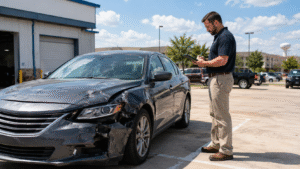
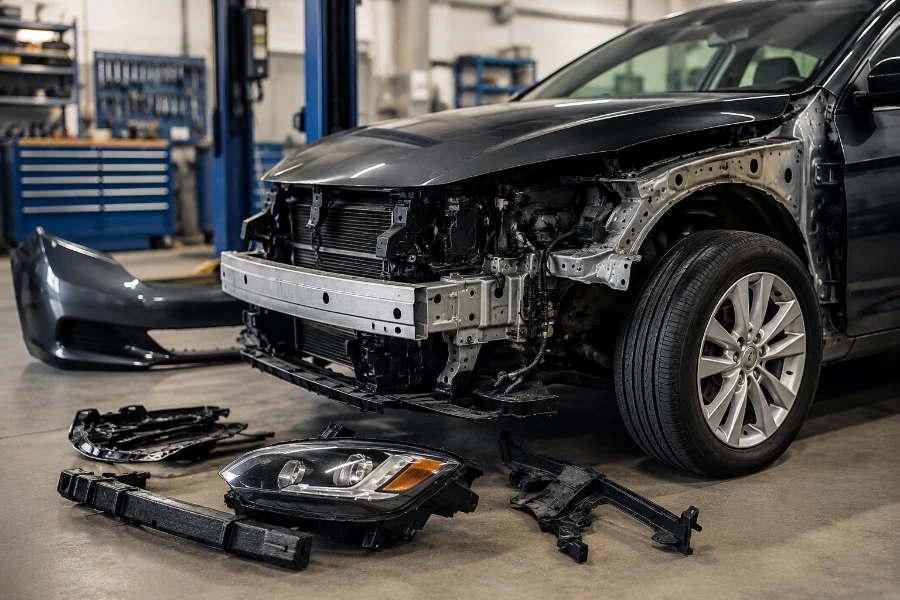
After an accident, most drivers focus on what they can see. A dented bumper. A broken headlight. A scraped fender. The damage appears straightforward, and the insurance estimate seems reasonable.
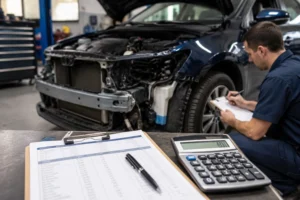
Then the repair shop starts taking the vehicle apart.
Suddenly, the numbers change.
This is where many policyholders discover a frustrating reality: insurance missed hidden damage that was never included in the original estimate. What initially looked like a minor repair can quickly become a much larger claim once technicians uncover structural issues, damaged sensors, suspension problems, or internal body panel damage hidden beneath the surface.
I have seen this happen countless times. A vehicle owner accepts the initial estimate, believes everything has been accounted for, and later learns that thousands of dollars in additional repairs are necessary. While supplemental claims often address these discoveries, the process can create delays, disagreements, and financial uncertainty.
Understanding why insurance missed hidden damage, how hidden damage affects repair costs, and what you can do when additional damage is discovered can help you protect both your vehicle and your settlement.
What Is Hidden Damage in an Auto Insurance Claim?
Not all collision damage is visible.
Some of the most expensive repairs are buried behind bumpers, beneath body panels, inside structural components, or within sophisticated electronic systems.
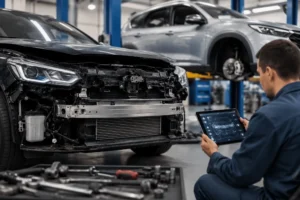
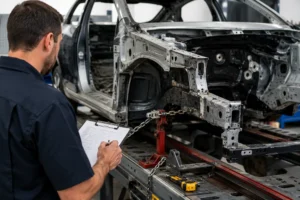
Hidden damage refers to vehicle damage that cannot be identified during a basic visual inspection. Technicians usually discover these issues only after removing damaged parts and performing a detailed teardown.
Modern vehicles have made this challenge even more common.
Today’s cars include advanced safety technology, sensors, cameras, and structural components designed to absorb collision forces. As a result, even a relatively low-speed impact can damage parts that remain completely invisible during an initial insurance inspection.
Common examples include:
- Bent frame rails
- Damaged suspension parts
- Crushed reinforcement bars
- Sensor calibration issues
- Wiring harness damage
- Cooling system damage
- Steering system damage
- Hidden unibody distortion
This explains why insurance missed hidden damage claims continue to occur across the industry.
Why Hidden Damage Is Frequently Missed
Many vehicle owners assume the first insurance estimate is final.
It rarely is.
Most estimates are preliminary evaluations based on visible evidence rather than complete repair plans.
Limited Initial Inspections
Insurance adjusters often inspect vehicles quickly to begin the claims process.
These inspections may occur:
- At a drive-in claims center
- Through photo submissions
- At a body shop
- Using virtual estimating technology
Although these methods improve efficiency, they have limitations.
Adjusters generally do not dismantle vehicles during the initial assessment. Without removing panels and components, significant damage can remain hidden.
Photo-Based Estimating Challenges
Photo estimating has become increasingly common.
It speeds up claim processing. It also creates blind spots.
A photograph may reveal bumper damage. However, it cannot always show what happened behind the bumper.
The same issue applies to damaged fenders, quarter panels, doors, and hoods. The visible damage may represent only a small portion of the actual repair scope.
Pressure to Process Claims Efficiently
Insurance companies handle thousands of claims every year.
To move claims through the system efficiently, many estimates focus first on obvious damage while allowing repair facilities to submit supplements later when additional problems are discovered.
That approach is common. It is also one reason why insurance missed hidden damage situations occur so frequently.
Common Types of Hidden Damage Insurance Companies Miss
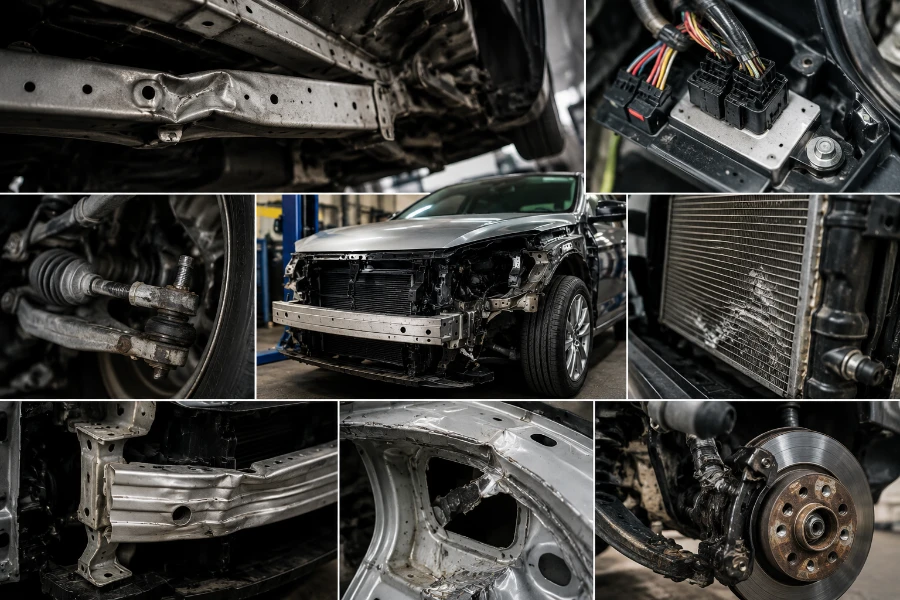
Certain forms of damage repeatedly appear after repairs begin.
Understanding these areas can help vehicle owners recognize potential issues before accepting a settlement.
Structural Frame Damage
Vehicle structures are designed to absorb impact energy.
Unfortunately, that means significant force can travel through the frame even when exterior damage appears minor.
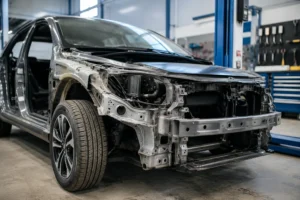
Vehicle frames are designed to absorb impact energy, but significant collisions can cause permanent deformation that may not be visible until technicians perform detailed measurements.
Common structural issues include:
| Structural Damage | Potential Consequences |
| Bent frame rails | Alignment problems |
| Unibody distortion | Reduced crash protection |
| Crumple zone damage | Safety concerns |
| Reinforcement bar damage | Increased repair costs |
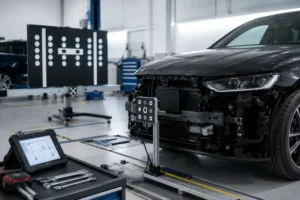
Structural damage often requires specialized measuring systems to identify accurately.
Suspension and Steering Damage
Suspension systems frequently absorb impact forces.
Even relatively minor collisions can damage:
- Control arms
- Struts
- Tie rods
- Steering racks
- Wheel bearings
- Suspension mounts
Many of these issues remain hidden until alignment procedures begin.
Electronic System Damage
Modern vehicles rely heavily on electronics.
Many drivers are surprised to learn that a small accident can affect multiple vehicle systems.
Examples include:
- Blind spot monitoring
- Parking sensors
- Backup cameras
- Adaptive cruise control
- Lane departure warning systems
- Automatic emergency braking sensors
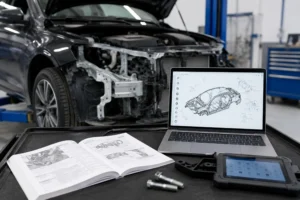
Many modern vehicles rely on Advanced Driver Assistance Systems (ADAS), and even a minor collision can affect sensors that require recalibration before the vehicle can operate safely.
These repairs can add substantial costs to a claim.
Mechanical Damage
Impact forces can also affect critical mechanical components.
Common examples include:
- Radiator damage
- Air conditioning system damage
- Cooling system leaks
- Transmission mount damage
- Engine accessory damage
Because these components often sit behind body panels, technicians may not discover the damage until repairs begin.
Internal Body Panel Damage
Many vehicles contain multiple layers of structural support hidden beneath exterior panels.
When technicians remove damaged body parts, they often discover:
- Crushed supports
- Bent reinforcement panels
- Weld damage
- Corrosion protection damage
These discoveries frequently trigger supplemental estimates.
Why Insurance Estimates Often Miss Hidden Damage
The answer is simple.
You cannot inspect what you cannot see.
Insurance estimates generally occur before technicians remove damaged components. As a result, the estimate reflects visible evidence rather than the complete repair picture.
Think of it like a home inspection after a storm.
A roof may appear intact from the ground. Once an inspector enters the attic, hidden water damage may become obvious.
Vehicle claims follow the same pattern.
The visible damage tells part of the story. The teardown reveals the rest.
The Difference Between Estimates and Repair Plans
One of the biggest misconceptions in auto claims involves the difference between an estimate and a repair plan.
| Insurance Estimate | Repair Plan |
| Based on visible damage | Based on full inspection |
| Created early in the claim | Developed during repairs |
| May require supplements | Includes actual repair needs |
| Preliminary in nature | More comprehensive |
Understanding this distinction can reduce frustration when repair costs increase after work begins.
Signs Your Insurance Estimate May Be Missing Damage
Certain warning signs suggest that insurance missed hidden damage during the initial evaluation.
Repair Costs Increase After Teardown
This is one of the clearest indicators.
Once technicians remove damaged components, they gain access to previously hidden areas. Additional repairs often emerge during this process.
An increased repair bill does not automatically mean someone made a mistake.
It often means hidden damage has finally been exposed.
Multiple Supplemental Estimates Are Submitted
Supplements are normal.
A supplement is simply an additional repair request submitted after new damage is discovered.
However, several supplements during a repair may indicate extensive concealed damage that was impossible to identify during the initial inspection.
Vehicle Performance Changes
Pay attention to warning signs after an accident.
Examples include:
- Steering pull
- Vibrations
- Suspension noises
- Dashboard warning lights
- Uneven tire wear
These symptoms may indicate hidden damage that deserves further investigation.
Repair Timelines Continue Expanding
Unexpected delays often occur when additional damage is discovered.
New parts must be ordered. Repairs may become more extensive. Insurance approvals may be required.
When timelines continue growing, it may be another sign that insurance missed hidden damage during the first inspection.
The Financial Impact of Hidden Damage
Hidden damage creates more than repair headaches.
It can significantly affect the financial outcome of your claim.
Unexpected Repair Costs
Disputes sometimes arise when additional damage is discovered after an estimate has already been prepared.
Vehicle owners can find themselves caught between repair facilities and insurers while supplemental reviews are underway.
Vehicle Safety Risks
Safety should never be overlooked.
Incomplete repairs may affect:
- Structural integrity
- Crash protection
- Steering performance
- Electronic safety systems
- Vehicle handling
Saving money means very little if critical repairs are ignored.
Reduced Vehicle Value
Collision history can affect resale value.
Hidden damage can make that situation worse if repairs are incomplete or improperly documented.
Potential buyers and dealerships often identify repair quality issues during inspections, which can reduce market value.
Hidden damage can also affect whether a vehicle is considered repairable or a total loss, making it important to understand how insurers determine vehicle values after an accident. For a deeper look at this process, read our guide on Actual Cash Value (ACV) Vehicle Valuation.
Potential Total Loss Complications
Sometimes additional damage changes everything.
A vehicle that initially appeared repairable may become a total loss after technicians uncover significant structural damage.
This situation often creates valuation disputes, especially when vehicle owners believe the insurer’s settlement offer does not reflect the true value of the vehicle.
What to Do If Insurance Missed Hidden Damage
Discovering additional damage after repairs begin can feel overwhelming.
The good news is that you still have options. The key is acting quickly, documenting everything, and understanding how the claims process works.
If you suspect insurance missed hidden damage, follow these steps.
Request a Detailed Repair Shop Inspection
Your repair facility is often the first line of defense.
Experienced collision repair technicians work with damaged vehicles every day. They know where hidden damage tends to occur and understand how impacts travel through a vehicle’s structure.
Ask the repair shop to:
- Perform a complete teardown inspection
- Document all newly discovered damage
- Take detailed photographs
- Create written repair notes
- Provide updated repair estimates
The more evidence available, the easier it becomes to support additional repair costs.
Review the Insurance Estimate Carefully
Many vehicle owners never read the estimate beyond the final dollar amount.
That can be a costly mistake.
Compare the insurance estimate with the repair facility’s findings and look for:
| Items to Review | Why It Matters |
| Missing labor operations | Repairs may be incomplete |
| Missing parts | Damage may not be fully accounted for |
| No calibration procedures | Electronic systems may not function properly |
| Missing structural repairs | Safety concerns may exist |
| No diagnostic scans | Hidden faults may go undetected |
A detailed review often reveals where the gaps exist.
Document Newly Discovered Damage
Documentation wins disputes.
Whenever additional damage is uncovered, gather:
- High-quality photographs
- Technician reports
- Repair invoices
- Structural measurement reports
- Diagnostic scan results
- Supplemental estimates
This information creates a clear record showing why additional repairs are necessary.
Request a Supplemental Claim Review
Supplements are a normal part of collision repair.
When repair costs increase after teardown, vehicle owners should understand how supplemental claims work and what documentation is needed to support additional repairs. Learn more in our guide to Supplemental Insurance Claims.
A supplemental claim allows the repair facility to request payment for newly discovered damage that was not visible during the initial inspection.
Most insurers handle supplemental reviews regularly.
The process typically includes:
- Discovery of hidden damage
- Documentation by the repair facility
- Submission of supporting evidence
- Review by the insurance company
- Approval or negotiation of additional repairs
The stronger the documentation, the smoother the process usually becomes.
When Hidden Damage Affects a Total Loss Settlement
Sometimes hidden damage increases repair costs dramatically.
When that happens, the discussion may shift from repairs to total loss valuation.
Hidden Damage and Vehicle Valuation
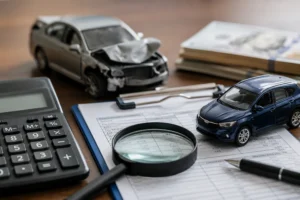
Insurance companies compare repair costs against the vehicle’s value.
If repairs exceed certain thresholds, the insurer may declare the vehicle a total loss.
Additional hidden damage can push repair costs beyond that threshold.
For vehicle owners, this creates an important question:
Is the settlement offer accurate?
That question becomes especially important when significant damage is discovered late in the claims process.
Reviewing Total Loss Reports
Not every valuation report is perfect.
Common issues include:
- Incorrect vehicle options
- Missing upgrades
- Mileage errors
- Poor comparable vehicle selections
- Market data discrepancies
- Regional pricing differences
Even small errors can affect settlement amounts by hundreds or thousands of dollars.
Challenging an Unfair Settlement
If you believe the insurer’s valuation is inaccurate, gather supporting evidence.
Useful documentation includes:
- Vehicle maintenance records
- Upgrade receipts
- Recent comparable vehicle listings
- Dealer valuation reports
- Independent appraisal documentation
Many successful valuation disputes begin with strong documentation rather than emotional arguments.
Facts matter.
Evidence matters.
Documentation matters.
How Auto Appraisals Can Help Identify Hidden Damage Disputes
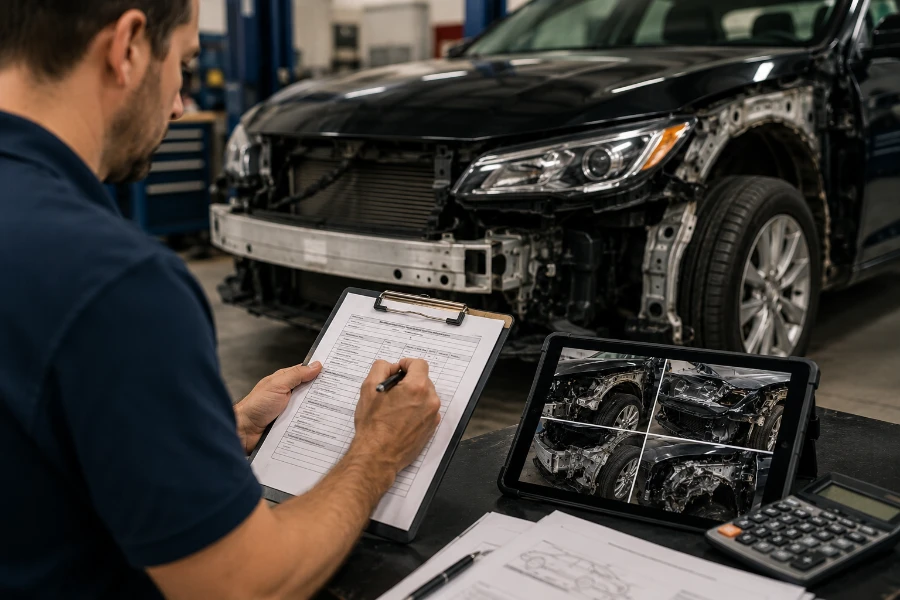
When repair costs rise and claim disputes develop, independent analysis becomes valuable.
Auto appraisals help vehicle owners understand whether the insurer’s position accurately reflects the damage and value involved.
Independent Review of Repair Documentation
An appraisal review can identify:
- Missing repair operations
- Incomplete damage assessments
- Overlooked structural concerns
- Missing calibrations
- Valuation discrepancies
This independent perspective can uncover issues that might otherwise go unnoticed.
Evaluating Repair Scope and Costs
Repair estimates involve hundreds of individual line items.
Some of the most important operations are also the easiest to miss.
An experienced appraisal review can help determine whether the repair scope accurately reflects the actual damage.
This becomes particularly important when insurance missed hidden damage and disputes arise over supplemental repairs.
Strengthening Your Position During Negotiations
Insurance claims are ultimately built on evidence.
Independent documentation can help vehicle owners:
- Support supplemental claims
- Challenge valuation errors
- Clarify repair requirements
- Improve negotiation outcomes
The goal is not conflict.
The goal is accuracy.
How AutoAdjusting Helps Vehicle Owners
Vehicle owners often feel at a disadvantage when claim disputes arise.
After all, insurers handle claims every day. Most consumers do not.
That is where independent appraisal expertise can make a difference.
Auto Appraisal Expertise
AutoAdjusting specializes in reviewing vehicle valuations, repair documentation, and claim-related issues.
This independent perspective helps vehicle owners understand whether the numbers presented by the insurance company reflect the full picture.
Total Loss Settlement Reviews
Many total loss disputes stem from valuation questions.
AutoAdjusting helps vehicle owners identify:
- Incorrect comparable vehicles
- Valuation inconsistencies
- Missing vehicle options
- Market value discrepancies
- Settlement calculation concerns
These reviews can provide valuable insight before accepting a settlement offer.
Support for Hidden Damage Cases
When insurance missed hidden damage, vehicle owners often need help understanding their options.
AutoAdjusting can assist by reviewing:
- Repair estimates
- Supplemental claims
- Vehicle valuations
- Supporting documentation
The goal is simple: help vehicle owners make informed decisions based on accurate information.
Why Hidden Damage Should Never Be Ignored
Hidden damage is not a rare exception.
It is a routine part of modern collision repair.
Today’s vehicles are more complex than ever. They contain advanced electronics, sophisticated safety systems, and structural designs that often conceal damage until repairs begin.
That reality makes thorough inspections essential.
Ignoring newly discovered damage can lead to:
- Incomplete repairs
- Safety concerns
- Lower resale value
- Additional repair costs later
- Settlement disputes
The earlier hidden damage is identified, the easier it becomes to address.
Final Thoughts
When insurance missed hidden damage, the situation can feel frustrating. However, it does not mean you have lost control of the claim.
The most important step is understanding that initial estimates are often preliminary. Hidden damage frequently appears only after technicians begin disassembling the vehicle.
Document everything. Ask questions. Review estimates carefully. Work with qualified repair facilities. Most importantly, do not assume the first estimate tells the entire story.
A vehicle may look repaired on the surface while significant issues remain hidden underneath.
By staying informed and proactive, you can help ensure your vehicle is repaired properly and that your claim reflects the true extent of the damage.
If you believe insurance missed hidden damage on your vehicle or you have concerns about a repair estimate or total loss settlement, AutoAdjusting can provide an independent review to help you better understand your options and protect your financial interests.