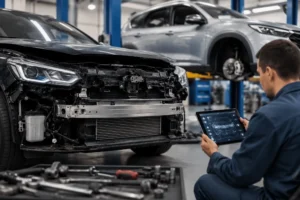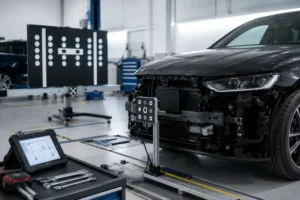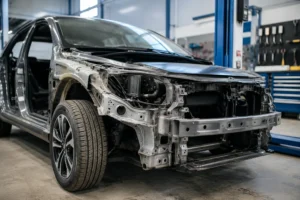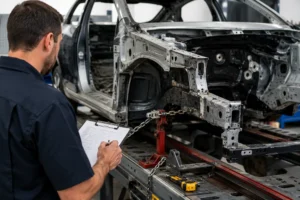
A car accident can create far more damage than what you see on the surface. A bent fender or cracked bumper is obvious. Hidden structural damage, sensor issues, and compromised safety systems are not. This is where OEM repair procedures become one of the most important parts of the repair process.
Today’s vehicles are more advanced than ever. They contain high-strength steel, aluminum components, radar sensors, cameras, and sophisticated safety systems designed to protect occupants during a crash. Repairing these vehicles correctly requires more than replacing damaged parts. It requires following manufacturer-approved OEM repair procedures that specify exactly how repairs should be performed.
Unfortunately, many vehicle owners never hear about these procedures until a dispute arises. Sometimes the insurance estimate does not include all required repair operations. Other times a repair facility discovers additional work after disassembly. Understanding how OEM repair procedures affect your vehicle, your safety, and your insurance claim can help you make informed decisions after an accident.
What Are OEM Repair Procedures?
OEM stands for Original Equipment Manufacturer. In simple terms, it refers to the company that built your vehicle.
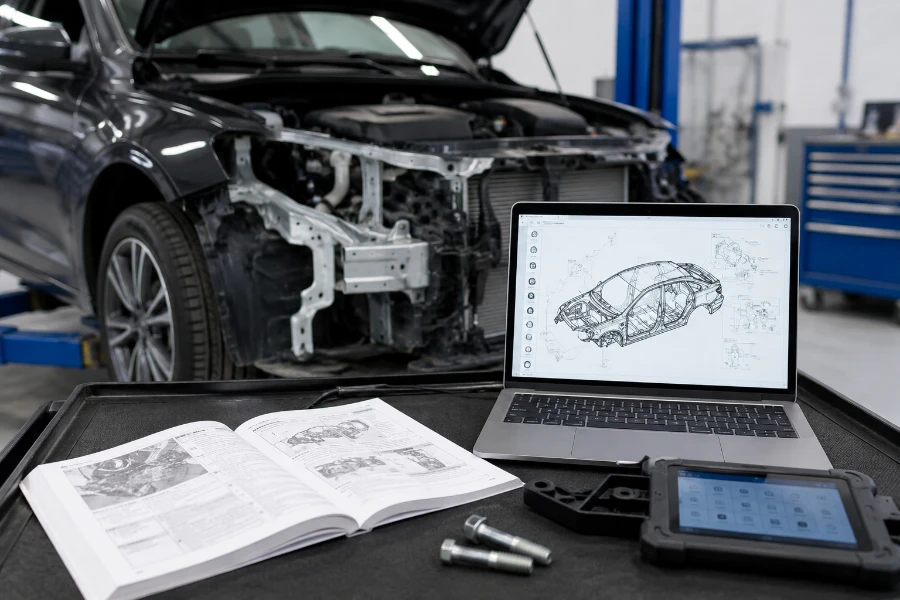
OEM repair procedures are detailed instructions created by vehicle manufacturers that explain how collision repairs should be performed. These procedures are based on engineering data, crash testing, and manufacturer specifications.
They provide guidance on:
- Structural repairs
- Panel replacement
- Welding techniques
- Sensor calibrations
- Diagnostic scanning
- Corrosion protection
- Fastener replacement
- Safety system verification
Think of them as the repair blueprint for your vehicle.
Without these instructions, technicians would be left making assumptions about critical repair operations.
Why Manufacturers Create Repair Procedures
Automakers spend years developing vehicle structures that protect occupants during collisions. Every material, weld point, and sensor placement serves a specific purpose.
When a vehicle is damaged, manufacturers want repairs completed in a way that restores the vehicle as closely as possible to its original condition.
Their goals include:
- Maintaining crashworthiness
- Preserving structural integrity
- Protecting advanced safety systems
- Supporting long-term durability
- Reducing future safety risks
A vehicle may look perfect after repairs, but appearance alone does not guarantee safety. Proper repairs depend on following OEM repair procedures.
Where Repair Shops Obtain OEM Information
Professional repair facilities typically access repair information through manufacturer-approved sources.
These include:
| Source | Purpose |
| OEM Repair Portals | Official repair procedures |
| Technical Databases | Vehicle-specific information |
| Manufacturer Subscriptions | Current repair updates |
| OEM Certification Programs | Training and standards |
Because repair requirements change regularly, shops must stay current with the latest manufacturer recommendations.
Why OEM Procedures Matter More Than Ever
Vehicle technology has changed dramatically over the last decade.
Repairs that were once simple have become increasingly complex.
Advanced Materials Require Specialized Repairs
Modern vehicles often combine multiple materials throughout the body structure.
Common examples include:
- High-strength steel
- Ultra-high-strength steel
- Aluminum
- Magnesium
- Composite materials
Each material behaves differently during a collision and requires different repair methods.
For example, certain ultra-high-strength steel components may need complete replacement rather than straightening. Attempting a repair that contradicts manufacturer recommendations can weaken the structure and reduce occupant protection.
This is one reason OEM repair procedures have become so important.
ADAS Systems Demand Precision
Advanced Driver Assistance Systems (ADAS) have transformed vehicle safety.
These systems include:
- Automatic emergency braking
- Adaptive cruise control
- Blind spot monitoring
- Lane departure warning
- Collision avoidance technology
The sensors that support these features operate within extremely tight tolerances.
A small change in sensor position can affect performance.
That is why manufacturers frequently require calibrations after collision repairs.
Small Errors Can Lead to Big Problems
A repair shortcut may save time initially.
It can also create major problems later.
Examples include:
- Improper welding techniques
- Missed sensor calibrations
- Reused one-time-use hardware
- Incomplete corrosion protection
These issues may not be visible when the vehicle leaves the shop. However, they can affect safety, reliability, and resale value for years.
Common OEM Repair Requirements Insurance Estimates Miss

Insurance estimates are often written before repairs begin.
At that stage, appraisers can only evaluate visible damage.
Once the vehicle is disassembled, additional requirements frequently emerge.
This creates a gap between the original estimate and the actual repair process.
In fact, this situation is very similar to what is discussed in AutoAdjusting’s article on insurance estimate vs actual repair cost.
Pre-Repair Scanning
Most manufacturers require diagnostic scanning before repairs begin.
This process helps identify:
- Hidden damage
- Electronic faults
- System communication issues
- Safety system concerns
Without a pre-repair scan, important problems may remain undetected.
Post-Repair Scanning
Repair work is not complete when replacement parts are installed.
Manufacturers often require post-repair scanning to verify that all systems are functioning properly.
This step helps confirm:
- Fault codes are cleared
- Modules communicate correctly
- Repairs were completed successfully
ADAS Calibrations
One of the most commonly overlooked operations involves ADAS calibration.
Many manufacturers require calibration after:
- Windshield replacement
- Structural repairs
- Suspension repairs
- Front-end damage
- Rear-end damage
Calibration ensures cameras and sensors function as designed.
Without it, safety systems may not perform properly when needed most.
One-Time-Use Fasteners
Not all hardware can be reused.
Manufacturers frequently designate specific components as one-time-use items.
Examples include:
- Torque-to-yield bolts
- Structural rivets
- Certain clips and retainers
- Specialized mounting hardware
Replacing these items helps preserve structural integrity and repair quality.
Structural Verification and Weld Testing
Some repair procedures require extensive verification processes.
These may include:
- Structural measurements
- Weld testing
- Alignment checks
- Destructive test weld samples
These steps help ensure repairs meet manufacturer standards rather than relying on visual inspection alone.
Corrosion Protection Restoration
During repairs, factory corrosion protection is often disturbed or removed.
Manufacturers may require:
- Seam sealing
- Undercoating restoration
- Anti-corrosion coatings
- Cavity wax application
Ignoring these procedures can result in premature corrosion and long-term durability concerns.
How OEM Procedures Affect Insurance Claims
This is where many vehicle owners become frustrated.
The repair facility identifies manufacturer-required operations, but the original insurance estimate may not include them.
That difference often leads to supplements.
A supplement is simply a request for additional payment when newly discovered damage or required repair operations emerge during the repair process.
Many vehicle owners encounter this issue when pursuing supplemental insurance claims after hidden damage or OEM-required procedures are discovered.
Supplements are extremely common in modern collision repairs because vehicle complexity continues to increase.
They are not necessarily evidence of a bad estimate. They often reflect information that was unavailable during the initial inspection.
The Safety Consequences of Ignoring OEM Procedures
Vehicle owners often assume that if a repaired vehicle looks good, the job was done correctly.
Unfortunately, appearance tells only part of the story.
Many critical repair operations are hidden beneath exterior panels. When OEM repair procedures are ignored, the consequences may not become obvious until another collision occurs.
Reduced Crash Protection
Modern vehicles are designed to absorb and redirect crash energy through components such as crumple zones and structural reinforcements that work together during an impact.
Manufacturers engineer crumple zones, reinforcements, and structural components to work together during an impact.
If repairs fail to follow OEM requirements, several problems can occur:
- Structural components may not perform as intended.
- Crash energy may not be redirected properly.
- Occupant protection may be reduced.
- Future repair costs may increase.
A vehicle can pass a visual inspection while still having compromised structural integrity.
That is why manufacturers place so much emphasis on proper repair methods.
Malfunctioning Safety Systems
Today’s vehicles rely heavily on electronic safety systems.
Airbags, radar sensors, cameras, and collision avoidance technologies must work together seamlessly.
If required calibrations are skipped or performed incorrectly, the vehicle may experience:
- False warnings
- Delayed responses
- Inaccurate sensor readings
- Reduced effectiveness of driver-assistance features
These issues may not be noticeable during normal driving. They often appear only when the system is called upon during a dangerous situation.
Long-Term Reliability Issues
Not every repair problem shows up immediately.
Some issues take months or even years to develop.
For example:
- Missing corrosion protection can lead to rust.
- Improperly repaired panels may deteriorate faster.
- Incorrect fasteners can loosen over time.
- Electrical systems may develop intermittent faults.
Following OEM repair procedures helps reduce the likelihood of these long-term problems.
Potential Liability Concerns
Repair decisions can have consequences beyond vehicle performance.
If a future accident occurs and investigators discover repairs were not completed according to manufacturer recommendations, questions may arise regarding:
- Repair quality
- Shop procedures
- Documentation
- Vehicle safety
While every situation is different, proper repairs help reduce uncertainty and support safer outcomes.
OEM Procedures and Diminished Vehicle Value

Many vehicle owners focus on getting their vehicle repaired.
Fewer consider how repair quality affects resale value.
The reality is simple.
Poor repairs can cost money long after the repair bill is paid.
How Improper Repairs Affect Resale Value
Buyers today are more informed than ever.
Vehicle history reports, pre-purchase inspections, and dealership evaluations often reveal prior accident damage.
Potential buyers may become concerned if:
- Repairs appear incomplete
- Safety systems were not calibrated
- Structural work lacks documentation
- Manufacturer procedures were not followed
These concerns can reduce buyer confidence and lower resale value.
Why Documentation Matters
Good documentation creates transparency.
When repairs follow OEM repair procedures, owners should keep records that include:
- Repair estimates
- Supplement approvals
- Diagnostic scan reports
- Calibration reports
- Repair invoices
- OEM procedure documentation
These records can help demonstrate that repairs were completed properly.
The Connection Between Repair Quality and Market Value
A vehicle repaired according to manufacturer standards is generally in a stronger position when it comes to resale discussions.
Buyers may still recognize prior damage.
However, detailed documentation showing compliance with OEM requirements often inspires greater confidence than incomplete records.
Protecting vehicle value starts with protecting repair quality.
How Vehicle Owners Can Protect Themselves
Many people feel overwhelmed after an accident.
Between insurance adjusters, repair facilities, rental vehicles, and paperwork, it can feel like information is coming from every direction.
The good news is that a few simple steps can help protect your interests.
Request OEM Repair Documentation
Do not be afraid to ask questions.
Ask the repair facility:
- Are OEM repair procedures being followed?
- Have manufacturer procedures been reviewed?
- Are calibrations required?
- Will scans be performed?
- Can you provide supporting documentation?
A reputable repair facility should be comfortable discussing these topics.
Verify Shop Qualifications
Not all repair facilities have the same level of training and equipment.
Consider asking:
- Does the shop have OEM certifications?
- Have technicians received manufacturer training?
- Does the facility have calibration equipment?
- Does the shop regularly repair your vehicle make?
Experience matters.
So does access to the right information.
Keep Detailed Records
Documentation becomes especially important if a dispute develops later.
Keep copies of:
- Initial estimates
- Supplement requests
- Repair invoices
- Photos
- Correspondence
- Calibration reports
Organized records make it easier to address questions and support future claims.
Understand Your Rights
Vehicle owners often have more options than they realize.
Depending on state laws and policy language, you may have rights regarding:
- Repair facility selection
- Independent inspections
- Supplemental payments
- Claim disputes
- Appraisal processes
Understanding these rights can help prevent costly mistakes.
How AutoAdjusting Helps Vehicle Owners
Repair estimates can be complicated.
Manufacturer repair procedures add another layer of complexity.
That is where independent analysis becomes valuable.
Reviewing Repair Estimates for Missing OEM Procedures
AutoAdjusting helps vehicle owners identify potential gaps between repair estimates and manufacturer requirements.
This may include reviewing:
- Diagnostic operations
- Calibration requirements
- Structural procedures
- Manufacturer-mandated repair steps
- Hidden damage considerations
The goal is to determine whether critical operations may have been overlooked.
Supporting Insurance Claim Disputes
Insurance claims occasionally involve disagreements regarding repair costs.
Common issues include:
- Missing repair operations
- Supplement disputes
- Repair versus replacement decisions
- OEM procedure disagreements
Independent appraisal support can help vehicle owners better understand the repair process and supporting documentation.
Helping Owners Pursue Fair Settlements
Every claim is different.
Some involve repair disputes.
Others involve total loss valuations or diminished value concerns.
By reviewing available documentation and repair information, AutoAdjusting helps vehicle owners evaluate whether settlement offers accurately reflect the damage and repair requirements.
Providing Objective Vehicle Damage Evaluations
Objectivity matters.
Rather than relying solely on opinions, independent evaluations focus on:
- Repair documentation
- Manufacturer requirements
- Industry standards
- Supporting evidence
This approach helps create a clearer picture of the vehicle’s condition and repair needs.
Conclusion
Vehicle repairs are no longer as simple as replacing damaged parts and applying fresh paint. Modern vehicles contain advanced materials, sophisticated electronics, and safety systems that require precise attention throughout the repair process.
That is why OEM repair procedures matter so much.
They help protect vehicle occupants, preserve structural integrity, support advanced safety systems, and maintain long-term value. More importantly, they provide a roadmap for restoring a vehicle according to the standards established by the manufacturer.
When insurance estimates, repair plans, and manufacturer requirements do not align, vehicle owners can find themselves facing difficult questions. Understanding the role of OEM repair procedures makes those conversations easier and helps ensure important repair operations are not overlooked.
If questions arise regarding repair estimates, supplements, vehicle value, or claim disputes, an independent review can provide clarity. The more informed you are about the repair process, the better positioned you will be to protect both your vehicle and your financial interests after an accident.
FAQs
OEM repair procedures are manufacturer-issued instructions that explain how a vehicle should be repaired after a collision to restore safety and performance.
They help ensure repairs meet the standards established by the vehicle manufacturer and maintain critical safety features.
Not always. Some manufacturer-required operations may only be identified after the vehicle is disassembled during repairs.
An ADAS calibration adjusts cameras, radar sensors, and other driver-assistance technologies after repairs to ensure they function properly.
Yes. Hidden structural damage or missed repair procedures can affect safety even if the vehicle appears fully repaired.
They often require additional labor, specialized equipment, diagnostic scans, and manufacturer-approved repair methods.
These are bolts, fasteners, and other components that manufacturers require to be replaced rather than reused after removal.
Yes. Improper repairs or missing documentation can raise concerns for buyers and potentially reduce vehicle value.
Ask whether they reviewed OEM repair procedures, performed required scans, and completed any necessary calibrations.
AutoAdjusting can review repair estimates, identify potentially missing OEM-required operations, and assist with appraisal-related claim disputes.