
Getting a call from the insurance company after your vehicle has been declared a total loss is stressful enough.
Then the settlement offer arrives.
You review the number. You compare it to what similar vehicles are selling for in your area and you start searching dealership websites. Suddenly, one thing becomes obvious: the total loss settlement too low offer sitting in front of you may not be enough to replace your vehicle.
Unfortunately, this situation is more common than many drivers realize.
Insurance companies rely on valuation systems, market reports, and comparable vehicle data to determine what they believe your vehicle was worth before the loss occurred. While these systems are designed to be consistent, they are not perfect. Errors happen. Important vehicle features get overlooked. Comparable vehicles may not truly be comparable.
The good news?
You do not have to accept an undervalued settlement without asking questions.
Understanding how total loss valuations work—and knowing how to challenge mistakes—can make a substantial difference in the final outcome of your claim.
What Does “Total Loss Settlement Too Low” Actually Mean?
A total loss occurs when the cost to repair a damaged vehicle exceeds a certain percentage of its value, or when state regulations require the insurer to declare it a total loss.
Once that determination is made, the insurance company calculates what it believes the vehicle was worth immediately before the loss occurred.
This amount is commonly referred to as the Actual Cash Value (ACV).
The problem arises when the settlement amount does not accurately reflect what it would cost to purchase a similar vehicle in today’s market.
That is when vehicle owners begin asking whether their total loss settlement too low offer truly reflects fair market value.
Understanding Actual Cash Value
Actual Cash Value is not replacement cost.
Instead, it is the insurer’s estimate of your vehicle’s pre-loss market value after considering factors such as:
- Age
- Mileage
- Condition
- Vehicle history
- Market demand
- Comparable vehicle sales
The concept sounds straightforward.
The execution is where problems often occur.
How Insurance Companies Calculate Total Loss Settlements
Most insurance companies use third-party valuation vendors to determine vehicle values.
These systems analyze large amounts of market data and attempt to identify comparable vehicles.
The resulting report becomes the foundation for the settlement offer.
Insurance valuation systems rely heavily on data analysis and statistical modeling. In some ways, this process resembles Bayesian inference, where estimates are refined as additional information becomes available. While vehicle valuations are not calculated exactly this way, both approaches depend on using available data to reach a reasonable conclusion.
Factors That Influence Vehicle Value
| Factor | Impact on Value |
| Vehicle Age | Older vehicles typically depreciate |
| Mileage | Higher mileage often lowers value |
| Condition | Better condition generally increases value |
| Trim Level | Premium trims command higher prices |
| Optional Equipment | Added features may increase value |
| Local Demand | Market conditions influence pricing |
On paper, this process seems reasonable.
However, even small errors can significantly affect the final valuation.
A missing technology package.
An incorrect mileage entry.
A lower trim level used for comparison.
Each can reduce the settlement amount.
Common Reasons a Total Loss Settlement Is Too Low
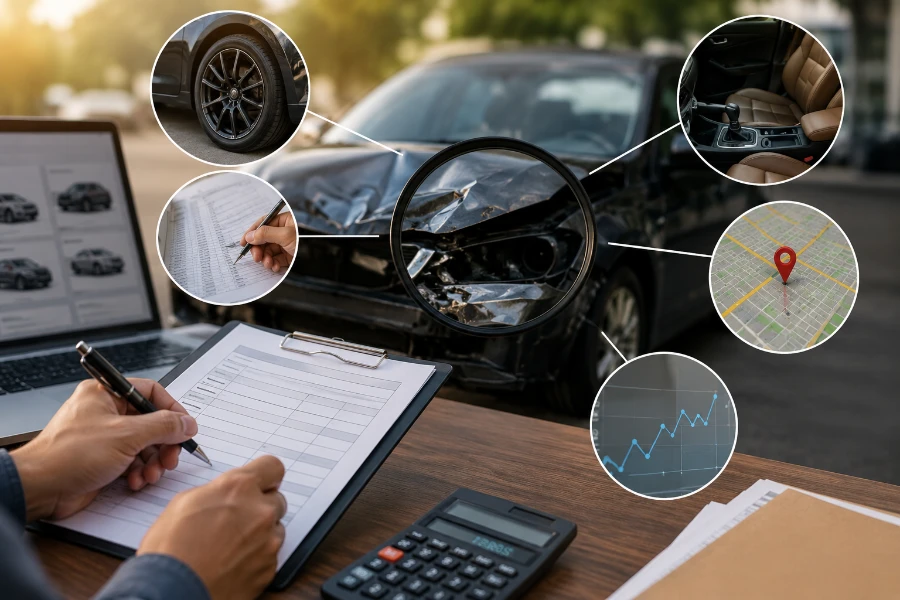
Many consumers assume the insurance company’s valuation is automatically accurate.
That assumption can be expensive.
Let’s examine some of the most common causes behind a total loss settlement too low dispute.
Comparable Vehicles Are Not Truly Comparable
This issue appears frequently.
Valuation systems may select vehicles that share the same make and model but differ significantly in equipment and features.
For example:
- Base trim compared to premium trim
- Front-wheel drive compared to all-wheel drive
- Cloth seats compared to leather interiors
- Standard audio compared to premium sound systems
Small differences add up quickly.
Missing Factory Options
Modern vehicles often include thousands of dollars in optional equipment.
Examples include:
- Advanced safety packages
- Navigation systems
- Panoramic sunroofs
- Premium wheels
- Driver assistance technology
If these options are omitted from the valuation report, your vehicle’s value may be understated.
Incorrect Condition Adjustments
Insurance reports often assign condition ratings.
These ratings affect value.
A vehicle that was exceptionally well maintained may deserve a higher condition rating than the one assigned during the valuation process.
Maintenance records and photographs can become important evidence here.
Geographic Pricing Errors
Vehicle prices vary dramatically by region.
A truck in Texas may sell for more than the same truck in another state.
A luxury SUV in a metropolitan area may command stronger pricing than one in a rural market.
When comparable vehicles come from distant markets, valuations can become distorted.
Outdated Market Data
The used vehicle market changes quickly.
Inventory shortages, seasonal demand, and economic conditions can influence prices within weeks.
If outdated data is used, the settlement may fail to reflect current market realities.
Signs Your Settlement Offer May Be Inaccurate
Not every settlement is wrong.
But several warning signs should prompt a closer review.
Red Flags to Watch For
- The offer seems substantially lower than similar vehicles for sale
- The report lists incorrect mileage
- Factory options are missing
- The trim level is incorrect
- Comparable vehicles appear significantly different
- Vehicle condition ratings seem unfair
If several of these issues appear, there is a strong possibility the total loss settlement too low concern is justified.
Reviewing the Insurance Valuation Report
One of the most effective actions you can take is requesting a complete copy of the valuation report.
Never rely solely on the settlement letter.
The detailed report often contains valuable information.
Review These Areas Carefully
| Report Section | What to Verify |
| Vehicle Identification | Year, make, model, trim |
| Mileage | Accuracy of odometer reading |
| Equipment List | Included options and packages |
| Condition Adjustments | Fair assessment of condition |
| Comparable Vehicles | Similarity to your vehicle |
| Market Area | Geographic relevance |
A careful review often uncovers discrepancies.
Some are minor.
Others can materially affect value.
What To Do Before Accepting a Low Settlement
Time matters.
Once you accept a settlement and sign release documents, reopening negotiations becomes difficult.
Before agreeing to anything, gather evidence.
Step 1: Obtain the Full Valuation Report
This should be your starting point.
Without it, you cannot evaluate how the insurer arrived at its number.
Step 2: Gather Supporting Documentation
Helpful documents include:
- Maintenance records
- Service receipts
- Upgrade invoices
- Recent photographs
- Vehicle purchase documents
The stronger your documentation, the stronger your position.
Step 3: Research Current Market Prices
Look for vehicles matching:
- Year
- Make
- Model
- Trim level
- Mileage range
- Equipment level
Focus on vehicles actually available for sale.
Current listings often provide valuable insight into real-world replacement costs. Broader economic trends can also influence used vehicle pricing. The U.S. Bureau of Labor Statistics tracks inflation and market data that can help explain why vehicle prices fluctuate over time.
How Independent Auto Appraisals Strengthen Your Case
This is where many vehicle owners gain leverage.
An independent auto appraisal provides an objective evaluation performed by a professional appraiser rather than the insurance company’s valuation vendor. Understanding the full car appraisal process can help vehicle owners understand how appraisers evaluate vehicle condition, market trends, comparable sales, and supporting documentation when determining fair market value.
What an Independent Appraiser Examines
A qualified appraiser typically reviews:
- Vehicle specifications
- Market data
- Condition
- Comparable sales
- Optional equipment
- Regional pricing trends
The goal is simple.
Determine fair market value based on evidence.
Not assumptions.
Why Independent Appraisals Matter
Insurance valuation reports are not immune from errors.
An independent appraisal can:
- Identify valuation mistakes
- Verify comparable vehicles
- Document omitted equipment
- Establish fair market value
- Support negotiations
For many owners facing a total loss settlement too low dispute, independent appraisals become a critical tool.
Can You Negotiate a Total Loss Settlement?
Absolutely.
Many consumers mistakenly believe the first offer is final.
It rarely is.
Settlement negotiations occur every day.
Effective Negotiation Strategies
Start with facts.
Not emotions.
Provide evidence showing why the valuation should be reconsidered.
Useful evidence may include:
- Comparable vehicle listings
- Service records
- Upgrade documentation
- Independent appraisal reports
The more objective your evidence, the stronger your argument.
Mistakes to Avoid
Avoid these common errors:
- Accepting the first offer immediately
- Arguing without documentation
- Ignoring valuation report mistakes
- Using unrelated vehicle listings
Successful negotiations rely on evidence.
Not opinions.
When the Appraisal Clause Becomes Important

Some insurance policies contain an appraisal clause.
This provision can become valuable when negotiations stall.
What Is the Appraisal Clause?
The appraisal clause provides a formal process for resolving disputes over vehicle value.
It does not determine coverage.
It focuses on valuation.
Typically:
- The vehicle owner hires an appraiser.
- The insurer hires its own appraiser.
- The two appraisers select an umpire.
- Value disputes are reviewed and resolved.
This process often results in a more balanced valuation.
When Appraisal Makes Sense
Appraisal may be appropriate when:
- Negotiations have failed
- Value differences are substantial
- Significant valuation errors exist
- Independent evidence supports a higher value
For consumers dealing with a total loss settlement too low situation, appraisal can provide a structured path toward resolution.
Real-World Examples of Undervalued Total Loss Claims
Example 1: Missing Factory Equipment
A luxury SUV included an advanced technology package worth several thousand dollars.
The valuation report omitted the package entirely.
After correction, the vehicle value increased substantially.
Example 2: Incorrect Trim Level
A premium trim vehicle was compared to lower-level models.
The valuation report undervalued the vehicle because the comparables did not match.
Once corrected, the settlement increased.
Example 3: Specialty Modifications
A truck included upgraded suspension components, wheels, and towing equipment.
These additions were not fully considered initially.
Additional documentation helped establish a higher valuation.
If your vehicle suffered substantial damage before being declared a total loss, a professional car appraisal after an accident can help uncover valuation discrepancies that may not appear in an insurance company’s original report.
These situations occur more often than most people realize.
How AutoAdjusting Helps Vehicle Owners Challenge Low Settlements
At AutoAdjusting, the focus is on one thing.
Accurate vehicle valuation.
When drivers believe their total loss settlement too low offer does not reflect fair market value, an independent review can uncover errors that may have gone unnoticed.
Independent Vehicle Appraisals
Professional appraisers evaluate:
- Vehicle specifications
- Market conditions
- Comparable vehicles
- Equipment levels
- Regional pricing trends
Total Loss Valuation Reviews
Detailed reviews help identify:
- Incorrect comparables
- Missing options
- Mileage errors
- Improper adjustments
Appraisal Clause Representation
When appraisal becomes necessary, experienced appraisers can represent vehicle owners throughout the process.
The objective remains the same.
Pursue a fair, evidence-based vehicle value.
Final Thoughts
Receiving a total loss settlement too low offer can feel discouraging.
However, it is important to remember that the initial valuation is not always the final word.
Insurance valuation systems are useful tools, but they are not infallible. Errors, omissions, and inaccurate comparisons occur every day. Vehicle owners who carefully review valuation reports, gather supporting documentation, and seek independent professional opinions often discover opportunities to challenge undervalued offers.
The key is taking action before accepting the settlement.
Review the report.
Verify the facts.
Question discrepancies.
And when necessary, seek an independent appraisal from professionals who understand vehicle valuation disputes.
A fair settlement starts with an accurate value. When that value is challenged, knowledge becomes one of your most powerful assets.
FAQs
It means the insurance company’s valuation may not accurately reflect your vehicle’s actual market value before the loss.
Yes. You are generally not required to accept the first offer if you believe the valuation is incorrect.
They typically use valuation reports based on comparable vehicles, mileage, condition, and market data.
Request the full valuation report and review it carefully for errors or missing vehicle features.
Yes. Omitted factory options or upgrades can reduce the calculated value of your vehicle.
Provide maintenance records, receipts, photographs, and comparable vehicle listings that support a higher value.
An independent appraisal can identify valuation errors and provide evidence to support a higher settlement.
It is a process that allows disputes over vehicle value to be resolved by independent appraisers and an umpire.
The timeframe varies by insurer and state, so it is best to act as soon as possible after receiving the offer.
Yes. AutoAdjusting provides independent vehicle appraisals and valuation reviews to help support fair settlements.