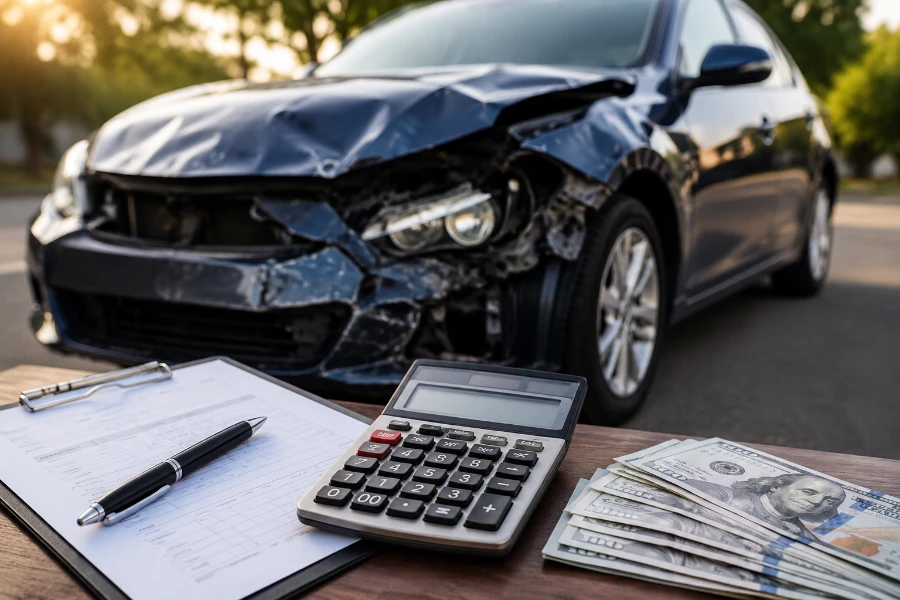
Most vehicle owners focus on repair estimates after a collision. That’s understandable. The visible damage demands attention, and getting the vehicle back on the road feels like the immediate priority.
But there is another financial consequence that often receives far less attention.
Car value after accident can decline significantly, even when repairs are completed perfectly.
That surprises many drivers. They assume that once the dents are removed, the paint is matched, and the vehicle looks like new, its value returns to normal. Unfortunately, the market doesn’t always see it that way.
A vehicle’s accident history can follow it for years. Future buyers, dealerships, and appraisers frequently view accident-related vehicles differently than identical vehicles with clean histories. As a result, owners may discover that their car is worth less than expected when it’s time to sell, trade in, or negotiate with an insurance company.
Understanding how accidents affect value is essential. Whether you’ve recently been involved in a collision or simply want to protect your investment, knowing what influences vehicle value can help you make smarter decisions.
What Happens to Car Value After an Accident?
The moment an accident occurs, a vehicle’s market perception changes.
Even if repairs eventually restore the vehicle’s appearance and functionality, the accident itself often becomes part of the vehicle’s permanent history. That history can influence future buyers and valuation professionals alike.
Think about it from a buyer’s perspective.
If two identical vehicles are sitting side by side on a dealership lot, with similar mileage, features, and condition, but one has a documented accident history while the other does not, which one would most buyers choose?
The answer is usually obvious.
The vehicle without accident history often commands a higher price because buyers perceive less risk.
This is why car value after accident frequently decreases, regardless of repair quality.
Key Takeaway
A repaired vehicle may look identical to its pre-accident condition, but market value often tells a different story.
Why Cars Lose Value Even After Professional Repairs
Many owners struggle with this concept. If the vehicle has been repaired properly, why should it be worth less?
The answer comes down to perception, risk, and market demand.
Vehicle History Reports Follow the Car
Today’s buyers have access to more information than ever before.
Vehicle history services often collect accident-related information and make it available to prospective buyers. When an accident appears on a vehicle history report, it can influence purchasing decisions long after repairs are completed.
A buyer who sees accident history may wonder:
- Was the damage severe?
- Were repairs performed correctly?
- Could hidden problems appear later?
- Will resale value be affected again?
Those concerns create downward pressure on value.
Buyer Concerns About Hidden Damage
Even high-quality repairs cannot eliminate every buyer concern.
Potential purchasers frequently worry about:
- Structural integrity
- Frame alignment
- Airbag performance
- Suspension issues
- Long-term reliability
In many cases, those concerns are based on uncertainty rather than actual defects. Nevertheless, uncertainty influences market behavior. Buyer behavior is not always driven purely by facts. In many cases, purchasing decisions are influenced by risk assessment and even forms of heuristics, where people rely on mental shortcuts when evaluating whether a vehicle with accident history represents a good investment.
Reduced Market Demand
Accident-free vehicles generally attract more buyers.
When demand decreases, sellers often have fewer options and less negotiating power. Dealerships know this. Private buyers know it too.
The result?
Lower offers.
This market reality is one of the primary reasons car value after accident tends to decline.
How Much Does a Car’s Value Drop After an Accident?
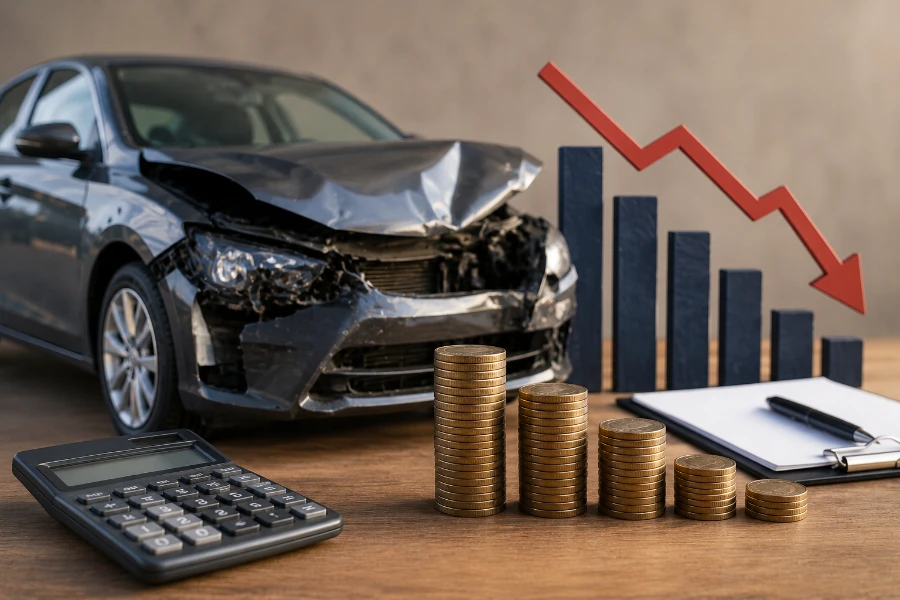
There is no universal answer.
Every vehicle is different, and every accident produces unique circumstances. However, certain trends are commonly observed throughout the automotive marketplace.
| Damage Severity | Typical Value Loss |
| Minor Cosmetic Damage | 5%–10% |
| Moderate Collision Damage | 10%–25% |
| Major Structural Damage | 25%–50%+ |
These percentages are estimates rather than guarantees.
Vehicle age, repair quality, mileage, and market demand all influence the final outcome.
Minor Cosmetic Damage
Minor incidents may involve:
- Small dents
- Bumper repairs
- Scratches
- Paint corrections
Although value loss may be limited, some reduction can still occur because the accident remains part of the vehicle’s history.
Moderate Collision Damage
More significant repairs often involve:
- Multiple body panels
- Airbag deployment
- Suspension repairs
- Mechanical component replacement
These situations frequently produce larger diminished value losses because buyers perceive greater risk.
Major Structural Damage
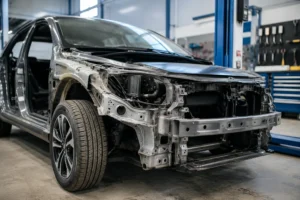
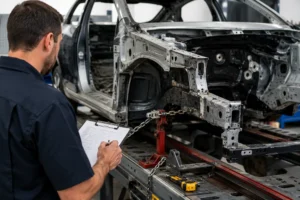
When frame damage or major reconstruction occurs, value reductions can become substantial.
Structural repairs often trigger concerns regarding safety, alignment, and long-term reliability. Consequently, buyers may demand significant discounts before considering purchase.
Factors That Influence Car Value After Accident
Not all vehicles experience the same level of diminished value.
Several factors determine how much market value may be lost.
Vehicle Age
Newer vehicles often suffer larger value reductions.
Why?
Because buyers expect newer vehicles to have clean histories.
A three-year-old luxury sedan with accident history may lose more value than a fifteen-year-old vehicle that already has substantial depreciation.
Vehicle Make and Model
Some vehicles are more sensitive to accident history than others.
Examples include:
- Luxury vehicles
- Performance cars
- Exotic vehicles
- High-demand collector models
Buyers in these markets often scrutinize vehicle history very closely.
Mileage
Lower-mileage vehicles generally have more value to lose.
A vehicle with 20,000 miles often attracts stronger buyer interest than one with 180,000 miles. Consequently, accident-related value reductions can be more noticeable.
Severity of Damage
This factor may seem obvious, but it remains one of the most important.
Cosmetic repairs typically affect value less than structural repairs.
Frame damage, airbag deployment, and extensive reconstruction usually create larger market penalties.
Quality of Repairs
Repair quality matters.
Vehicles repaired using proper procedures, certified facilities, and quality replacement parts may retain more value than vehicles repaired using shortcuts or substandard components.
However, even exceptional repairs may not eliminate diminished value entirely.
Understanding Diminished Value
One of the most important concepts vehicle owners should understand is diminished value.
Simply put, diminished value refers to the difference between a vehicle’s value before an accident and its value afterward.
Even after repairs are completed, that difference may still exist.
What Is Diminished Value?
Diminished value reflects the marketplace’s reaction to accident history.
Buyers frequently pay less for vehicles with documented collision records, creating a measurable reduction in value.
Immediate Diminished Value
This refers to the reduction in value immediately after an accident occurs but before repairs are completed.
The vehicle is damaged and therefore worth less than it was before the collision.
Inherent Diminished Value
This is often the most commonly discussed form of diminished value.
The vehicle has been repaired, but accident history remains. Buyers know about the accident and adjust their offers accordingly.
Repair-Related Diminished Value
Sometimes repairs themselves contribute to additional value loss.
Examples include:
- Paint mismatches
- Visible repair marks
- Panel alignment issues
- Non-original components
These factors can further reduce market value beyond the accident history itself.
How Vehicle History Reports Affect Resale Value
Vehicle history reports have fundamentally changed the used car marketplace.
Years ago, buyers relied heavily on visual inspections and seller disclosures.
Today, information is much easier to access.
A prospective buyer can often review accident history before even visiting the vehicle.
This transparency benefits consumers, but it also means accident records can influence value for years.
Consider two identical vehicles:
- Same year
- Same model
- Same mileage
- Same condition
The only difference is accident history.
In many situations, the accident-free vehicle receives stronger offers and sells faster.
That’s why understanding car value after accident is so important. The financial impact often extends far beyond the repair invoice itself.
Can You Recover Lost Value Through a Diminished Value Claim?
For many vehicle owners, discovering that their car is worth less after an accident leads to an obvious question:
Can that lost value be recovered?
In some situations, the answer may be yes.
A diminished value claim is designed to compensate a vehicle owner for the reduction in market value that remains after repairs have been completed.
However, eligibility varies depending on state laws, insurance policies, and the circumstances of the accident.
Before pursuing a diminished value claim, it’s important to understand how professional valuations are prepared and what documentation may be required. Vehicle owners often ask about appraisal costs, report details, and whether the process is worth it. Our guide on how much does a car appraisal cost explains the different appraisal types and how valuation reports are commonly used in accident-related disputes.
When Diminished Value Claims Often Apply
Diminished value claims are most commonly associated with third-party insurance claims.
In simple terms, if another driver caused the accident, you may have an opportunity to pursue compensation for the loss in value that resulted from their negligence.
Because regulations vary, vehicle owners should carefully review their specific situation before proceeding.
Evidence That Can Strengthen a Claim
Insurance companies typically require documentation.
The stronger your evidence, the stronger your position.
Useful documentation may include:
- Repair invoices
- Photographs of damage
- Vehicle history records
- Accident reports
- Market valuation data
- Independent appraisal reports
A well-documented claim is generally more persuasive than a claim supported only by assumptions.
Why a Professional Auto Appraisal Matters After an Accident
One of the biggest mistakes vehicle owners make is assuming that insurance company valuations are automatically accurate.
They are not always wrong.
But they are not always complete, either.
That’s why independent appraisals can be extremely valuable.
Many vehicle owners don’t realize how much documentation influences claim outcomes. A professional appraisal provides an independent valuation that can support diminished value discussions, settlement negotiations, and resale decisions. If you’re unsure how the process works, our guide on car appraisal after accident explains what appraisers evaluate and why post-collision valuations often reveal losses that repair estimates alone cannot capture.
Determining Actual Market Loss
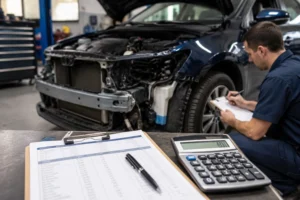
A professional appraiser evaluates the vehicle’s condition, accident history, repair information, and local market data to determine how much value may have been lost.
This process creates a more objective picture of the vehicle’s current worth.
Rather than relying on generic formulas, an appraisal examines the specific vehicle involved.
Supporting Insurance Negotiations
Insurance companies often rely on internal valuation methods.
Independent appraisals provide additional information that may support negotiations when disagreements arise.
Documentation matters.
Numbers backed by analysis generally carry more weight than unsupported opinions.
Helping Owners Make Better Decisions
Sometimes the goal isn’t filing a claim.
Sometimes owners simply want answers.
Questions such as:
- Should I keep the vehicle?
- Should I sell it?
- What should I accept as a trade-in offer?
- Is the insurance settlement reasonable?
A professional appraisal can provide clarity.
Avoiding Lowball Evaluations
Many vehicle owners never discover the true extent of their diminished value because they never obtain an independent assessment.
Without a reliable valuation, it becomes difficult to determine whether an offer accurately reflects market conditions.
This is where post-accident appraisals can provide significant value.
Common Myths About Car Value After Accident
Misunderstandings about vehicle value are everywhere.
Let’s separate fact from fiction.
Myth #1: Repairs Restore Full Value
Repairs restore functionality and appearance.
They do not automatically restore market perception.
Accident history can continue affecting value long after repairs are complete.
Myth #2: Only Luxury Cars Experience Diminished Value
Luxury vehicles often experience significant losses, but they are not alone.
Mainstream sedans, trucks, SUVs, and even economy cars can experience diminished value.
Myth #3: Older Vehicles Cannot Lose Value
Older vehicles may have less value to lose, but accident history can still influence pricing.
The impact simply varies based on market conditions and vehicle characteristics.
Myth #4: Insurance Companies Automatically Pay Diminished Value
Many vehicle owners assume diminished value compensation is automatic.
It often isn’t.
In many cases, owners must actively pursue the issue and provide supporting evidence.
Myth #5: Buyers Don’t Care About Accident History
The marketplace says otherwise.
Dealerships, wholesalers, and private buyers frequently adjust offers based on accident records.
The difference may be minor in some cases and substantial in others, but it often exists.
What To Do Immediately After an Accident to Protect Vehicle Value
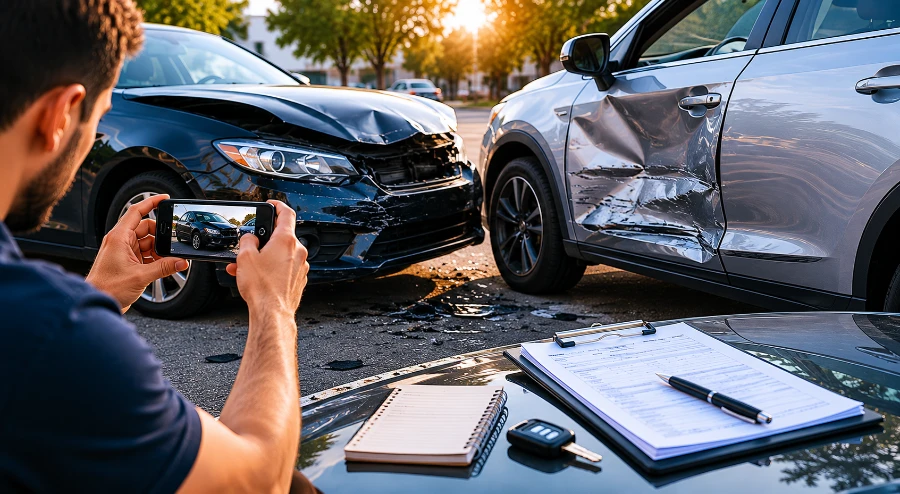
The actions taken after a collision can influence future value discussions.
A little preparation today can make a significant difference later.
Step 1: Document Everything
Documentation is your best friend.
Take photographs from multiple angles.
Capture:
- Vehicle damage
- Accident scene
- Road conditions
- License plates
- Relevant surroundings
More documentation is generally better than less.
Proper documentation is one of the strongest tools available after a collision. Vehicle owners can also review crash reporting resources provided by the National Highway Traffic Safety Administration (NHTSA) to better understand accident reporting, vehicle safety information, and documentation practices that may become important during future valuation discussions.
Step 2: Keep Every Repair Record
Save everything.
That includes:
- Estimates
- Invoices
- Repair orders
- Parts documentation
- Inspection reports
Future buyers and appraisers may request this information.
Step 3: Choose Quality Repairs
Cheap repairs can become expensive mistakes.
Whenever possible, work with reputable repair facilities that follow manufacturer-recommended procedures.
Quality repairs can help reduce future concerns.
Step 4: Obtain an Independent Auto Appraisal
An independent appraisal can establish a clearer understanding of your vehicle’s post-accident market value.
The sooner accurate information is gathered, the easier it may be to evaluate settlement offers and diminished value concerns.
Step 5: Understand Your Rights
Every situation is different.
Take time to understand available options and deadlines.
Waiting too long can sometimes limit available remedies.
Signs Your Vehicle May Have Significant Diminished Value
Not every accident produces major value loss.
However, certain indicators often suggest that diminished value could be substantial.
Frame or Structural Repairs
Structural repairs frequently have one of the largest impacts on resale value.
Buyers often view frame damage as a serious concern, even when repairs are properly completed.
Airbag Deployment
Airbag deployment can signal a higher-severity collision.
This often attracts additional scrutiny from future buyers.
Multiple Panel Replacements
Replacing numerous body panels may indicate extensive damage.
The larger the repair scope, the more likely buyers are to question the vehicle’s history.
High-Value Vehicles
Luxury, exotic, and performance vehicles often experience greater diminished value losses because buyers expect pristine histories.
Low-Mileage Vehicles
A low-mileage vehicle typically carries a premium in the marketplace.
An accident can significantly affect that premium.
Real-World Example of Car Value After Accident
Imagine a three-year-old SUV valued at $35,000 before a collision.
The vehicle suffers moderate damage involving:
- Front-end repairs
- Airbag deployment
- Replacement of several body panels
Repairs cost $12,000 and restore the vehicle to excellent operating condition.
On the surface, everything appears fine.
However, when comparable vehicles are analyzed, buyers consistently pay less for similar SUVs with documented accident histories.
Instead of selling for $35,000, the repaired SUV may now attract offers closer to $30,000 to $32,000.
The repair bill addressed the physical damage.
The market value loss remained.
This example illustrates why car value after accident extends beyond repair costs alone.
Why Vehicle Owners Should Not Ignore Diminished Value
Many drivers spend weeks negotiating repair estimates while never considering what happened to the vehicle’s market value.
That can be an expensive oversight.
A few thousand dollars in diminished value may not seem significant until it’s time to:
- Trade in the vehicle
- Sell privately
- Lease a replacement vehicle
- Negotiate an insurance settlement
At that point, the impact becomes very real.
Understanding your vehicle’s true post-accident value provides leverage, clarity, and confidence.
Those benefits can translate directly into better financial outcomes.
Conclusion
The effects of a collision don’t end when repairs are finished.
For many vehicle owners, the more significant financial issue is what happens to car value after accident. A vehicle can look perfect, drive perfectly, and still be worth less simply because its accident history remains part of the record.
Factors such as repair severity, mileage, vehicle type, market demand, and buyer perception all influence post-accident value. In many cases, that reduction can amount to thousands of dollars.
That’s why understanding diminished value is so important.
Whether you’re considering a diminished value claim, evaluating an insurance settlement, preparing to sell your vehicle, or simply seeking answers, an independent auto appraisal can provide an objective assessment of what your vehicle is truly worth today.
The repair invoice tells part of the story.
The market tells the rest.
FAQs
Most vehicles lose some market value after an accident, even if repairs are completed professionally and the vehicle appears fully restored.
The reduction varies based on factors such as vehicle age, damage severity, mileage, and repair quality, but losses can range from a few percent to more than 25%.
Yes. Buyers and dealerships often view accident history as a risk factor, which can reduce resale and trade-in value.
Diminished value is the difference between a vehicle’s pre-accident market value and its post-repair market value.
In some situations, particularly when another driver is at fault, you may be able to pursue compensation for diminished value.
Yes. Structural or frame damage is often one of the largest contributors to diminished value because it raises concerns for future buyers.
Many accidents are reported to vehicle history databases, where they may remain visible to future buyers and dealerships.
Dealerships know that accident history can make a vehicle harder to sell, so they often adjust trade-in offers accordingly.
An independent appraisal can help determine the vehicle’s actual post-accident value and provide documentation for insurance or resale purposes.
Accident history can impact value for the life of the vehicle because it may remain part of the vehicle’s permanent history record.