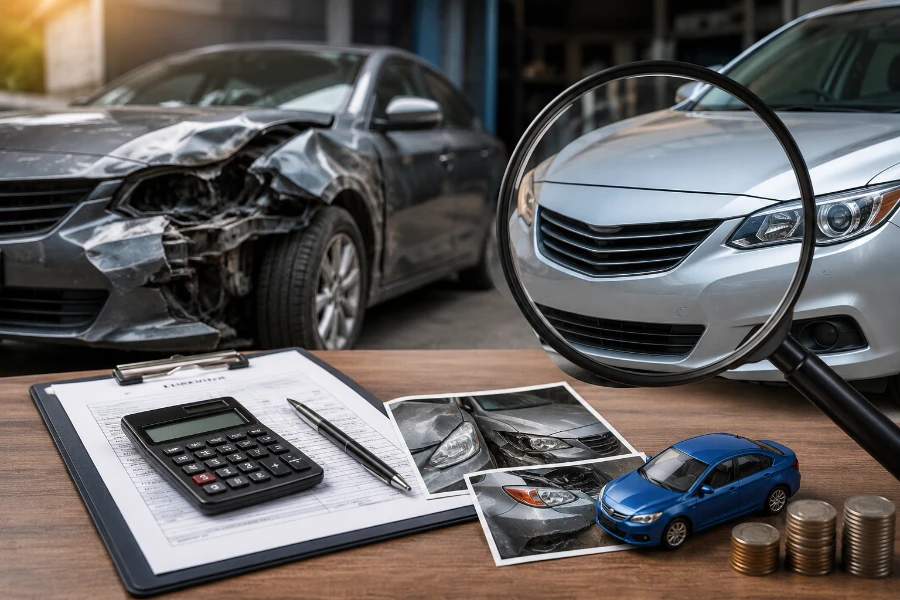
You picked up your vehicle from the repair shop. The paint matches. The panels line up. The car drives straight.
Everything appears normal.
So naturally, many vehicle owners assume the accident is behind them.
Unfortunately, that’s not always how the marketplace sees it.
The reality of diminished value after repairs is that even a perfectly repaired vehicle may be worth significantly less than it was before the accident occurred. The reason has little to do with how the car looks today and everything to do with how buyers, dealerships, and appraisal professionals evaluate accident history.
This catches many people off guard.
They spend weeks dealing with insurance companies, arranging repairs, and getting their vehicle back into pre-loss condition. Then months later, when they try to sell or trade it in, they discover the vehicle’s value has taken a hit.
A substantial one.
The good news is that understanding diminished value can help you protect your financial interests and determine whether you may have grounds for a diminished value claim.
Let’s break down exactly what vehicle owners need to know.
What Is Diminished Value After Repairs?
At its simplest, diminished value refers to the difference between what your vehicle was worth before an accident and what it is worth after repairs have been completed.
The key phrase here is “after repairs.”
Many people assume repairs automatically restore value. In reality, repairs typically restore functionality and appearance—not necessarily market value.
Imagine two identical vehicles sitting side by side on a dealer lot.
Both have the same year, make, model, mileage, and features.
However:
- Vehicle A has never been involved in an accident.
- Vehicle B sustained collision damage and was professionally repaired.
Which vehicle would most buyers choose?
Most shoppers prefer Vehicle A.
That preference directly impacts market value.
As a result, diminished value after repairs becomes a very real financial loss even when the repair work is flawless.
Why Repairs Do Not Restore Full Market Value
There are several reasons this happens.
First, accident history has become easier than ever to access.
Vehicle history reports allow buyers to see:
- Reported accidents
- Collision repairs
- Structural damage records
- Airbag deployments
- Insurance claims
That information influences purchasing decisions.
Second, buyers often worry about hidden damage.
Even if repairs were completed correctly, some consumers fear there may be lingering issues involving:
- Frame alignment
- Suspension components
- Electronics
- Safety systems
- Long-term reliability
Whether those concerns are justified is almost irrelevant.
Market perception drives value.
Third, dealerships frequently discount vehicles with accident histories because they know consumers may hesitate to purchase them.
The result?
A lower trade-in offer.
A lower resale price.
And measurable diminished value.
How Much Value Can a Vehicle Lose After Repairs?
This is usually the first question vehicle owners ask.
The honest answer is: it depends.
No two vehicles experience the exact same value reduction because numerous variables affect the calculation.
Factors That Influence Diminished Value
Vehicle Age
Newer vehicles often experience greater diminished value.
Why?
Because buyers expect newer vehicles to have clean histories.
A two-year-old vehicle with accident damage tends to raise more concerns than a twelve-year-old vehicle with the same repair history.
Mileage
Lower-mileage vehicles generally sustain larger losses.
A vehicle with 15,000 miles has more market appeal than one with 150,000 miles.
That increased desirability can magnify post-accident depreciation.
Severity of Damage
Minor bumper damage typically causes less value loss than significant collision repairs.
The more extensive the damage, the greater the potential impact.
Structural Damage
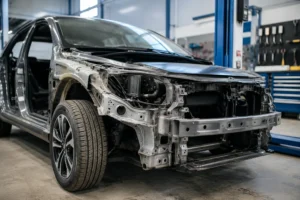
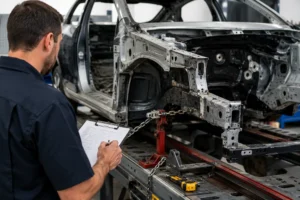
Frame or structural repairs often create some of the largest diminished value losses.
Buyers view structural damage differently than cosmetic repairs.
Even when repaired properly, structural history remains a concern for many purchasers.
Airbag Deployment
Airbag deployment often signals a more serious collision.
Vehicles with documented airbag deployment may experience increased market resistance.
Vehicle Brand
Luxury and high-performance vehicles frequently suffer larger diminished value losses.
Brands such as:
- BMW
- Mercedes-Benz
- Porsche
- Audi
- Lexus
often attract buyers who pay close attention to accident history.
Real-World Examples
| Vehicle | Accident Severity | Potential Diminished Value Impact |
| 2024 Toyota Camry | Minor bumper repair | Low to moderate |
| 2023 Honda Accord | Multiple panel replacement | Moderate |
| 2025 BMW 5 Series | Structural damage repair | Significant |
| 2024 Ford F-150 | Frame repair and airbag deployment | Significant |
These examples illustrate why no universal percentage works for every claim.
Professional evaluation matters.
Why Vehicle History Reports Matter
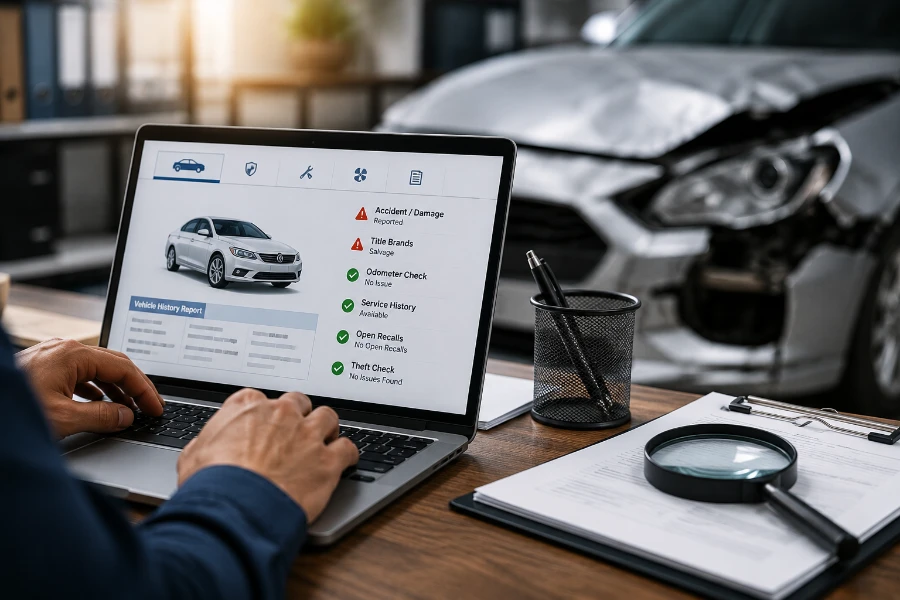
Years ago, accident history was harder to discover.
Not anymore.
Today’s buyers often check vehicle history reports before making an offer.
Within minutes they can uncover information about prior damage.
That transparency affects market pricing.
The Impact of Accident Records
A single accident report can change how a buyer views a vehicle.
I’ve seen situations where a vehicle looked immaculate yet still received reduced offers because the accident appeared on the history report.
From the buyer’s perspective, uncertainty creates risk.
Risk lowers value.
That’s one of the biggest drivers behind diminished value after repairs.
Vehicle history reports also help reduce information asymmetry between buyers and sellers by making prior accident and repair records more transparent. When buyers gain access to information that was previously unknown, their perception of risk may change, which can directly influence resale value and contribute to diminished value after repairs.
How Dealers Evaluate Accident History
Dealerships operate differently than private buyers.
They look at numbers.
Profit margins.
Marketability.
Inventory turnover.
If they believe a vehicle with accident history will be harder to sell, they’ll typically adjust their trade-in offer accordingly.
This adjustment often occurs even when repairs were completed by certified repair facilities.
Dealers know buyers ask questions.
Dealers know accident history influences demand.
And they price vehicles accordingly.
Types of Diminished Value
Not all diminished value is the same.
Understanding the categories can help vehicle owners better understand potential claims.
Immediate Diminished Value
This refers to the difference in value immediately after an accident occurs but before repairs are completed.
While technically relevant, this type is rarely used in claims.
Inherent Diminished Value
This is the most common form of diminished value.
It refers to the loss in market value that remains after proper repairs have been completed.
The vehicle functions properly.
The repairs meet industry standards.
Yet the vehicle is still worth less.
Why?
Because the accident history remains attached to the vehicle.
This is the category most often associated with diminished value after repairs.
Repair-Related Diminished Value
This occurs when repairs themselves negatively affect value.
Examples include:
- Paint mismatches
- Improper panel alignment
- Visible repair defects
- Incomplete restoration
- Poor workmanship
Unlike inherent diminished value, repair-related diminished value stems directly from repair quality issues.
Signs Your Vehicle May Have Significant Diminished Value
Certain situations tend to create greater value losses than others.
Understanding these indicators can help you determine whether a professional appraisal may be worthwhile.
Structural Damage Repairs
Frame and structural repairs often have lasting market consequences.
Buyers frequently associate structural damage with major collisions.
Even when repairs meet manufacturer standards, the stigma can remain.
Airbag Deployment
Airbag deployment is another major factor.
Many buyers see deployed airbags as evidence of a severe accident.
That perception alone can reduce market demand.
Multiple Panel Replacements
Replacing several body panels can increase buyer concerns.
Examples include:
- Doors
- Quarter panels
- Roof panels
- Fenders
- Tailgates
The more extensive the repairs, the more likely buyers are to question the vehicle’s history.
High-End Vehicles
Luxury vehicles often experience larger diminished value claims because buyers in these segments tend to be especially selective.
Accident history matters.
A lot.
Newer Vehicles
Late-model vehicles generally have more to lose.
The market expects newer vehicles to have clean records.
When that expectation changes, value often changes with it.
Can You File a Diminished Value Claim?
Many vehicle owners discover their financial loss only after attempting to sell or trade their vehicle.
At that point, they often ask an important question:
Can I recover that loss?
In many situations, the answer is yes.
However, eligibility depends on several factors, including state laws, insurance policies, and who caused the accident.
Understanding Your Rights
Diminished value claims are most commonly pursued through third-party insurance claims.
A third-party claim involves the insurer of the at-fault driver.
The logic is straightforward.
If another driver caused the accident, their insurer may be responsible not only for repairing your vehicle but also for compensating you for any remaining loss in value.
Some states also allow certain first-party diminished value claims against your own insurance company, but those situations are generally more limited.
Because rules vary significantly, vehicle owners should review local laws and policy language carefully.
Situations Where Claims Are Most Common
Diminished value claims are often strongest when:
- You were not at fault for the accident.
- The vehicle sustained significant damage.
- Structural repairs were required.
- Airbags deployed.
- The vehicle is relatively new.
- The vehicle has low mileage.
- The vehicle had no prior accident history.
The stronger these factors are, the easier it may be to demonstrate meaningful diminished value after repairs.
Common Insurance Company Arguments
Insurance carriers frequently challenge diminished value claims.
Some of the most common responses include:
“The Vehicle Was Fully Repaired”
This is probably the most common argument.
The insurer may claim that because repairs restored the vehicle to pre-loss condition, no additional compensation is owed.
The problem?
Market data often shows otherwise.
A vehicle can be perfectly repaired and still sell for less than an identical accident-free vehicle.
“There Is No Measurable Loss”
Insurance companies sometimes argue that diminished value cannot be accurately quantified.
Professional appraisal reports are often used to address this argument by providing documented market analysis.
“The Vehicle’s Value Was Restored”
Again, this focuses on repairs rather than marketplace behavior.
Vehicle buyers don’t simply evaluate repair quality.
They evaluate accident history as well.
That distinction is critical.
How Diminished Value Is Calculated
One of the biggest misconceptions surrounding diminished value claims is that there is a universal formula.
There isn’t.
Every vehicle must be evaluated individually.
Professional Appraisal Methods
Qualified appraisers typically use market-based approaches rather than generic calculations.
The goal is to determine what buyers are actually willing to pay.
This often involves comparing:
- Accident-free vehicles
- Similar repaired vehicles
- Local market conditions
- Vehicle-specific characteristics
The appraiser then estimates the difference between the vehicle’s pre-loss value and its post-repair market value.
Market valuation is rarely based on a single factor. Professional appraisers often evaluate how various characteristics influence buyer behavior and market demand. This concept is somewhat similar to hedonic pricing, an economic model used to estimate the value of individual characteristics that contribute to the price of an asset. While vehicle appraisal involves its own methodologies, market perception remains a significant factor in determining diminished value after repairs.
In many cases, obtaining a professional car appraisal after accident can provide valuable documentation regarding both vehicle damage and the extent of diminished value. A detailed appraisal helps establish the difference between pre-loss and post-repair market value.
Factors Appraisers Review
A professional diminished value appraisal may consider:
- Vehicle year
- Make and model
- Mileage
- Prior accident history
- Repair invoices
- Repair estimates
- Photographs of damage
- Vehicle history reports
- Structural repair documentation
- Market sales data
The more documentation available, the stronger the analysis.
Why Online Calculators Often Miss the Mark
Many consumers search online for diminished value calculators.
While convenient, these tools often oversimplify the process.
They generally cannot account for:
- Regional market differences
- Vehicle desirability
- Repair complexity
- Buyer behavior
- Luxury vehicle premiums
As a result, calculator results may differ dramatically from actual market-based appraisals.
A vehicle is not a math equation.
It is an asset whose value depends on real-world market conditions.
Why Independent Appraisals Matter
When a diminished value dispute arises, documentation becomes everything.
Opinions alone rarely move claims forward.
Evidence does.
The Difference Between Insurance and Independent Valuations
Insurance companies have their own valuation processes.
Independent appraisers have a different role.
Their responsibility is to provide an objective analysis based on market data and vehicle-specific facts.
An independent appraisal can help establish:
- The vehicle’s pre-loss value
- The vehicle’s post-repair value
- The extent of diminished value
- Supporting market evidence
This documentation may become an important component of a claim negotiation.
What a Professional Auto Appraiser Does
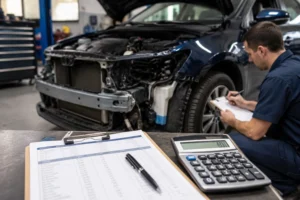
A qualified auto appraiser typically performs several key tasks.
These may include:
- Reviewing repair documentation
- Analyzing vehicle history reports
- Evaluating collision severity
- Researching comparable vehicle sales
- Assessing market reaction to accident history
- Preparing a written diminished value report
Understanding the professional car appraisal process can help vehicle owners see how appraisers evaluate accident history, repair documentation, market comparisons, and post-repair value loss. This detailed approach often provides stronger support for diminished value claims than generic online valuation tools.
The final report often serves as supporting evidence when negotiating with insurers or presenting a claim.
For many vehicle owners, this is the first time they receive a clear picture of their actual financial loss.
Steps to Protect Your Diminished Value Claim

The actions you take after an accident can influence the strength of a future claim.
The sooner you begin documenting information, the better.
Keep Every Repair Document
Don’t throw anything away.
Maintain copies of:
- Repair estimates
- Final invoices
- Supplement requests
- Parts replacement records
- Repair shop communications
These documents help establish exactly what damage occurred and how it was repaired.
Obtain Vehicle History Reports
Review your vehicle history after repairs are completed.
This helps verify what information future buyers will see.
It also allows you to identify potential reporting issues early.
Document the Accident Thoroughly
Strong claims are built on evidence.
Important documentation may include:
- Accident scene photographs
- Damage photographs
- Police reports
- Insurance correspondence
- Rental vehicle records
- Repair progress photos
The more complete your file, the easier it becomes to support your position.
Seek an Independent Diminished Value Appraisal
Many vehicle owners wait until they receive a low trade-in offer before obtaining an appraisal.
That can be a mistake.
An appraisal performed shortly after repairs are completed can provide valuable insight into the true extent of diminished value after repairs and help guide next steps.
Common Mistakes Vehicle Owners Make
Even strong claims can be weakened by avoidable errors.
Let’s look at a few common ones.
Assuming Repairs Restore Value
This is perhaps the biggest misconception in the entire process.
Repairs restore the vehicle.
They do not automatically restore market perception.
Those are two different things.
Waiting Too Long
Evidence becomes harder to gather over time.
Documents get misplaced.
Repair records become difficult to locate.
Vehicle conditions change.
Acting sooner generally strengthens your position.
Accepting the First Response
Insurance companies may initially dispute or minimize diminished value claims.
That does not necessarily mean the claim lacks merit.
Many successful claims involve additional documentation and follow-up.
Skipping the Appraisal
Without an independent valuation, it may be difficult to demonstrate the extent of the loss.
The stronger the evidence, the stronger the argument.
Conclusion
An accident may end when the repairs are finished.
The financial impact doesn’t always stop there.
That’s the reality of diminished value after repairs.
A vehicle can look excellent, drive perfectly, and meet all repair standards while still being worth less in the eyes of buyers, dealerships, and the broader marketplace. Accident history, structural repairs, airbag deployment, and vehicle history reports can all influence resale value long after the body shop work is complete.
Understanding this loss is the first step.
Documenting it is the second.
For vehicle owners who believe their car has suffered diminished value after an accident, a professional independent appraisal can provide the evidence needed to understand the true financial impact and support a potential diminished value claim.
FAQs
Diminished value after repairs is the reduction in a vehicle’s market value after an accident, even when repairs have been completed properly.
Not always. Minor cosmetic damage may have little impact, but moderate to severe accident damage often results in measurable value loss.
Yes. Buyers and dealerships often view accident history as a risk factor, regardless of repair quality.
It is typically determined through a professional appraisal that evaluates repair records, accident severity, vehicle history, and current market conditions.
Yes. Newer vehicles generally experience greater diminished value because buyers expect them to have clean accident histories.
In many cases, yes. Structural or frame repairs are often viewed more negatively by buyers and can significantly affect resale value.
In many states, vehicle owners may pursue a diminished value claim against the at-fault driver’s insurance company.
Keep repair estimates, invoices, photos, vehicle history reports, and all insurance communications to help support a potential claim.
Often they do. Luxury vehicle buyers tend to be more sensitive to accident history, which can increase value loss.
If your vehicle sustained significant damage, an independent appraisal can provide objective evidence of the vehicle’s diminished value and strengthen your claim.