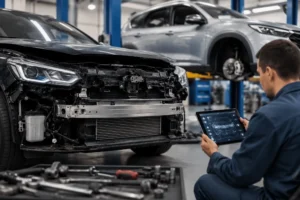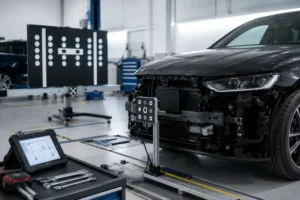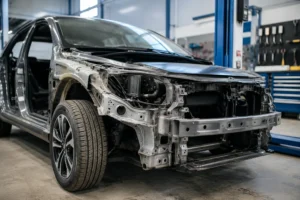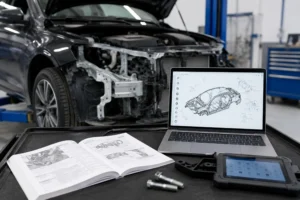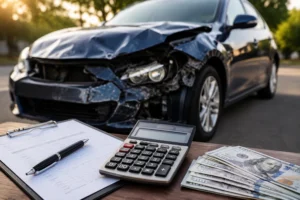

A low vehicle settlement can put you in a frustrating position. Your repair shop says the damage will cost $18,000 to correct, yet the insurance estimate allows only $12,500. Or perhaps your insurer declares the car a total loss and assigns a value that would not buy a comparable replacement anywhere near you. In situations like these, the Texas appraisal clause auto insurance process may offer a structured way to challenge the amount of the loss.
This is more than another phone call with the adjuster.
Under an appraisal process, you and the insurance company select separate appraisers. Those professionals inspect the evidence, calculate the loss independently, and attempt to reach an agreement. When they cannot agree, an umpire may help resolve the remaining differences.
The process can address disagreements involving the value of a totaled vehicle or the reasonable cost of repairing a damaged one.
Still, appraisal has boundaries. It usually determines how much a covered loss is worth. It does not typically decide whether the accident is covered, who caused the crash, or whether a policy exclusion applies.
That distinction matters.
What Is an Appraisal Clause in Texas Auto Insurance?
An appraisal clause is a policy provision that creates a method for resolving disagreements about the amount of an insured loss.
For an auto insurance claim, that disagreement may involve:
- The pre-accident value of a totaled vehicle
- The reasonable cost of collision repairs
- The full extent of the vehicle’s physical damage
- The need for specific repair procedures
- The value of factory packages or documented modifications
- Whether the vehicle should be repaired or declared a total loss
The Texas appraisal clause auto insurance process is different from asking an adjuster to reconsider an estimate. During an informal reconsideration, the insurance company reviews its own work and decides whether to revise its offer.
Appraisal moves the disagreement into a more formal valuation process.
Each party appoints an appraiser. The two appraisers analyze the vehicle, estimates, market data, photographs, repair procedures, and other evidence. They then attempt to establish the correct amount of loss.
Texas adopted requirements for appraisal provisions in personal auto policies issued or renewed beginning January 1, 2026. However, drivers should still review the exact language in their policy because procedures, notices, and responsibilities can depend on the contract and the date it took effect.
What the Appraisal Clause Can Decide
Appraisal focuses on the amount of the loss.
That may sound simple. It rarely is.
Modern vehicle claims can involve hundreds of individual calculations. One expert may believe a structural component can be safely repaired. Another may conclude that replacement is necessary under the manufacturer’s procedures. One valuation report may rely on vehicles hundreds of miles away, while another appraiser may find stronger local comparables.
Depending on the claim and policy, appraisal may determine:
- The vehicle’s pre-loss market value
- The cost of repairing covered physical damage
- The value of damaged components
- The financial amount of a partial loss
- The financial amount of a total loss
- The value associated with factory options and documented upgrades
For total-loss claims, the insurer may base its offer on the vehicle’s actual cash value immediately before the accident. This is a valuation concept used in property and casualty insurance, although the precise calculation applied to a vehicle depends on the policy, market information, vehicle condition, and applicable claim rules.
Age is only one factor.
Mileage, trim, drivetrain, local availability, equipment, condition, maintenance history, prior damage, and market demand can all affect the result.
What Appraisal Usually Cannot Decide
Appraisal can be useful, but it cannot resolve every insurance disagreement.
It usually does not decide:
- Whether the accident is covered
- Whether the policy was active
- Who caused the collision
- Whether an exclusion applies
- Whether the driver complied with policy conditions
- Whether an insurer acted in bad faith
- How much should be paid for bodily injuries
- Whether a third party is legally responsible
Suppose an insurer accepts coverage but values a totaled SUV at $24,000. The owner believes the vehicle was worth $31,000 based on its trim, condition, equipment, and local market. That is an amount-of-loss dispute that may fit the appraisal process.
Now consider a different situation.
The insurer denies the claim because it believes the vehicle was being used for a purpose excluded by the policy. That is primarily a coverage dispute. Appraisers are generally not appointed to rewrite the insurer’s coverage decision.
The Texas appraisal clause auto insurance process may establish the amount of a loss without automatically resolving every question about payment.
When Should a Texas Driver Consider Appraisal?
Not every estimate disagreement requires formal appraisal.
Some problems can be corrected by providing better documentation. An adjuster may revise a total-loss report after receiving proof of the correct trim, mileage, factory package, or vehicle condition. A repair estimate may also increase through the supplement process after a body shop disassembles the car and finds hidden damage.
Appraisal becomes more relevant when the difference is substantial and normal negotiations have reached a genuine deadlock.
Drivers may consider appraisal when:
- A total-loss offer appears significantly below local market value
- Comparable vehicles are the wrong trim, year, or configuration
- The report omits valuable factory options
- Documented custom equipment was not considered
- A repair estimate excludes required procedures
- The insurer and repair facility disagree over replacement parts
- Structural damage appears to have been underestimated
- Diagnostic scans or safety-system calibrations were omitted
- The parties disagree over whether the vehicle is safely repairable
- Supplemental damage has not been fully recognized
Before demanding appraisal, identify the exact amount in dispute.
Saying the offer “feels too low” is not persuasive. Show where the calculation went wrong, how it affected the result, and what evidence supports a different number.
Using Appraisal for a Total-Loss Dispute
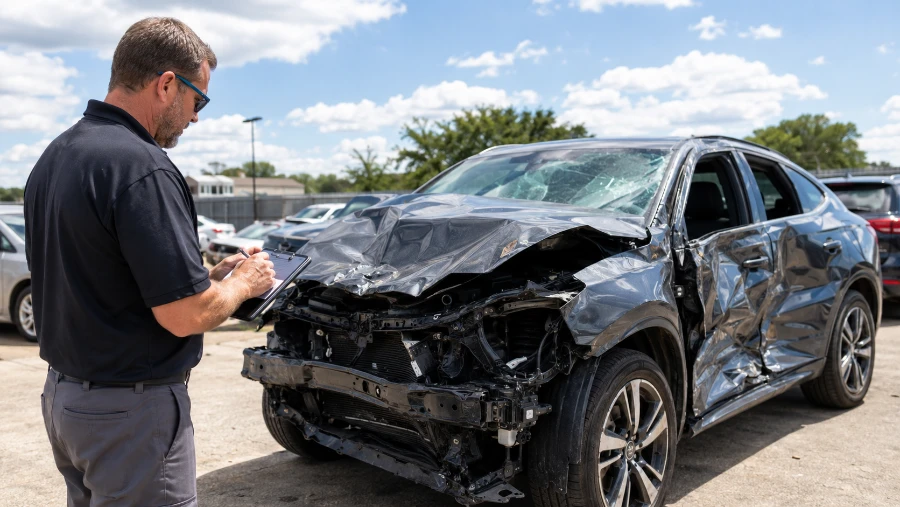
Total-loss valuation is one of the most common reasons a driver may explore appraisal.
An insurer generally compares the vehicle’s value with the expected repair cost when determining whether to declare it a total loss. Some insurers may total a vehicle even when the repair estimate is lower than its calculated market value.
Drivers can review the Texas Department of Insurance guidance for totaled vehicles to understand how insurers approach total-loss decisions and what information a vehicle owner can gather when challenging an offer. The department recommends asking what source the insurer used to calculate the car’s value and collecting local pricing evidence when the offer appears too low.
The difficult part is often the value assigned to the vehicle immediately before the accident.
An insurer’s report may consider:
- Model year
- Make and model
- Trim level
- Mileage
- Pre-loss condition
- Vehicle history
- Factory packages
- Geographic market
- Comparable listings or sales
- Prior damage
- Adjustments for equipment and condition
One incorrect detail can affect several parts of the calculation.
A four-wheel-drive truck should not be valued as though it were a two-wheel-drive model. A premium trim should not be treated like the base version. A vehicle with an expensive technology or towing package may be worth more than an otherwise similar model without that equipment.
Request the complete valuation report.
Do not rely only on the settlement summary or the final number shown in an email.
Review the Total-Loss Report Carefully
A total-loss valuation report may contain dozens of pages. Read all of them.
Look for:
- Incorrect mileage
- Wrong trim level
- Missing factory options
- Incorrect drivetrain
- Duplicate comparable vehicles
- Comparables that were already sold
- Vehicles located far outside the local market
- Unexplained condition deductions
- Comparables with different engines or body configurations
- Adjustments that are unsupported or difficult to understand
Vehicle owners should also watch for common CCC One valuation problems when that platform is used to calculate the settlement. Incorrect vehicle details, unsuitable comparables, and questionable condition adjustments can materially change the final offer.
Do not assume the report is accurate because it looks technical.
Check every data point against the vehicle identification number, window sticker, build sheet, photographs, service records, and other documentation.
Evidence That Can Strengthen a Total-Loss Appraisal
A strong appraisal file tells the story of the exact vehicle that existed immediately before the collision.
Useful evidence may include:
- The complete insurance valuation report
- The original window sticker
- The vehicle identification number
- A manufacturer build sheet
- Pre-accident photographs
- Maintenance and service records
- Receipts for tires or major mechanical work
- Receipts for upgrades and accessories
- Local dealer listings
- Comparable sales information
- Specialty-market auction records
- Documentation of rare equipment or limited production
Local comparables should be genuinely comparable.
A listing carries more weight when it matches the vehicle’s year, trim, engine, drivetrain, body style, mileage range, condition, and major options. Asking prices are not always the same as completed sale prices, but carefully selected listings can still expose weaknesses in an insurer’s analysis.
Quality matters more than volume.
Five strong local comparables may be more persuasive than 50 loosely related listings from across the country.
A vehicle owner should also inspect every adjustment applied to those comparables. Identifying total loss valuation errors can reveal why the insurer’s calculation does not accurately reflect the car’s pre-accident market value.
Using Appraisal for a Repair-Cost Dispute
The Texas appraisal clause auto insurance process is not limited to total-loss claims.
It may also apply when the insurer and policyholder disagree about the amount needed to repair a covered vehicle. These disputes often begin with a preliminary estimate based only on visible damage.
Then the vehicle is disassembled.
Suddenly, the shop discovers crushed brackets, damaged wiring, structural movement, broken sensors, cooling-system damage, or additional components that were hidden behind exterior panels. The repair facility submits a supplement, but the insurer approves only part of it.
The disagreement may involve:
- Repairing versus replacing a component
- Original equipment versus aftermarket parts
- Recycled or used components
- Labor hours
- Local labor rates
- Paint and refinishing procedures
- Structural measuring
- Frame correction
- Diagnostic scans
- Mechanical damage
- Wheel alignment
- Corrosion protection
- Seam sealers and adhesives
- Post-repair inspections
- Camera, radar, and sensor calibration
Modern vehicles are complex.
A minor-looking impact can affect radar units, cameras, parking sensors, wiring, airbag components, cooling systems, and driver-assistance technology. A bumper that looks acceptable from the outside does not prove that every system behind it works correctly.
That is why repair estimates should be compared line by line.
What to Review in a Repair Estimate
| Area | Questions to Ask |
| Parts | Are the parts original equipment, aftermarket, recycled, or used? |
| Labor | Do the hours reflect the complete repair procedure? |
| Structural work | Were measuring, pulling, sectioning, or replacement included? |
| Electronics | Were diagnostics, scans, programming, and calibration allowed? |
| Paint | Are refinishing, blending, materials, and corrosion protection included? |
| Hidden damage | Was the estimate updated after vehicle disassembly? |
| Safety systems | Were manufacturer-required inspections and procedures considered? |
The appraiser should evaluate the repair method, not simply total the estimate.
A low insurer estimate is not automatically wrong. A high repair-shop estimate is not automatically correct. The purpose of the appraisal is to establish the reasonable amount required to address the covered damage using appropriate procedures and documentation.
How the Texas Auto Appraisal Process Works
The exact steps depend on the policy, but the process generally follows a recognizable sequence.
Review the Policy
Start with the complete insurance contract.
Read the declarations, endorsements, exclusions, and appraisal clause. Confirm that the dispute concerns the amount of a covered vehicle loss rather than a question about coverage or liability.
Check all notice requirements and deadlines.
Do not assume that ongoing telephone conversations preserve your appraisal rights. Important communications should be made in writing, and proof of delivery should be retained.
Submit a Written Appraisal Demand
A written demand should clearly identify:
- The policyholder
- Policy number
- Claim number
- Vehicle
- Vehicle identification number
- Date of loss
- Nature of the disagreement
- Appraiser selected by the policyholder, when required
Keep the demand focused.
You do not need to repeat the entire claim history. State that you disagree with the amount of the loss and are invoking the appraisal provision under the policy.
Select a Qualified Auto Appraiser
Each side generally appoints an appraiser.
For a total-loss dispute, choose someone with strong experience in vehicle valuation, market research, comparable selection, factory equipment, and condition analysis.
For a repair dispute, prioritize collision-repair knowledge. The appraiser should understand estimating systems, structural repairs, manufacturer procedures, parts selection, labor operations, scans, and calibrations.
The appraiser should also be independent.
Avoid anyone who has an undisclosed financial interest in the award or guarantees a specific increase before reviewing the file.
Inspect the Evidence
The appraisers may review:
- Vehicle photographs
- Damage estimates
- Valuation reports
- Repair invoices
- Diagnostic results
- Manufacturer procedures
- Market listings
- Service records
- Build information
- Parts documentation
A physical inspection may also be necessary, especially when the disagreement involves repairability, hidden damage, pre-loss condition, modifications, or specialty equipment.
Use an Umpire When Necessary
The two appraisers first try to reach an agreement.
When they cannot resolve the disputed amount, an umpire may review the remaining differences. Depending on the policy and governing requirements, an agreement signed by the necessary members of the appraisal panel establishes the amount of loss.
Appraisal is intended to resolve the valuation disagreement, not create another endless negotiation.
How Much Does Auto Insurance Appraisal Cost?
Each party generally pays its own appraiser.
Umpire expenses and other shared costs may be divided as required by the policy or applicable rules. Before hiring anyone, request a written fee agreement that explains:
- Inspection charges
- Report preparation
- Market research
- Communication and negotiation time
- Travel expenses
- Umpire participation
- Court-related work, when applicable
- Additional expert costs
Then compare the expense with the amount in dispute.
Spending several thousand dollars to argue over a $700 difference may not make financial sense. In contrast, appraisal may be practical when a high-value truck, luxury vehicle, collector car, or major structural repair has been undervalued by many thousands of dollars.
Treat it as a financial decision.
Anger over a disappointing offer is understandable, but the numbers still need to work.
Appraisal Versus Other Claim Options
| Option | Best Used For |
| Corrected valuation request | Errors involving mileage, trim, options, or comparables |
| Repair supplement | Additional damage found during disassembly |
| Supervisor review | Disputes that may still be resolved internally |
| Appraisal clause | A deadlock over the amount of a covered loss |
| TDI complaint | Concerns involving insurer conduct or claim handling |
| Legal guidance | Coverage denial, policy interpretation, or bad-faith allegations |
These options are not always mutually exclusive.
A driver may first submit corrections, request a supervisor’s review, and then use the Texas appraisal clause auto insurance provision when the amount remains disputed.
Common Appraisal Mistakes to Avoid
Waiting Too Long
Policies and laws may impose deadlines.
A driver who spends months making informal telephone calls could place appraisal rights at risk. Review the contract early and submit important requests in writing.
Hiring the Wrong Appraiser
A dealership trade-in opinion is not the same as a formal insurance appraisal.
Likewise, an expert who primarily values collector cars may not be the right choice for a complicated collision-repair dispute involving structural damage and advanced safety systems.
Match the appraiser to the problem.
Using Weak Comparables
A vehicle from another state with different mileage, equipment, and condition may provide little support.
Use comparables that closely resemble the insured vehicle and explain every meaningful difference.
Ignoring Policy Language
Online summaries can help explain general concepts, but they do not replace the insurance contract.
Read the policy you actually purchased.
Disposing of Evidence Too Quickly
Once damaged parts are discarded or the vehicle is sold, inspection opportunities may disappear.
Preserve photographs, scans, estimates, invoices, valuation reports, correspondence, and damaged components when reasonably possible.
Mixing Different Types of Claims
Repair cost, total-loss value, diminished value, coverage, and liability are different issues.
Define the dispute before invoking appraisal. A clear issue is easier to document, evaluate, and resolve.
Practical Total-Loss Appraisal Example

Consider a driver whose 2023 pickup is declared a total loss.
The insurer offers $42,000. After reviewing the valuation report, the owner discovers that two comparable trucks have lower trim levels, one lacks four-wheel drive, and another is located more than 500 miles away.
The report also misses a premium towing package and applies an unexplained condition deduction.
The owner submits the build sheet, pre-accident photographs, service records, and several local listings between $47,000 and $50,000. The insurer increases the offer to $43,500 but refuses to go higher.
At that point, the driver considers the Texas appraisal clause auto insurance process.
The policyholder’s appraiser reviews the documentation, confirms the truck’s configuration, researches the local market, and concludes that its pre-loss value was $48,250. The insurer’s appraiser maintains a lower figure.
If they cannot agree, the dispute may proceed to an umpire.
No result is guaranteed. Still, the owner is no longer making a vague complaint. The position is supported by vehicle-specific evidence and a professional valuation.
Choosing the Right Auto Insurance Appraiser
Ask direct questions before signing an agreement:
- How many total-loss or repair appraisals have you completed?
- Do you inspect vehicles when needed?
- How do you choose comparable vehicles?
- Can you interpret factory build information?
- Do you understand collision estimating and repair procedures?
- Have you worked with appraisal umpires?
- Will you communicate with the insurer’s appraiser?
- What will your written report contain?
- Are all fees disclosed in advance?
- Do you have any financial interest in the result?
A credible appraiser should be independent, methodical, and willing to explain the analysis.
Be cautious when someone promises a specific settlement increase before seeing the evidence. A professional can identify issues and describe the process, but cannot honestly guarantee the final appraisal award.
Steps to Take Before Demanding Appraisal
Use this checklist:
- Obtain the complete insurance policy.
- Read the appraisal clause and endorsements.
- Save the insurer’s coverage and settlement notices.
- Confirm all applicable deadlines.
- Request the full repair estimate or valuation report.
- Mark each item you dispute.
- Collect vehicle photographs and records.
- Gather strong local comparables.
- Ask the insurer to correct clear errors.
- Calculate the real amount in dispute.
- Consult a qualified auto appraiser.
- Send the appraisal demand in writing.
- Retain proof that the demand was delivered.
Organization makes the process more efficient.
It also allows the appraiser to focus on the real valuation problem instead of spending valuable time sorting through an incomplete claim file.
Is the Texas Appraisal Clause Worth Using?
Sometimes, yes.
The Texas appraisal clause auto insurance process may be worth considering when the disputed amount is meaningful, the evidence supports a different valuation, and ordinary negotiation has failed.
It can be particularly useful for:
- Expensive late-model vehicles
- Trucks with valuable factory packages
- Luxury or performance cars
- Classic and collector vehicles
- Modified vehicles with documented upgrades
- Major structural repair disputes
- Claims involving advanced vehicle technology
- Total-loss valuations based on weak comparables
However, appraisal costs money and requires preparation.
Review the evidence. Estimate the potential financial difference. Understand the fees. Confirm the deadline.
Then make an informed decision.
Final Thoughts
An insurance estimate is a calculation supported by selected information. It is not beyond review.
When a driver and insurance company cannot agree on the value of a totaled vehicle or the reasonable cost of covered repairs, the Texas appraisal clause auto insurance process can move the dispute away from repetitive negotiations and toward an independent evaluation.
Strong appraisal cases are organized.
They contain accurate vehicle information, credible market data, complete repair documentation, clear photographs, and an appraiser who understands the exact type of dispute.
Start with the policy.
Then obtain the insurer’s complete report, identify the specific errors, preserve the evidence, and calculate what is truly at stake. A well-supported appraisal demand gives the process something concrete to evaluate—and gives the vehicle owner a clearer path toward an accurate loss amount.
FAQs
The appraisal clause provides a formal process for resolving disputes over the value of a totaled vehicle or the reasonable cost of covered repairs.
You may consider appraisal when you and your insurer agree that the damage is covered but disagree about the amount of the loss.
Usually not. Appraisal determines the amount of a covered loss, while coverage denials and policy exclusions generally require a different dispute process.
Yes. It may help resolve disagreements involving actual cash value, vehicle condition, factory options, mileage, and comparable vehicles.
Yes. Appraisal may address disagreements over labor, parts, structural repairs, diagnostic scans, calibrations, and other covered repair expenses.
The policyholder and insurance company generally select their own independent appraisers, who then review the evidence and attempt to agree.
The dispute may be submitted to an umpire, who reviews the remaining differences and helps determine the amount of loss.
Each party typically pays its own appraiser, while umpire expenses may be divided according to the policy or applicable requirements.
Provide the insurance valuation, repair estimates, photographs, build sheet, maintenance records, upgrade receipts, and relevant local vehicle listings.
An appraisal award may be binding as to the amount of loss, although coverage questions and other policy disputes may remain unresolved.