

After an accident, most people focus on what they can see.
A crumpled bumper. A damaged fender. A shattered headlight.
But the most expensive problem is often hidden underneath.
Frame damage can change the way a vehicle performs, handles, protects occupants, and retains value. Even when repairs appear flawless on the surface, structural issues can leave a lasting impact that follows the vehicle for years. That is why a frame damage appraisal can be one of the most important steps after a serious collision.
I’ve seen vehicle owners accept insurance settlements believing everything was accounted for, only to discover later that structural damage affected resale value, repair quality, and even safety. The reality is simple: when a vehicle’s structure is compromised, the financial consequences often extend far beyond the repair bill.
A frame damage appraisal helps uncover those consequences. It provides an independent assessment of structural damage, repair quality, and potential value loss so owners can make informed decisions instead of relying solely on insurance estimates.
Let’s take a closer look.
What Is Frame Damage?
Every vehicle relies on a structural foundation.
Think of it as the skeleton that supports everything else. The frame absorbs crash forces, supports major components, and helps maintain occupant safety during an impact.
When that structure bends, twists, cracks, or shifts out of specification, frame damage occurs.
Modern vehicle structures are engineered to comply with federal vehicle safety standards, making structural integrity a critical part of overall crash protection.
Modern vehicles generally fall into two categories:
| Vehicle Structure | Description |
| Unibody | Body and frame are integrated into one structure |
| Body-on-Frame | Separate body mounted on a dedicated frame |
Most passenger vehicles today use unibody construction. Trucks and some larger SUVs often use body-on-frame designs.
Regardless of construction type, structural damage can have significant consequences.
Common causes include:
- Front-end collisions
- Side-impact accidents
- Rear-end crashes
- Rollovers
- Undercarriage impacts
- Multi-vehicle accidents
Sometimes the damage is obvious.
Other times it isn’t.
A vehicle may appear repaired while hidden structural deviations remain beneath panels and trim.
That is where a frame damage appraisal becomes valuable.
Why Frame Damage Is a Serious Concern
Not all collision damage is equal.
Replacing a bumper cover is very different from repairing a bent frame rail.
Structural damage affects areas that were specifically engineered to protect occupants during a crash. Even small deviations can influence how a vehicle responds during future impacts.
Safety concerns are often the first issue.
Manufacturers design crumple zones and structural components to absorb crash energy in precise ways. When those components are altered, repaired incorrectly, or replaced improperly, crash performance may be affected.
The concerns don’t stop there.
Frame damage can also create ongoing mechanical problems such as:
- Uneven tire wear
- Steering instability
- Suspension issues
- Alignment difficulties
- Vehicle pulling during driving
- Excessive vibration
Some of these problems appear immediately.
Others develop slowly over time.
A vehicle owner may spend months chasing recurring alignment problems without realizing structural damage is the root cause.
That can become expensive fast.
Signs Your Vehicle May Have Frame Damage
Frame damage isn’t always visible.
In fact, many structural issues are discovered only after a detailed inspection.
Still, there are warning signs worth watching for.
Visible Indicators
Walk around the vehicle carefully.
Pay attention to:
- Uneven gaps between body panels
- Doors that do not close properly
- Hood alignment issues
- Trunk fitment problems
- Wrinkled metal inside the engine compartment
- Signs of structural repair or welding
Small irregularities can point to larger structural concerns.
Driving Symptoms
The vehicle itself often tells the story.
Watch for:
- Pulling to one side
- Off-center steering wheel
- Unusual vibrations
- Wandering at highway speeds
- Uneven tire wear patterns
If multiple symptoms appear together, further investigation is warranted.
Repair Shop Findings
Repair facilities frequently identify frame damage during the repair process.
Frame measuring equipment can reveal structural deviations that are impossible to detect with the naked eye.
When repair estimates include structural labor, frame machine time, or frame rail repairs, those are strong indicators that additional evaluation may be necessary.
What Is a Frame Damage Appraisal?
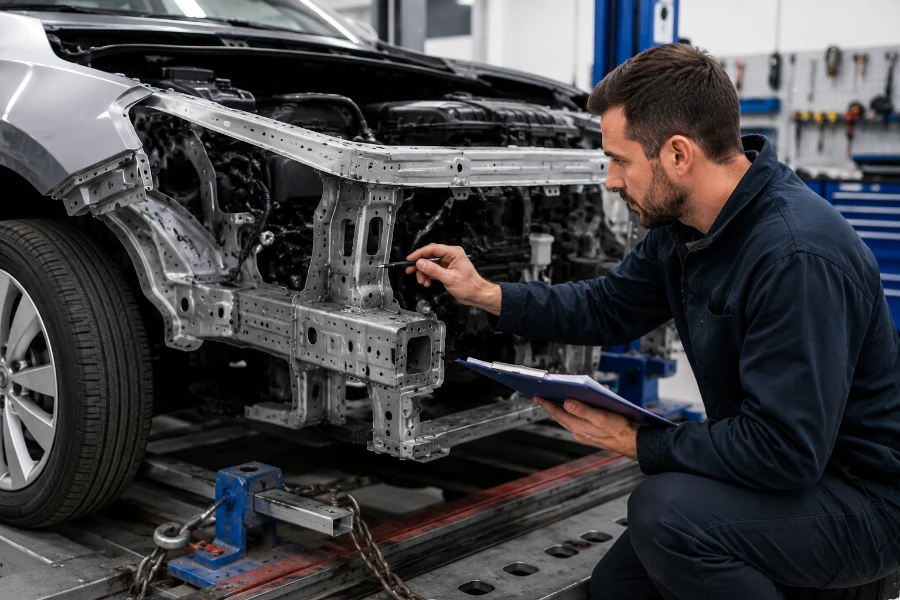
A frame damage appraisal is an independent assessment focused on determining the extent and impact of structural vehicle damage.
Unlike a standard repair estimate, which primarily addresses repair costs, an appraisal evaluates broader concerns.
Those concerns may include:
- Structural integrity
- Repair quality
- Vehicle value loss
- Safety implications
- Compliance with manufacturer repair procedures
The goal is simple.
Identify what happened to the vehicle, evaluate how it was repaired, and determine how that damage affects overall value.
A professional appraiser may review:
- Repair invoices
- Insurance estimates
- Collision photographs
- Structural measurements
- OEM repair procedures
- Vehicle history documentation
If you’re unsure whether structural repairs were properly documented, an independent car appraisal after an accident can provide objective evidence regarding damage severity, repair quality, and potential value loss.
The resulting report provides vehicle owners with objective information they can use during claim discussions, diminished value negotiations, or appraisal disputes.
How a Frame Damage Appraisal Works
The process is much more detailed than many people expect.
A proper frame damage appraisal follows several important steps.
Step 1: Reviewing Documentation
The appraiser begins by collecting available records.
These often include:
- Insurance estimates
- Supplement estimates
- Repair invoices
- Damage photographs
- Vehicle history reports
- Prior appraisal reports
This documentation establishes a foundation for the evaluation.
Step 2: Physical Vehicle Inspection
Next comes the hands-on inspection.
This is where many overlooked issues surface.
An appraiser may examine:
- Frame rails
- Structural welds
- Suspension mounting points
- Crumple zones
- Repaired components
- Replacement parts
The inspection helps verify whether repairs align with accepted industry and manufacturer standards.
Step 3: Reviewing Manufacturer Requirements
Modern vehicle repairs are increasingly complex.
Manufacturers publish specific procedures for repairing structural damage. These procedures often dictate when a component can be repaired and when it must be replaced entirely. Ignoring those requirements can affect both safety and resale value.
A thorough frame damage appraisal compares completed repairs against manufacturer recommendations to identify any discrepancies.
Step 4: Evaluating Financial Impact
Structural damage often affects more than repair costs.
Many buyers hesitate to purchase vehicles with a documented frame damage history, even if repairs were completed correctly. Dealers frequently reduce trade-in offers, and private buyers may negotiate aggressively once they learn about prior structural repairs.
This market reaction creates measurable financial loss.
Step 5: Producing a Comprehensive Report
The final report ties everything together.
It documents structural findings, repair observations, supporting evidence, and value-related conclusions. The report serves as a valuable tool during insurance negotiations, diminished value discussions, or appraisal disputes.
Understanding the professional vehicle appraisal process helps vehicle owners see how inspections, documentation reviews, and market analysis work together to establish an accurate valuation after a collision.
How Frame Damage Can Affect Vehicle Value
Here is a reality many vehicle owners discover too late.
A vehicle can be repaired perfectly and still lose value.
Why?
Because buyers care about history.
When a vehicle has documented frame damage, many prospective buyers immediately become cautious. They worry about safety, future repairs, hidden problems, and long-term reliability. Whether those concerns are justified or not, they influence purchasing decisions.
That perception has real financial consequences.
Vehicle history reports often disclose accident information and structural damage records. Once that information becomes part of a vehicle’s history, it can affect future resale opportunities.
Consider the difference:
| Vehicle Condition | Typical Buyer Confidence |
| No accident history | High |
| Minor cosmetic repairs | Moderate |
| Documented frame damage | Lower |
This reduction in buyer confidence often translates directly into reduced market value.
A professional frame damage appraisal helps quantify that impact.
Frame Damage and Diminished Value Claims
One of the most misunderstood aspects of collision claims involves diminished value.
Many vehicle owners believe their financial loss ends once the repair shop finishes the repairs.
In reality, that is often not the case.
Diminished value represents the difference between a vehicle’s market value before an accident and its market value after repairs. Even when repairs restore the vehicle’s appearance and functionality, the accident history can still reduce what buyers are willing to pay.
The repairs may restore functionality.
They may restore appearance.
They do not always restore value.
Structural damage often creates some of the largest diminished value losses because buyers generally view frame repairs differently than cosmetic repairs.
Why Structural Damage Has a Greater Impact
Frame damage raises questions.
Buyers wonder:
- Was the repair performed correctly?
- Could hidden damage still exist?
- Will future mechanical issues develop?
- Will resale become more difficult later?
Even if the answer to all those questions is no, the concerns remain.
That hesitation affects market value.
Supporting a Diminished Value Claim
A successful diminished value claim typically relies on strong documentation.
Important evidence may include:
- Repair records
- Collision photographs
- Vehicle history reports
- Market comparisons
- Independent appraisal reports
A professional frame damage appraisal can provide objective support when demonstrating how structural damage affected a vehicle’s market value.
Common Insurance Issues Involving Frame Damage
Insurance companies and vehicle owners do not always agree.
That is especially true when structural damage is involved.
Missing Repair Operations
Some repair estimates may overlook procedures required by manufacturers.
Examples include:
- Structural measurements
- Calibration procedures
- Component replacements
- Specialized repair operations
When these items are omitted, repair costs may be undervalued.
Repair Versus Replacement Disputes
A common disagreement centers on whether a damaged component should be repaired or replaced.
Insurers may favor repair when possible.
Manufacturers may recommend replacement.
These situations can create significant claim disputes.
Value Loss Disagreements
Not every insurer evaluates diminished value the same way.
Some may challenge the extent of value loss associated with structural damage. Others may rely on formulas that fail to reflect actual market behavior.
An independent frame damage appraisal provides evidence-based analysis that can help support a more accurate assessment.
Total Loss Disputes
In severe collisions, structural damage may influence whether a vehicle should be repaired or declared a total loss.
Disagreements sometimes arise when vehicle owners believe repair costs, diminished value, or structural concerns have not been fully considered.
Professional appraisals can help clarify those situations.
How a Professional Auto Appraisal Can Help

Vehicle owners often feel overwhelmed after a serious accident.
There are repair estimates to review. Insurance conversations to manage. Settlement offers to evaluate.
An independent appraisal helps cut through the confusion.
Identifying Hidden Structural Damage
Some structural issues remain hidden long after repairs are completed.
A professional appraisal can uncover concerns that may not appear on standard repair estimates.
Supporting Insurance Negotiations
Facts matter.
Detailed documentation gives vehicle owners a stronger foundation for discussing repair costs, structural concerns, and value loss.
Insurance discussions become more productive when supported by evidence rather than assumptions.
Strengthening Diminished Value Claims
Diminished value claims often require more than a simple opinion.
They require documentation.
A professional frame damage appraisal provides detailed analysis that can help explain how structural damage affected market value.
Providing Objective Documentation
Independent reports offer credibility.
They help vehicle owners understand the full scope of their losses while providing supporting evidence for claim discussions and dispute resolution.
When Should You Get a Frame Damage Appraisal?
Timing matters.
The sooner structural concerns are identified, the easier they are to document.
Consider obtaining a frame damage appraisal in the following situations:
After Major Collision Repairs
A post-repair inspection can help verify repair quality and identify any remaining structural concerns.
Before Accepting an Insurance Settlement
Once a settlement is accepted, additional recovery options may become more limited.
Understanding the full impact of frame damage beforehand can be extremely valuable.
Before Selling or Trading Your Vehicle
Knowing how structural damage affects market value helps set realistic expectations and supports informed decisions.
During an Insurance Dispute
Independent documentation often becomes particularly important when disagreements arise regarding repairs, value, or settlement amounts.
Choosing the Right Frame Damage Appraiser
Not all appraisers have the same experience.
When selecting a professional, look for several key qualifications.
Experience With Structural Damage Cases
Frame damage evaluations require specialized knowledge.
Experience matters.
Understanding OEM Repair Procedures
Manufacturer repair requirements continue to evolve.
A qualified appraiser should understand how those requirements affect repair quality and vehicle value.
Knowledge of Insurance Claims
Structural damage often intersects with insurance disputes, diminished value claims, and settlement negotiations.
An experienced appraiser understands those issues.
Comprehensive Reporting
The final report should be clear, detailed, and supported by evidence.
Strong documentation creates stronger conclusions.
How AutoAdjusting Helps Vehicle Owners
When structural damage affects a vehicle, owners deserve clear answers.
That is where AutoAdjusting helps.
Independent Auto Appraisal Services
AutoAdjusting provides objective evaluations focused on documenting vehicle damage, repair quality, and value-related concerns.
Support for Diminished Value Claims
Structural damage often creates lasting financial consequences.
Professional appraisal reports help vehicle owners understand and document those losses.
Detailed Reporting and Analysis
Every appraisal is built on evidence.
Repair records, inspection findings, photographs, and market research work together to provide a comprehensive assessment.
Helping Owners Make Informed Decisions
Whether a vehicle owner is evaluating repairs, reviewing an insurance settlement, or pursuing a diminished value claim, accurate information is critical.
A professional frame damage appraisal helps provide that information.
Conclusion
Frame damage is about far more than bent metal.
It can affect safety. It can affect reliability and it can affect resale value years after repairs are completed.
Unfortunately, many vehicle owners never receive a complete picture of those impacts.
That is why a frame damage appraisal can be such a valuable tool.
An independent appraisal helps identify structural concerns, evaluate repair quality, document value loss, and provide objective evidence when insurance disputes arise. Most importantly, it gives vehicle owners the information they need to protect their financial interests.
After a serious collision, assumptions can be costly.
Facts are powerful.
A professional frame damage appraisal helps ensure you have them.
FAQs
A frame damage appraisal is an independent evaluation that assesses structural vehicle damage, repair quality, and the impact on vehicle value.
Frame damage can affect a vehicle’s safety, handling, alignment, and long-term reliability even after repairs are completed.
Yes. Many buyers and dealerships view vehicles with a frame damage history as less desirable, which can reduce resale value.
Common signs include uneven body gaps, steering issues, alignment problems, unusual vibrations, and doors that do not close properly.
No. Many vehicles with frame damage can be repaired, although the severity of the damage may influence total loss decisions.
It typically includes a review of repair records, vehicle inspections, structural findings, and an assessment of value-related impacts.
Yes. An independent appraisal can provide evidence that supports discussions regarding repairs, settlement amounts, or diminished value.
Diminished value is the difference between a vehicle’s pre-accident value and its value after repairs have been completed.
It’s best to obtain one after major collision repairs, before accepting a settlement, or when disputing a claim.
AutoAdjusting provides independent vehicle appraisals that help document structural damage, evaluate value loss, and support claim negotiations.