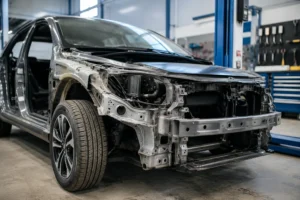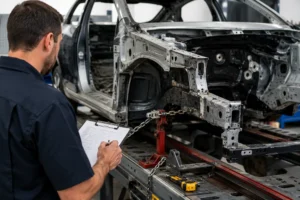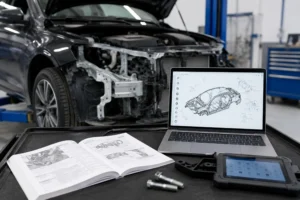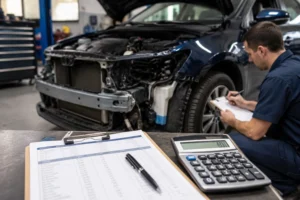
If you’ve recently been involved in a car accident, you may have discovered something frustrating. Even after your vehicle is fully repaired, it may not be worth what it was before the collision. That’s why many drivers begin searching for the term diminished value statute Texas in hopes of finding out whether they can recover that financial loss.
The good news is that diminished value claims can be pursued in many situations. The challenge is that Texas does not have one simple law called the “diminished value statute Texas” that clearly outlines every aspect of the process. Instead, vehicle owners must navigate a combination of insurance rules, legal principles, claim procedures, and valuation evidence.
This is where understanding diminished value becomes critical.
For many drivers, the loss can amount to hundreds or even thousands of dollars. Luxury vehicles, newer cars, and vehicles that sustain significant damage often experience the greatest reduction in market value. Knowing how these claims work can help you protect your financial interests and avoid leaving money on the table.
Understanding Diminished Value
A vehicle’s value is based on much more than its appearance.
Buyers look at accident history, repair records, vehicle condition, ownership history, mileage, and market demand. Once a vehicle is involved in a collision, its market perception often changes permanently.
Even if repairs are flawless, many buyers simply prefer a vehicle with a clean history report.
That difference in market perception is known as diminished value.
What Is Diminished Value?
Diminished value refers to the difference between what a vehicle was worth immediately before an accident and what it is worth after repairs have been completed.
In other words, your vehicle may be restored physically, but not financially.
Consider this example:
| Vehicle Status | Market Value |
| Before Accident | $35,000 |
| After Professional Repairs | $30,500 |
| Diminished Value | $4,500 |
The vehicle looks the same. It drives the same.
Yet the market views it differently.
That difference matters.
The Three Types of Diminished Value
Immediate Diminished Value
This represents the loss in value immediately after the accident occurs and before any repairs are made.
In practice, this type is rarely used for claim settlements because most claims involve repaired vehicles.
Inherent Diminished Value
This is the most common form of diminished value.
It reflects the reduction in value simply because the vehicle now carries an accident history.
Even perfect repairs cannot erase that history.
Repair-Related Diminished Value
Sometimes repairs themselves create additional loss.
Examples include:
- Paint mismatches
- Alignment issues
- Visible repair defects
- Non-OEM replacement parts
- Structural concerns
When repair quality impacts resale value, repair-related diminished value may exist.
Is There a Diminished Value Statute in Texas?
Many consumers assume there must be a specific law that directly addresses these claims.
That assumption is understandable.
After all, thousands of people search for diminished value statute Texas every year.
However, Texas does not have a single standalone statute that exclusively governs all diminished value claims.
Instead, diminished value claims generally arise from broader property damage principles and insurance claim practices.
Understanding Texas Law
When someone damages your vehicle, the goal of a property damage claim is to compensate you for the loss.
That loss may include:
- Repair costs
- Replacement costs in some situations
- Loss of market value
The concept itself is fairly straightforward.
The challenge often lies in proving the amount of diminished value that exists.
How Texas Courts View Diminished Value
Texas courts have historically recognized that property damage can include a reduction in market value.
In certain situations, repairing a vehicle alone may not fully compensate the owner for the loss suffered.
This legal foundation is one reason diminished value claims continue to exist.
The key takeaway is simple.
The absence of a dedicated diminished value statute Texas does not automatically eliminate your right to pursue compensation.
Why the Search Term Causes Confusion
Many people expect to find a single law that guarantees payment.
Unfortunately, claims are rarely that simple.
Instead, outcomes often depend on:
- Liability determination
- Insurance policy language
- Vehicle condition
- Repair quality
- Available evidence
- Appraisal documentation
Understanding those factors is often more important than finding a specific statute.
Can You File a Diminished Value Claim in Texas?
In many situations, yes.
However, the type of claim matters.
Third-Party Diminished Value Claims
A third-party claim is filed against the at-fault driver’s insurance company.
These claims often present the strongest opportunity for recovering diminished value.
To support the claim, insurers typically evaluate:
- Accident reports
- Liability findings
- Repair records
- Vehicle history
- Appraisal reports
The stronger your documentation, the stronger your claim.
First-Party Diminished Value Claims
These claims are filed against your own insurance company.
Whether diminished value is recoverable often depends on policy language.
Many policyholders assume coverage exists automatically.
That assumption can create disappointment later.
Policy terms matter.
Always review the specific language of your policy before making assumptions about coverage.
Commercial Vehicles Versus Personal Vehicles
Commercial vehicles can present unique challenges.
Business vehicles may experience additional losses because downtime can impact revenue generation.
Commercial claims often require more extensive valuation analysis because vehicle use and market conditions differ from standard consumer vehicles.
Factors That Influence Diminished Value in Texas
No two diminished value claims are identical.
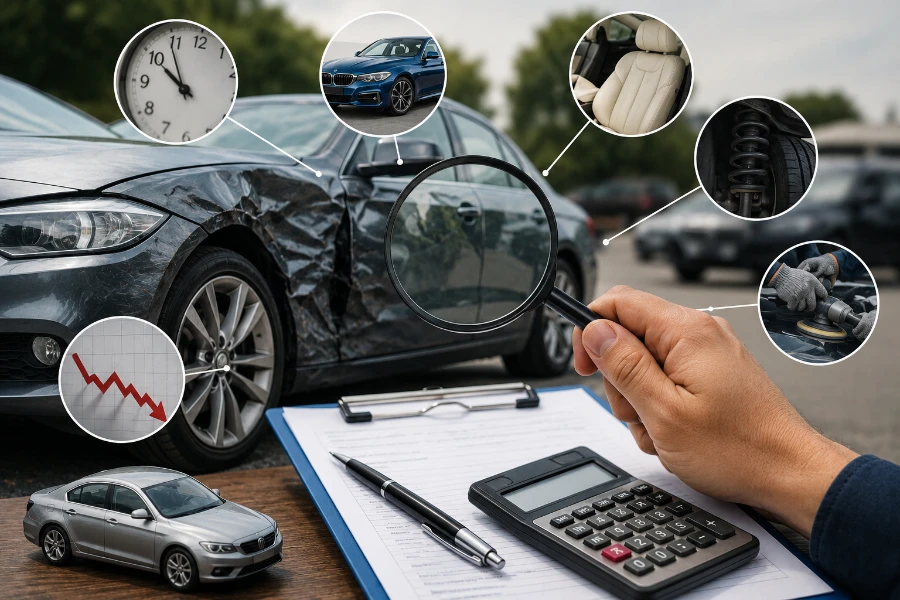
Several factors influence the final valuation.
Vehicle Age
Newer vehicles generally suffer greater diminished value losses.
Why?
Because buyers expect newer vehicles to have clean histories.
A three-year-old luxury sedan with accident history may lose substantial market value compared to a fifteen-year-old vehicle.
Vehicle Make and Model
Some vehicles are more sensitive to accident history.
Examples include:
- Luxury vehicles
- Performance cars
- Exotic vehicles
- Premium SUVs
Higher-value vehicles often experience larger diminished value losses.
Pre-Accident Condition
Condition matters.
A well-maintained vehicle with no prior accidents will often support a stronger diminished value claim than a vehicle with extensive prior damage.
Severity of Damage
Serious damage can significantly increase diminished value.
Examples include:
- Frame damage
- Structural repairs
- Airbag deployment
- Suspension damage
- Major panel replacement
The more significant the repairs, the greater the potential impact on resale value.
Quality of Repairs
Not all repairs are equal.
Buyers often inspect repair records carefully.
Poor workmanship can create additional value loss long after repairs are completed.
Accident Reporting History
Vehicle history databases can influence buyer decisions immediately.
When accident records appear in vehicle history reports, resale value frequently suffers.
This factor alone can create measurable diminished value.
How Insurance Companies Evaluate Diminished Value Claims
Insurance companies rarely accept diminished value claims at face value.
Instead, they review documentation, compare market data, and evaluate whether the claimed loss can be supported with evidence. The burden often falls on the vehicle owner to demonstrate that the vehicle’s market value truly declined because of the accident.
Common Insurance Company Approaches
Most insurers rely on a combination of:
- Internal valuation tools
- Comparable vehicle sales
- Repair documentation
- Vehicle history reports
- Market trend analysis
The objective is to estimate what the vehicle would likely sell for after repairs compared to its pre-accident value.
Insurance valuation can involve reviewing multiple variables simultaneously. In some ways, this resembles a form of multivariate statistics, where several independent factors contribute to a final outcome rather than a single measurement.
Why Insurance Companies Often Dispute Claims
A common misconception is that every repaired vehicle automatically qualifies for a large diminished value payment.
That is rarely the case.
Insurance companies frequently question:
- Whether diminished value exists at all
- The amount of value allegedly lost
- The quality of repairs
- The vehicle’s prior condition
- The accuracy of valuation reports
This is precisely why supporting evidence becomes so important.
Common Reasons Claims Are Denied
Several issues can weaken a claim:
| Potential Issue | Impact on Claim |
| Missing repair records | Difficult to verify repairs |
| Prior accidents | Reduces valuation strength |
| Older vehicle age | May limit value loss |
| Poor documentation | Weakens negotiation position |
| Lack of appraisal | Limited proof of damages |
Strong evidence creates stronger claims.
The Critical Role of Auto Appraisals
At Auto Adjusting, we regularly see one factor separating successful claims from unsuccessful ones.
Documentation.
More specifically, professional appraisal documentation.
Why Professional Auto Appraisals Matter
A professional appraisal provides an independent assessment of how much value was lost because of the accident.
Rather than relying on assumptions, an appraiser examines market data, repair history, vehicle condition, and comparable sales.
The result is an evidence-based opinion of value.
If you’re unfamiliar with how post-accident valuations work, our guide on Car Appraisal After Accident can help explain how accident-related appraisals support diminished value claims and insurance negotiations:
What an Auto Appraisal Typically Includes
A comprehensive appraisal may evaluate:
- Vehicle specifications
- Mileage
- Accident severity
- Repair quality
- Structural damage history
- Comparable vehicle sales
- Regional market conditions
- Vehicle history reports
Every piece of information helps paint a more complete picture.
How Appraisals Strengthen Claims
An appraisal provides something insurers respect.
Evidence.
Instead of simply arguing that the vehicle is worth less, the owner can present documented market analysis supporting the claim.
Benefits often include:
- Stronger negotiations
- Improved settlement discussions
- Better claim documentation
- Independent support for value loss calculations
For many vehicle owners, a professional appraisal becomes the foundation of the entire claim.
How to Calculate Diminished Value in Texas
Many drivers want a quick formula.
Unfortunately, diminished value rarely fits neatly into a simple calculation.
Every vehicle has unique characteristics that influence its market value.
Market-Based Valuation Methods
Professional appraisers often rely on real-world market data.
This may include:
- Comparable vehicle sales
- Dealer inventory pricing
- Auction results
- Regional demand trends
- Vehicle condition comparisons
These methods focus on how buyers actually behave in the marketplace.
Interestingly, many vehicle pricing trends reflect concepts studied in behavioral economics, a field that examines how consumers make purchasing decisions and react to perceived risk. Buyers often place lower values on vehicles with accident histories even when repairs are professionally completed. Learn more here:
Formula-Based Methods
Some insurance companies rely on formula-driven calculations.
While formulas can provide estimates, they may overlook important variables such as:
- Vehicle rarity
- Brand reputation
- Local market conditions
- Repair quality
- Buyer preferences
As a result, formula-only approaches may not always reflect actual market behavior.
Why Accurate Valuation Requires Professional Analysis
No two diminished value claims are identical.
A luxury vehicle with structural repairs may experience significantly different market reactions than a standard commuter vehicle with minor cosmetic damage.
Understanding valuation methodology is equally important. Our detailed guide on The Car Appraisal Process explains how appraisers evaluate vehicle condition, repair history, market comparisons, and post-accident value when preparing professional appraisal reports:
Professional analysis helps account for these differences and often produces more reliable conclusions.
Steps to Pursue a Diminished Value Claim

If you believe your vehicle has suffered diminished value, taking a structured approach can improve your chances of success.
Gather Accident Documentation
Start with the basics.
Collect:
- Police reports
- Photographs
- Claim numbers
- Insurance correspondence
- Witness information if available
Organization helps tremendously throughout the process.
Obtain Repair Records
Keep detailed documentation of all repairs.
Examples include:
- Original repair estimates
- Final invoices
- Parts replacement records
- Repair warranties
- Supplement estimates
The more complete the documentation, the easier it becomes to support your claim.
Secure a Professional Auto Appraisal
An independent appraisal often provides the strongest support for a diminished value claim.
It offers an objective assessment of the financial impact caused by the accident.
Submit the Claim
Present your documentation clearly and professionally.
Include:
- Accident records
- Repair invoices
- Vehicle photographs
- Appraisal reports
- Supporting market evidence
A well-organized submission can help streamline the review process.
Negotiate the Settlement
Many claimants assume the first offer is final.
It often isn’t.
Review all offers carefully and compare them to the supporting evidence.
Negotiations backed by documentation typically carry more weight than opinions alone.
Common Mistakes Texas Vehicle Owners Make
Even valid claims can be weakened by avoidable mistakes.
Waiting Too Long
Evidence can become harder to obtain over time.
Repair records, photographs, and claim documentation are easier to collect immediately after the accident.
Accepting the Initial Offer Too Quickly
Some vehicle owners settle before fully understanding their diminished value loss.
Patience can be valuable.
Failing to Document Repairs
Missing records create gaps in the claim.
Insurers may question damage severity or repair quality when documentation is incomplete.
Relying Solely on Online Calculators
Online calculators can provide rough estimates.
However, they rarely reflect real-world market conditions accurately enough to support a claim.
Skipping a Professional Appraisal
Without an independent appraisal, proving diminished value becomes significantly more difficult.
Documentation matters.
When Legal Assistance May Be Helpful
Most diminished value claims are resolved without legal action.
However, certain circumstances may justify consulting an attorney.
Examples include:
- High-value luxury vehicles
- Commercial vehicle disputes
- Significant settlement disagreements
- Complex liability issues
- Large diminished value losses
Professional legal guidance can help clarify available options when negotiations stall.
Conclusion
Searching for diminished value statute Texas often leads vehicle owners to expect a single law that clearly explains every aspect of diminished value claims. In reality, Texas handles these claims through broader property damage principles, insurance practices, and supporting valuation evidence.
The good news is that diminished value can be a legitimate and measurable loss.
The challenge is proving it.
That’s why documentation, repair records, market analysis, and professional appraisals play such important roles in the process. A vehicle may be fully repaired, but if its accident history reduces resale value, that loss deserves careful consideration.
Whether you’re pursuing a claim against an at-fault driver or simply trying to understand your vehicle’s post-accident value, taking an evidence-based approach can make a significant difference. The stronger your documentation, the stronger your position.
At Auto Adjusting, we believe informed vehicle owners make better decisions, build stronger claims, and place themselves in the best position to recover the compensation they deserve after an accident.
FAQs
Diminished value is the reduction in a vehicle’s market value after it has been involved in an accident, even if repairs are completed properly.
Texas does not have a single standalone diminished value statute. Instead, these claims are generally based on property damage principles and insurance claim practices.
Yes, Texas vehicle owners may be able to pursue a third-party diminished value claim against the at-fault driver’s insurer when sufficient evidence supports the loss.
In many cases, yes. Buyers often pay less for vehicles with accident histories, even when repairs are professionally completed.
Diminished value is typically determined through market analysis, comparable vehicle sales, repair records, and professional appraisal reports.
Newer vehicles, luxury cars, high-performance models, and vehicles with significant structural damage often experience the greatest loss in value.
While not always required, a professional appraisal can provide independent evidence that strengthens your claim and supports negotiations.
Yes. Previous accident history may reduce the amount of diminished value that can be attributed to the most recent collision.
Claims may be denied because of insufficient documentation, prior damage, questions about repair quality, or disagreements regarding the amount of value lost.
It’s a good idea to keep accident reports, repair invoices, photographs, and appraisal documents for several years in case questions arise later.