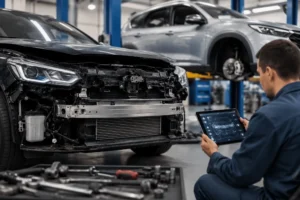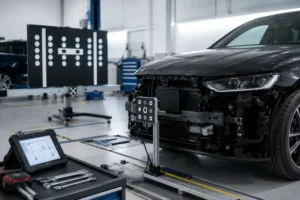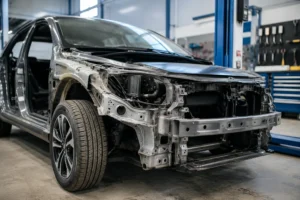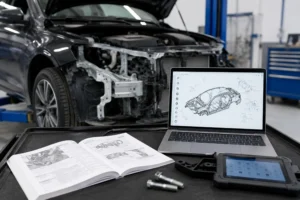

A vehicle accident is stressful enough. Then comes the phone call from the insurance company informing you that your car has been declared a total loss. Soon after, you receive a settlement offer that seems far lower than what it would actually cost to replace your vehicle.
That’s where many vehicle owners make a costly mistake.
They assume the offer is final.
It usually isn’t.
If you need to negotiate total loss offer amounts with an insurance company, understanding how vehicle valuations work can make a significant difference in the outcome of your claim. In many cases, policyholders who take the time to review the insurer’s valuation report discover mistakes, omissions, or outdated market data that can affect the settlement amount.
The good news?
You have options.
Let’s break down exactly how to negotiate total loss offer disputes and position yourself for a fair settlement.
Understanding What a Total Loss Offer Really Means
When an insurer determines that repairing a vehicle would cost more than a certain percentage of its value, they may classify it as a total loss.
This doesn’t necessarily mean the vehicle is beyond repair.
It simply means repairing it may no longer be economically practical according to the insurer’s guidelines.
Once the vehicle is declared a total loss, the insurance company calculates its Actual Cash Value (ACV).
Actual Cash Value is generally based on:
- Vehicle age
- Mileage
- Overall condition
- Market sales data
- Vehicle options and packages
- Comparable vehicle listings
The resulting figure becomes the basis of the settlement offer.
Unfortunately, valuation reports aren’t always perfect.
And that’s exactly why many policyholders choose to negotiate total loss offer amounts before accepting payment.
Why Total Loss Offers Often Come In Lower Than Expected
Most people compare the settlement offer to what it costs to buy another vehicle today.
Insurance companies approach the valuation differently.
They’re focused on determining what your specific vehicle was worth immediately before the accident occurred.
That difference in perspective often creates frustration.
Several common factors contribute to low settlement offers.
Incorrect Comparable Vehicles
Insurance companies frequently use comparable vehicles to establish market value.
However, not all comparables are truly comparable.
For example:
| Vehicle Attribute | Your Vehicle | Comparable Vehicle |
| Mileage | 45,000 | 85,000 |
| Trim Level | Premium | Base Model |
| Navigation | Included | Not Included |
| Leather Seats | Yes | No |
Small differences can create significant valuation gaps.
Missing Factory Options
Many valuation reports overlook valuable factory-installed equipment.
Examples include:
- Premium sound systems
- Advanced safety packages
- Sunroofs
- Heated seats
- Technology upgrades
- Tow packages
Missing options can reduce the calculated value of the vehicle.
Mileage Errors
Mileage plays a major role in vehicle valuation.
Even a simple data-entry mistake can impact the final offer.
Always verify the mileage listed in the report.
Regional Market Differences
Vehicle values vary dramatically between markets.
A pickup truck in Texas may command a different value than the same vehicle in another state.
The same applies to SUVs, luxury vehicles, and specialty models.
If the valuation relies on distant markets, the settlement may not accurately reflect local replacement costs.
Review the Valuation Report Before Doing Anything Else

The first rule when you negotiate total loss offer disputes is simple:
Don’t rush.
Take time to obtain and review the complete valuation package.
Ask the adjuster for:
- Full valuation report
- Comparable vehicle listings
- Condition adjustments
- Mileage calculations
- Option adjustments
Then examine every detail carefully.
When reviewing the report, think like an auditor. Every number matters. Even small discrepancies can affect the final settlement amount. The U.S. government’s resource on consumer dispute resolution emphasizes the value of maintaining records and documentation when addressing financial disagreements.
Information You Should Verify
Use this checklist:
| Item | Verify Accuracy |
| Year | ✓ |
| Make | ✓ |
| Model | ✓ |
| Trim Level | ✓ |
| Mileage | ✓ |
| Factory Options | ✓ |
| Vehicle Condition | ✓ |
| Comparable Vehicles | ✓ |
Errors happen more often than many people realize.
And every error has the potential to affect your settlement.
Gathering Evidence That Supports a Higher Value
Once you’ve reviewed the insurer’s report, start building your own valuation file.
Think of yourself as preparing a case.
The stronger the evidence, the stronger your negotiating position.
Building that file requires organization. In many ways, the process resembles taxonomy, the practice of organizing information into categories for analysis and comparison. The better your documentation is organized, the easier it becomes to support a higher vehicle valuation.
Find Better Comparable Vehicles
Search reputable sources such as:
- Dealer websites
- Auto marketplaces
- Manufacturer-certified listings
- Local dealership inventories
Focus on vehicles that closely match:
- Year
- Make
- Model
- Trim
- Mileage
- Condition
Avoid using unrealistic examples.
The goal is credibility.
Strong evidence beats exaggerated claims every time.
Document Vehicle Upgrades
Many owners forget how much money they’ve invested in their vehicle.
Gather documentation for:
- New tires
- Recent engine work
- Transmission replacements
- Suspension upgrades
- Factory accessories
- Technology upgrades
Keep receipts whenever possible.
Organize Maintenance Records
Consistent maintenance helps demonstrate vehicle condition.
Helpful records include:
- Oil changes
- Brake service
- Tire replacements
- Dealer maintenance history
- Inspection reports
While maintenance doesn’t always increase value dollar-for-dollar, it supports a stronger condition rating.
How to Negotiate a Total Loss Offer Successfully
Now comes the actual negotiation process.
Many people feel intimidated when dealing with insurance adjusters.
They shouldn’t.
Remember this.
The adjuster is working from data.
You should be too.
Step One: Identify Every Valuation Error
Create a simple list.
For example:
| Issue Found | Potential Impact |
| Wrong Mileage | Increased Value |
| Missing Premium Package | Increased Value |
| Incorrect Comparable | Increased Value |
| Condition Misclassification | Increased Value |
Specific corrections carry far more weight than general complaints.
Step Two: Submit Supporting Documentation
Provide evidence in an organized manner.
Include:
- Comparable vehicle listings
- Receipts
- Photos
- Maintenance records
- Vehicle option documentation
Make the adjuster’s job easy.
Professional presentation often leads to more productive discussions.
Step Three: Request a Revised Evaluation
Once you’ve submitted evidence, formally request reconsideration.
Keep communication professional.
Avoid emotional arguments.
Instead, focus on facts.
A good request might include:
- Specific valuation errors
- Supporting documentation
- Requested corrections
- Updated market data
Facts drive settlements.
Emotions rarely do.
Step Four: Continue the Discussion
Sometimes the first response is still unsatisfactory.
That’s normal.
You may need multiple conversations before reaching a resolution.
Continue focusing on:
- Documentation
- Market evidence
- Valuation accuracy
Persistence often pays off.
The key is to remain patient and professional throughout the process. Every time you communicate with the insurance company, support your position with facts rather than opinions.
When an Independent Auto Appraisal Becomes Valuable
At some point, negotiations may stall.
You believe the vehicle is worth more.
The insurer disagrees.
This is where professional assistance can become extremely valuable.
An independent appraisal can provide a more detailed analysis of market value, vehicle condition, and comparable sales than many standard insurance valuations. For readers who want a deeper understanding of how professionals determine vehicle value, our guide on the car appraisal process explains the steps appraisers use to develop a credible and well-supported valuation.
Unlike insurer-generated reports, independent appraisers work solely on determining fair market value based on available evidence.
The appraisal process often includes:
- Market research
- Comparable analysis
- Vehicle option review
- Condition assessment
- Detailed valuation report
For many policyholders trying to negotiate total loss offer disputes, an independent appraisal becomes one of the strongest pieces of evidence available.
A professional appraisal can also uncover valuation issues that vehicle owners may overlook, including incorrect market adjustments, inaccurate condition ratings, or improperly selected comparable vehicles.
Understanding the Insurance Appraisal Clause
Many vehicle owners have never heard of the appraisal clause until a dispute arises.
Yet it can be one of the most effective tools available when negotiations break down.
An appraisal clause is a provision found in many auto insurance policies that allows valuation disputes to be resolved through a structured appraisal process rather than litigation.
Here’s the basic concept:
- The vehicle owner selects an appraiser.
- The insurance company selects its own appraiser.
- The two appraisers attempt to reach an agreement.
- If they cannot agree, an umpire may be selected to make a final determination.
This process focuses on one critical issue:
Value.
Not liability. Not coverage disputes. Just the value of the vehicle.
For policyholders attempting to negotiate total loss offer disagreements, the appraisal clause can often provide a path forward when direct negotiations fail.
Benefits of the Appraisal Clause
The appraisal process offers several advantages:
- Often faster than litigation
- Focuses specifically on vehicle value
- Uses qualified valuation professionals
- Can result in higher settlement amounts when undervaluation exists
- Provides a formal dispute-resolution mechanism
Limitations to Consider
Like any process, appraisal is not perfect.
Potential considerations include:
- Appraisal costs
- Time requirements
- Policy-specific limitations
- Availability of qualified appraisers
Still, for significant valuation disputes, appraisal can be a powerful option.
Common Mistakes People Make During Total Loss Negotiations
I’ve seen many vehicle owners leave money on the table because they make avoidable mistakes.
Let’s look at the most common ones.
Accepting the First Offer Immediately
This happens more often than you might think.
After dealing with an accident, towing, rental vehicles, and paperwork, many people simply want the process to end.
That’s understandable.
But accepting the first offer without reviewing the valuation report can be costly.
Always verify the numbers first.
Failing to Review Comparable Vehicles
Comparable vehicles are the foundation of many valuation reports.
If the comparables are flawed, the settlement may be flawed as well.
Review every comparable carefully.
Pay attention to:
- Mileage differences
- Trim levels
- Vehicle condition
- Geographic location
- Equipment packages
Even small discrepancies can influence value.
Using Weak Evidence
Not all evidence carries the same weight.
For example:
| Strong Evidence | Weak Evidence |
| Dealer Listings | Online Opinions |
| Vehicle Appraisals | Social Media Posts |
| Maintenance Records | Verbal Estimates |
| Receipts | General Complaints |
When you negotiate total loss offer disputes, quality evidence matters.
Becoming Emotional During Negotiations
Accidents are personal.
Vehicles often represent years of investment and care.
However, negotiations work best when they remain fact-based.
Insurance companies respond to documentation.
They respond to data.
They respond to evidence.
Keep the discussion professional and focused on valuation facts.
Missing Important Deadlines
Some policies contain deadlines related to dispute resolution procedures.
Don’t wait too long.
If you believe the offer is incorrect, begin gathering evidence immediately.
Special Situations That Require Extra Attention
Not all vehicles fit neatly into standard valuation models.
Certain vehicles often require additional scrutiny.
Classic and Collector Cars
Classic vehicles present unique challenges.
Their value may depend on:
- Rarity
- Originality
- Restoration quality
- Collector demand
- Historical significance
Standard valuation tools often struggle to accurately assess collector vehicles.
Modified Vehicles
Many vehicle owners invest heavily in modifications.
Examples include:
- Lift kits
- Performance upgrades
- Custom wheels
- Suspension modifications
- Specialty audio systems
Unfortunately, insurers may not automatically account for these additions.
Documentation becomes critical.
Luxury Vehicles
Luxury vehicles often contain premium options that significantly affect value.
Missing features such as:
- Driver-assistance packages
- Premium interiors
- Technology upgrades
- Performance packages
can create substantial valuation differences.
Recently Purchased Vehicles
If you recently purchased the vehicle, your purchase documents may provide useful evidence.
While purchase price alone does not determine current value, it can help support your position when combined with other market data.
Low-Mileage Vehicles
Low mileage frequently increases value.
If the insurer’s report does not adequately account for exceptionally low mileage, the settlement may be lower than appropriate.
Signs You May Be Leaving Money on the Table

Many valuation disputes begin after an accident when vehicle owners discover that the insurance company’s assessment does not reflect the vehicle’s true market value. If your claim involves collision damage, our article about car appraisal after an accident explains how professional appraisals can help support fair compensation and strengthen negotiations.
How do you know whether you should continue negotiating?
Watch for these warning signs.
The Settlement Won’t Replace Your Vehicle
One of the biggest red flags occurs when comparable replacement vehicles consistently cost significantly more than the settlement offer.
While settlement calculations don’t guarantee replacement cost, a large gap deserves closer examination.
Important Features Are Missing
Review your valuation report carefully.
Missing features often include:
- Leather seating
- Navigation systems
- Premium audio packages
- Factory towing packages
- Safety technology packages
Missing options frequently translate into missing value.
Condition Ratings Seem Unfair
Vehicle condition adjustments can significantly affect settlements.
If the report rates your vehicle as average despite excellent maintenance and appearance, the valuation may deserve further review.
Comparables Don’t Match
If comparable vehicles have:
- Higher mileage
- Lower trim levels
- Fewer features
- Inferior condition
the valuation may not accurately reflect your vehicle.
The Numbers Don’t Add Up
Trust your instincts.
If something appears inconsistent, investigate further.
Many successful valuation challenges begin because a vehicle owner simply noticed something didn’t seem right.
Why Professional Auto Appraisals Can Strengthen Your Position
Negotiation becomes much easier when supported by an independent valuation.
Professional auto appraisers focus exclusively on determining fair market value.
Their reports often include:
- Detailed vehicle analysis
- Market research
- Comparable vehicle review
- Option verification
- Valuation calculations
This creates an objective foundation for discussions.
Rather than relying solely on personal opinion, you can present a professionally supported value conclusion.
For vehicle owners trying to negotiate total loss offer disputes involving substantial dollar amounts, professional appraisals often become an important part of the strategy.
At Auto Adjusting, the focus is on helping vehicle owners navigate valuation disputes through independent appraisal services and appraisal clause representation. When disagreements arise regarding total loss values, having experienced valuation professionals involved can provide clarity and support throughout the process.
Conclusion
Receiving a total loss settlement offer can feel overwhelming. However, accepting the first number presented is not always the best move.
The most successful policyholders take a different approach.
They review the valuation report carefully. They verify every detail and they gather strong evidence. And when necessary, they negotiate total loss offer disputes using facts rather than assumptions.
Remember, insurance valuations are based on data. If the data is incomplete, inaccurate, or outdated, the settlement may be too.
Whether you’re dealing with incorrect comparables, missing options, mileage discrepancies, or broader valuation disagreements, taking the time to investigate can make a meaningful difference in the final outcome.
And when negotiations reach a standstill, independent auto appraisals and appraisal clause services can provide an objective path toward resolving the dispute.
Before signing any settlement documents, make sure the offer truly reflects the value of your vehicle. A few extra steps today could result in a significantly fairer recovery tomorrow.
FAQs
Yes. Insurance companies often reconsider settlement amounts when you provide evidence showing valuation errors or stronger comparable vehicle data.
Most insurers use the vehicle’s Actual Cash Value (ACV), which considers factors such as age, mileage, condition, options, and local market data.
Not until you review the valuation report for errors, missing features, or inaccurate comparable vehicles that could affect the settlement amount.
Comparable vehicle listings, maintenance records, receipts for upgrades, photographs, and professional appraisals can all support a higher valuation.
Simple corrections may be resolved within days, while more complex valuation disputes can take several weeks to settle.
They can, but you’ll typically need receipts and documentation proving the modifications and their contribution to the vehicle’s market value.
You can challenge the valuation by presenting more accurate local comparables that better match your vehicle’s mileage, trim level, and condition.
Consider hiring an appraiser when there is a significant difference between your valuation and the insurer’s offer or when negotiations have stalled.
The appraisal clause is a dispute-resolution process that allows independent appraisers to determine a fair vehicle value when both sides disagree.
In many cases, yes. A professional appraisal can provide credible evidence that strengthens your negotiating position and may help secure a higher settlement.