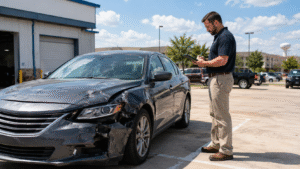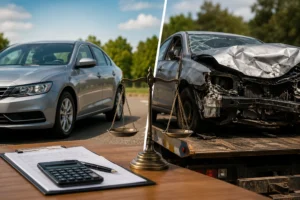

An accident can leave more behind than dents, scratches, and a damaged bumper. In many cases, the biggest problem is hidden beneath the surface. A structural damage vehicle may look repaired and road-ready, yet serious issues can remain that affect safety, value, and future insurance claims.
Many drivers assume that once repairs are complete, the situation is over. I have seen countless cases where that assumption leads to expensive surprises months or even years later. Structural damage is one of the most important factors affecting a vehicle after a collision, and it deserves close attention.
Whether you recently experienced an accident or you’re reviewing a repair estimate, understanding vehicle structural damage can help you make smarter decisions. It can also help you protect the value of your vehicle and ensure you receive fair treatment from insurance companies.
What Is Structural Damage on a Vehicle?
Structural damage occurs when an accident affects the parts of a vehicle that support its overall strength and integrity. These components are not designed for appearance. They are designed for protection.
Modern vehicles are built using either traditional frame construction or unibody construction. While the designs differ, both rely on structural components to absorb crash energy and protect occupants.
Understanding Vehicle Structure
Think of a vehicle’s structure as its skeleton.
The exterior panels may look attractive, but the structure underneath carries the real responsibility. It supports the engine, suspension, drivetrain, and passenger compartment while helping the vehicle respond properly during a collision.
Common structural components include:
- Frame rails
- Rocker panels
- Roof supports
- Floor pans
- A-pillars, B-pillars, and C-pillars
- Crossmembers
- Suspension mounting points
Damage to these areas can significantly affect how a vehicle performs and protects occupants.
What Qualifies as Structural Damage?
Not every accident causes structural damage. However, when impact forces travel beyond cosmetic panels and reach structural components, the consequences become much more serious.
Examples include:
| Structural Component | Potential Damage |
| Frame Rails | Bending, twisting, buckling |
| Roof Structure | Crushed supports from rollover accidents |
| Floor Pan | Distortion after major impacts |
| Pillars | Cracking or deformation |
| Suspension Mounts | Misalignment affecting handling |
| Crumple Zones | Compression or improper reshaping |
Even small changes in these areas can affect the vehicle’s overall performance.
Structural Damage vs. Cosmetic Damage
A scratched door is cosmetic.
A bent frame rail is structural.
The difference matters because cosmetic repairs usually restore appearance, while structural repairs must restore safety and functionality.
A vehicle can look perfect after repairs yet still contain underlying structural concerns. That is why professional inspections remain critical after significant collisions.
How Structural Damage Happens
Most people associate structural damage with severe crashes. That’s understandable.
But reality is often different.
A relatively moderate collision can produce enough force to shift structural components by fractions of an inch. Those small movements can create significant issues throughout the vehicle.
Major Collision Impacts
Several accident types commonly result in structural damage.
Front-End Collisions
Front impacts frequently affect:
- Front frame rails
- Engine cradle
- Crumple zones
- Suspension components
The damage may extend far beyond the visible front bumper area.
Rear-End Collisions
Rear impacts can damage:
- Rear frame sections
- Trunk floor structure
- Quarter panel supports
- Rear suspension mounts
Many drivers underestimate the severity of rear-end accidents because the damage often appears localized.
Side-Impact Crashes
Side collisions are particularly concerning.
Vehicle sides have less space to absorb impact energy. As a result, pillars, rocker panels, and floor structures can experience significant deformation.
Rollovers
Rollovers often create extensive structural damage involving:
- Roof supports
- Pillars
- Door openings
- Floor structures
These repairs require careful evaluation because occupant safety depends heavily on proper structural restoration.
Minor Accidents Can Create Major Problems
One of the most common misconceptions is that low-speed impacts cannot cause structural damage.
Unfortunately, they can.
Today’s vehicles are engineered with highly specialized materials and crumple zones. An impact that appears minor may still transfer enough force to affect structural components.
I’ve seen vehicles with modest exterior damage require extensive structural repairs after professional inspections revealed hidden issues.
Signs a Vehicle May Have Structural Damage

Some warning signs appear immediately.
Others develop over time.
Recognizing these indicators early can prevent further problems and support stronger insurance claims.
Physical Warning Signs
Watch for:
- Uneven panel gaps
- Doors that stick or fail to close properly
- Misaligned hood or trunk lid
- Uneven ride height
- Visible buckling in structural areas
These issues often suggest the vehicle’s structure has shifted.
Driving Symptoms
The road can reveal problems that are difficult to spot visually.
Common symptoms include:
- Vehicle pulling left or right
- Steering wheel sitting off-center
- Excessive vibration
- Abnormal tire wear
- Suspension noises
Many drivers assume these issues stem from alignment problems alone. In reality, underlying structural damage may be the true cause.
Why Professional Inspections Matter
Visual inspections have limitations.
Even experienced vehicle owners cannot always identify structural damage without specialized equipment.
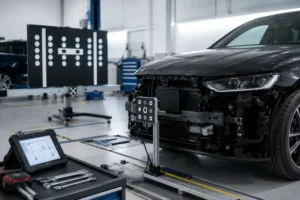
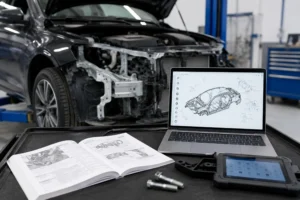
Professional repair facilities use computerized measuring systems that compare structural dimensions to factory specifications. These systems can detect deviations that would otherwise remain hidden.
That information becomes especially important when insurance disputes arise.
Why Structural Damage Matters
Structural damage affects more than repair costs.
It can influence safety, reliability, resale value, and future claim outcomes.
That’s a lot of risk packed into a problem many vehicle owners never fully understand.
Vehicle Safety Concerns
Modern vehicles are engineered with incredible precision.
Every structural component serves a specific purpose during a collision. When those components are damaged, the vehicle may not perform as intended during a future accident.
Potential safety concerns include:
- Reduced crash protection
- Altered crumple zone performance
- Increased occupant injury risk
- Changes in airbag deployment dynamics
Structural repairs should restore the vehicle’s original crashworthiness as closely as possible because occupant protection depends heavily on how the structure manages collision forces during an accident.
Even when repairs appear successful, improper restoration can compromise safety systems.
Repair Challenges
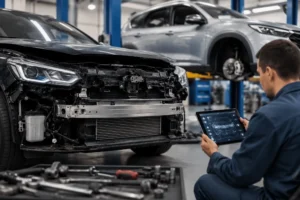
Restoring a structural damage vehicle requires more than replacing visible parts.
Technicians often need:
- Frame measuring equipment
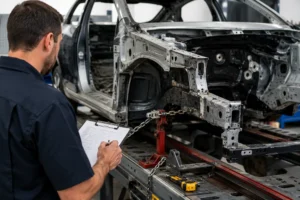
- Structural pulling systems
- Welding procedures
- OEM repair specifications
- Replacement structural components
A successful repair depends on following manufacturer guidelines carefully.
Shortcuts create problems.
Unfortunately, shortcuts happen.
Long-Term Reliability Issues
Structural damage can create ongoing headaches long after repairs are completed.
Examples include:
| Long-Term Issue | Possible Cause |
| Tire Wear | Structural misalignment |
| Steering Problems | Suspension mounting movement |
| Wind Noise | Body fitment issues |
| Water Leaks | Improper panel alignment |
| Suspension Wear | Geometry changes |
In some cases, repeated stress on previously damaged components can contribute to metallurgical fatigue, which may accelerate wear and increase the likelihood of future mechanical problems.
These issues can increase ownership costs for years.
How Structural Damage Impacts Vehicle Value
This is where many vehicle owners experience a second financial loss.
The first loss occurs during the accident.
The second often occurs when they attempt to sell or trade the vehicle.
Understanding Diminished Value
A vehicle involved in a significant collision frequently loses market value even after repairs are completed.
This reduction is called diminished value.
Buyers often prefer vehicles without major accident histories. As a result, a repaired structural damage vehicle may command a lower resale price than a comparable vehicle with a clean history.
The market simply views risk differently after structural repairs.
Structural Damage History and Resale Value
Vehicle history reports make accident information more accessible than ever.
Potential buyers can quickly discover:
- Major collision history
- Structural damage records
- Insurance claim activity
- Repair history
That transparency benefits consumers, but it can also reduce resale opportunities for owners of repaired vehicles.
Dealerships frequently reduce trade-in offers when structural damage appears on vehicle history reports.
Private buyers often negotiate aggressively as well.
Why Structural Damage Causes Greater Value Loss
Not all accident repairs affect value equally.
Structural repairs typically carry greater stigma because they raise concerns regarding:
- Safety
- Future reliability
- Repair quality
- Hidden damage
As a result, diminished value losses can become substantial, particularly for newer vehicles and luxury models.
Many vehicle owners discover these losses only when they try to sell their vehicle.
By then, the financial impact is impossible to ignore.
Insurance Companies and Structural Damage Claims
Discovering that your vehicle has structural damage is stressful enough.
Dealing with the insurance process can make things even more complicated.
Many policyholders assume insurance companies automatically identify every damaged component and include all necessary repairs in their estimates. In reality, the process is not always that simple.
How Insurers Evaluate Structural Damage
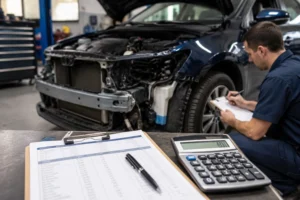
After an accident, insurance companies typically begin with a visual inspection. An adjuster may review photographs, inspect the vehicle in person, or evaluate repair estimates submitted by a body shop.
The challenge is that structural damage is often hidden.
A bumper may conceal bent frame rails. A damaged quarter panel may hide compromised support structures. What appears to be a straightforward repair can quickly become a much larger project once the vehicle is disassembled.
That is why supplemental repair estimates are common during major collision repairs.
Common Claim Challenges
Vehicle owners frequently encounter several issues when structural damage is involved.
These include:
- Hidden damage discovered after repairs begin
- Repair estimates that omit necessary structural procedures
- Disputes regarding replacement versus repair
- Questions about vehicle value after repairs
- Total loss disagreements
The larger the claim, the greater the chance that disagreements may arise.
When Policyholders Should Question the Insurance Evaluation
There are situations where obtaining additional information makes sense.
Consider a second opinion when:
- Repair costs increase significantly after teardown
- The repair shop identifies structural concerns not listed by the insurer
- The vehicle still exhibits driving issues after repairs
- The settlement does not account for diminished value
- A total loss valuation appears too low
These situations often justify a closer review of the claim.
The Role of a Professional Auto Appraisal
A structural damage vehicle often requires more than a standard insurance review.
This is where professional auto appraisals become valuable.
Independent appraisers focus on documenting vehicle condition, repair quality, market value, and financial loss. Their findings can provide vehicle owners with information that may otherwise go unnoticed.
What an Auto Appraiser Looks For
A comprehensive appraisal may include:
- Structural repair documentation
- Vehicle history analysis
- Market valuation research
- Repair estimate review
- Evidence of diminished value
- Inspection of completed repairs
The goal is to determine how the accident truly affected the vehicle.
Independent Appraisals vs. Insurance Assessments
Insurance adjusters and independent appraisers serve different purposes.
Insurance companies evaluate claims based on policy obligations and repair costs.
Independent appraisers focus on the vehicle itself.
Many vehicle owners seek a car appraisal after accident when they disagree with an insurance settlement or suspect hidden structural damage. A professional evaluation can uncover issues that may not appear in an insurance estimate and help document the true financial impact of a collision.
Supporting Insurance Claim Disputes
A detailed appraisal report can help support:
- Diminished value claims
- Total loss disputes
- Repair quality concerns
- Structural damage evaluations
- Insurance settlement negotiations
Strong documentation often creates stronger outcomes.
Can a Vehicle With Structural Damage Be Repaired?
The answer depends on the severity of the damage.
Many vehicles with structural damage can be repaired safely when proper procedures are followed. Others may simply be too damaged to justify repair.
Modern Repair Techniques
Today’s repair facilities have access to sophisticated equipment.
Common structural repair methods include:
- Frame straightening
- Structural section replacement
- Precision measuring systems
- OEM-approved welding procedures
- Structural reinforcement replacement
These tools allow technicians to restore vehicles to manufacturer specifications when repairs are feasible.
When Repairs Are Appropriate
Repairing a structural damage vehicle may be appropriate when:
- Damage is confined to repairable areas
- Manufacturer procedures support repair
- Repair costs remain reasonable
- Structural integrity can be restored
Proper documentation is critical throughout the process.
When a Vehicle May Be Declared a Total Loss
Some vehicles suffer damage that exceeds practical repair limits.
Insurance companies may declare a vehicle a total loss when:
| Factor | Impact |
| Repair Costs | Exceed vehicle value |
| Extensive Structural Damage | Safety concerns increase |
| Multiple Structural Areas Affected | Repair complexity rises |
| Market Value | Insufficient to justify repairs |
Every situation is unique.
The key is ensuring the valuation process is accurate.
How to Protect Yourself After an Accident

The decisions made immediately after a collision can significantly affect the outcome of an insurance claim.
Preparation matters.
Documentation matters even more.
Steps to Take Immediately
After an accident:
- Photograph all visible damage.
- Obtain a police report if applicable.
- Save repair estimates.
- Keep all claim communications.
- Request repair documentation.
- Maintain copies of invoices and supplements.
These records become valuable if disputes arise later.
Questions to Ask the Repair Shop
Before repairs begin, ask:
- Has structural damage been identified?
- What measuring system was used?
- Are OEM repair procedures being followed?
- Will structural parts be repaired or replaced?
- How will repairs be documented?
Clear answers today can prevent problems tomorrow.
When to Seek an Independent Auto Appraisal
Professional appraisals are often worthwhile when:
- Structural damage is present
- Vehicle value is disputed
- Diminished value may exist
- Insurance negotiations stall
- A total loss settlement appears inaccurate
Waiting too long can limit available options.
How AutoAdjusting Helps Vehicle Owners
Vehicle owners often feel overwhelmed after an accident.
Insurance paperwork accumulates quickly. Repair estimates become increasingly complex. Questions about value, repairs, and compensation seem to multiply overnight.
That is where professional appraisal services can help.
Independent Vehicle Appraisals
AutoAdjusting provides independent evaluations designed to help vehicle owners understand the full impact of a collision.
Services may include:
- Structural damage assessments
- Vehicle valuation analysis
- Repair estimate review
- Total loss appraisal support
- Diminished value evaluations
Independent analysis creates greater transparency.
Diminished Value Analysis
Many vehicle owners focus entirely on repair costs.
However, the financial loss often extends beyond repairs.
Structural damage can significantly reduce market value, even after high-quality repairs are completed. Professional diminished value assessments help quantify that loss and provide supporting documentation when compensation is warranted.
Insurance Claim Support
Understanding the car appraisal process helps vehicle owners make informed decisions after an accident. A thorough appraisal can identify structural concerns, document diminished value, and provide evidence that supports fair claim settlements.
Accurate information often becomes the strongest negotiating tool available.
Conclusion
A structural damage vehicle represents more than a repair challenge.
It affects safety. It affects value and it affects future ownership costs.
Most importantly, it affects the financial outcome of an insurance claim.
Understanding how structural damage occurs, how it is repaired, and how it influences vehicle value allows owners to make informed decisions throughout the claims process.
Whether you’re evaluating repair options, disputing an insurance settlement, or investigating diminished value, professional documentation can make a substantial difference.
The reality is simple. Structural damage does not always end when repairs are complete.
That is why vehicle owners should approach every major collision with a clear understanding of the risks, the repair process, and the potential financial consequences. When questions arise, an independent appraisal may provide the answers needed to protect both your vehicle and your investment.
FAQs
Structural damage occurs when an accident affects key support components such as frame rails, pillars, floor pans, or suspension mounting points.
Yes, many vehicles can be repaired safely if technicians follow manufacturer repair procedures and restore the structure to factory specifications.
Yes. Even after repairs, structural damage can lower resale and trade-in value because buyers often view previously damaged vehicles as higher risk.
Common signs include uneven panel gaps, alignment issues, steering problems, unusual tire wear, and doors that do not close properly.
Most collision coverage policies pay for covered structural repairs, subject to policy terms, deductibles, and claim limits.
Yes. Even relatively low-speed impacts can affect structural components depending on the vehicle design and collision forces involved.
The repair facility typically submits a supplemental estimate to the insurance company for approval of the additional repair costs.
An independent appraisal can help verify repair costs, document diminished value, and support insurance claim disputes.
Yes. Improperly repaired structural damage can contribute to alignment issues, suspension wear, tire problems, and other long-term concerns.
No. A vehicle becomes a total loss only when repair costs, salvage value, and other factors exceed the insurer’s repair threshold.