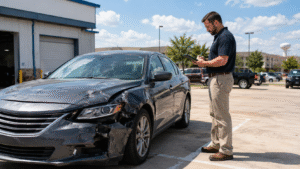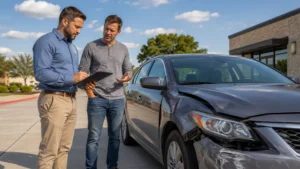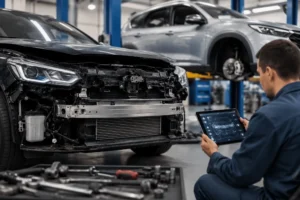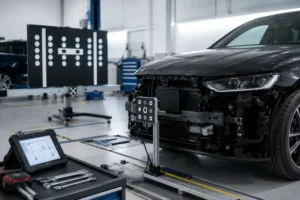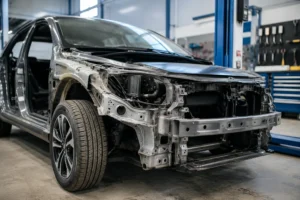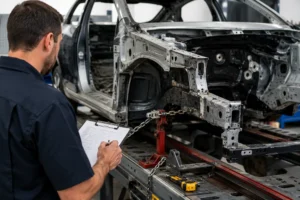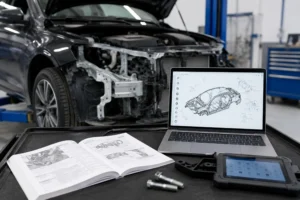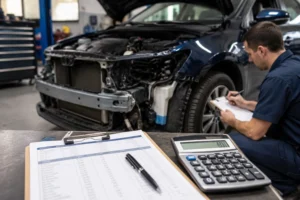
An accident can damage more than your vehicle.
It can damage its value.
Many Texas drivers discover this the hard way. Their vehicle is repaired, the insurance claim is closed, and life moves on. Then months later, when they attempt to trade in or sell the vehicle, they receive an offer that is thousands of dollars lower than expected.
Why?
Because accident history follows a vehicle long after repairs are completed.
That’s where a diminished value claim Texas vehicle owners pursue can become incredibly important. Even if your car looks perfect and drives exactly as it did before the collision, the market may still view it differently. Buyers often pay less for vehicles with documented accident histories, and that difference can represent a significant financial loss.
Unfortunately, many drivers never realize they may be entitled to compensation for that loss.
Understanding how diminished value claims work can help you recover money that might otherwise remain in the insurance company’s pocket.
What Is a Diminished Value Claim?
A diminished value claim seeks compensation for the reduction in your vehicle’s market value after an accident.
The concept is simple.
Before the accident, your vehicle had a certain market value. After the accident—even following high-quality repairs—the market may value it less simply because it has been involved in a collision.
That difference is known as diminished value.
For example:
| Scenario | Vehicle Value |
| Before Accident | $35,000 |
| After Professional Repairs | $31,000 |
| Diminished Value | $4,000 |
In this example, the vehicle owner potentially lost $4,000 despite the vehicle being fully repaired.
That loss is often the basis of a diminished value insurance claim.
The Three Types of Diminished Value
Immediate Diminished Value
This refers to the difference in value immediately after the accident occurs, before repairs are completed.
Inherent Diminished Value
This is the most common form of diminished value.
Even when repairs are flawless, buyers often pay less for a vehicle with accident history. The stigma associated with prior damage creates a permanent reduction in market value.
Most Texas diminished value claim cases involve inherent diminished value.
Repair-Related Diminished Value
This occurs when repairs fail to restore the vehicle properly.
Examples include:
- Paint mismatches
- Alignment issues
- Aftermarket parts concerns
- Visible repair defects
- Structural repair shortcomings
Poor repairs can significantly increase the amount of value lost.
How Diminished Value Claims Work in Texas
Texas generally allows vehicle owners to pursue diminished value compensation when another driver is responsible for the accident.
In many situations, a diminished value claim Texas driver files is considered a third-party claim against the at-fault driver’s insurance company.
First-Party vs. Third-Party Claims
| Claim Type | Diminished Value Eligible? |
| Third-Party Claim | Usually Yes |
| First-Party Claim | Depends on Policy |
| At-Fault Driver Claim | Often Limited |
Most successful diminished value settlements occur through third-party claims.
Timing Matters
The longer you delay gathering evidence, repair records, and appraisal documentation, the more difficult negotiations can become.
While legal deadlines may extend for years, practical claim success often depends on acting quickly.
Why Vehicles Lose Value After an Accident

Many drivers ask the same question:
“If my vehicle was repaired perfectly, why is it worth less?”
Because buyers care about history.
And history doesn’t disappear.
Vehicle History Reports Changed Everything
Years ago, buyers often had limited access to accident records.
Today, information is available instantly.
Services such as Carfax, AutoCheck, dealership databases, and repair records provide detailed accident histories within seconds.
A potential buyer can see:
- Accident reports
- Structural damage history
- Airbag deployment records
- Insurance claim information
- Repair history
That information directly affects resale value.
Vehicle valuation is rarely as straightforward as many people assume. Markets are influenced by numerous factors, and buyer behavior can sometimes resemble principles studied in fields such as Behavioral Economics, where perception and decision-making affect value beyond purely objective measurements. This is one reason accident history can have a lasting impact on resale prices even when repairs are completed properly.
Buyer Psychology Matters
Let’s imagine two identical vehicles.
Both have the same mileage.
Both have identical features.
and both look perfect.
One vehicle has never been in an accident.
The other sustained significant collision damage two years ago.
Most buyers choose the accident-free vehicle.
And if they consider the repaired vehicle, they often expect a lower price.
That’s market reality.
Insurance companies understand this. Appraisers understand this. Dealers understand this.
Vehicle owners should understand it too.
Accident History Creates Permanent Market Impact
Even when repairs restore safety and performance, accident history remains attached to the vehicle.
Potential concerns include:
- Hidden structural damage
- Future reliability questions
- Reduced trade-in value
- Lower private-party resale value
These concerns influence market demand.
Lower demand generally means lower value.
Factors That Affect Diminished Value in Texas
Not every vehicle experiences the same amount of value loss.
Several variables influence how much compensation may be available.
Vehicle Age
Newer vehicles often suffer greater diminished value because buyers expect newer vehicles to have clean histories.
Vehicle Make and Model
Premium vehicles frequently experience higher diminished value.
Examples include:
- Luxury sedans
- Performance vehicles
- High-end SUVs
- Specialty vehicles
Severity of Damage
This is one of the biggest factors.
Minor bumper damage generally creates less diminished value than:
- Frame damage
- Structural repairs
- Suspension damage
- Airbag deployment
- Significant body repairs
Mileage
Lower-mileage vehicles generally have more value to lose.
Repair Quality
High-quality repairs help.
Poor repairs hurt.
Insurance companies sometimes assume that repairs completely eliminate financial loss. Real-world market behavior often proves otherwise.
Still, repair quality remains an important factor when calculating vehicle diminished value claims.
How Insurance Companies Calculate Diminished Value
Insurance companies and vehicle owners often disagree significantly on value calculations.
And those disagreements can involve thousands of dollars.
The 17c Formula
Many insurers rely on a method commonly known as the 17c formula.
The formula applies various reductions based on:
- Vehicle value
- Damage severity
- Mileage
- Condition adjustments
Insurance valuation models often rely on formulas and statistical assumptions designed to simplify complex market conditions. In many ways, these systems attempt to reduce uncertainty through a process similar to Bayesian Inference, where available information is used to estimate probable outcomes. However, real-world vehicle markets do not always follow standardized formulas, which is why disputes over diminished value frequently arise.
On paper, it appears systematic.
In practice, many experts criticize it for producing values that are lower than actual market losses.
This often becomes a source of dispute during a diminished value settlement Texas negotiation.
Why Insurance Estimates May Be Low
Insurance companies may:
- Use broad formulas
- Rely on generic data
- Minimize accident severity
- Limit comparable vehicle analysis
As a result, settlement offers sometimes fail to reflect actual market conditions.
This is one reason many vehicle owners seek independent appraisals before accepting an offer.
If you’re unfamiliar with how professional vehicle valuations work, understanding the car appraisal process can provide valuable insight into how appraisers determine fair market value after a collision.
The Role of an Independent Auto Appraisal
When insurance companies and vehicle owners disagree on diminished value, documentation becomes everything.
Opinions don’t carry much weight.
Evidence does.
That’s where an independent auto appraisal can make a substantial difference.
A professional appraisal provides an objective assessment of how much market value your vehicle actually lost after the accident. Rather than relying on generic formulas, an experienced appraiser evaluates the vehicle’s unique characteristics and compares them against real-world market conditions.
What an Independent Appraiser Evaluates
A comprehensive diminished value appraisal often includes:
- Vehicle make and model
- Year of manufacture
- Mileage
- Pre-accident condition
- Repair invoices
- Damage severity
- Structural repair history
- Market comparisons
- Vehicle history report impact
The goal is simple.
Determine what the vehicle was worth before the accident and what it is worth afterward.
That difference can become powerful evidence during negotiations.
Why Appraisal Reports Carry Weight
Insurance adjusters review documentation every day.
A professionally prepared appraisal report provides:
- Detailed valuation methodology
- Supporting market data
- Comparable vehicle analysis
- Independent expert findings
Instead of simply arguing that your vehicle lost value, you can demonstrate it.
That changes the conversation.
For many vehicle owners pursuing a diminished value claim Texas insurers may initially undervalue, a professional appraisal becomes one of the strongest pieces of supporting evidence available.
Signs Your Diminished Value Claim May Be Underpaid
Not every insurance offer accurately reflects the actual loss.
In fact, many vehicle owners are surprised by how low the first offer can be.
Watch for these common warning signs.
The Settlement Offer Arrives Extremely Fast
Fast isn’t always bad.
But when an insurer offers compensation before conducting a thorough valuation review, it may indicate the assessment is incomplete.
No Detailed Explanation Is Provided
A legitimate valuation should include supporting calculations.
Ask questions such as:
- How was the value determined?
- What market data was used?
- Which comparable vehicles were analyzed?
- Was structural damage considered?
If clear answers aren’t available, further investigation may be warranted.
The Offer Seems Unreasonably Low
Consider a scenario:
A luxury SUV sustains significant collision damage resulting in extensive repairs.
The insurance company offers $500 in diminished value compensation.
Meanwhile, market research suggests similar repaired vehicles routinely sell for several thousand dollars less than accident-free examples.
That gap deserves scrutiny.
Generic Valuation Methods Were Used
Every vehicle is different.
A one-size-fits-all formula rarely captures the true market impact of accident history.
Common Insurance Company Arguments and How to Respond

Insurance carriers may challenge diminished value claims in several ways.
Understanding these arguments helps vehicle owners prepare.
“The Vehicle Was Fully Repaired”
This is perhaps the most common response.
The problem?
Repair quality and market value are not the same thing.
A vehicle can be restored perfectly and still experience diminished market value because buyers can see its accident history.
“The Vehicle Is Too Old”
Age matters.
But older vehicles can still suffer measurable diminished value.
The key question is not simply age.
The key question is whether the accident affected market value.
“There Is No Evidence of Market Loss”
This is where appraisal reports become valuable.
Market comparisons, dealer data, vehicle history reports, and resale analysis can all help demonstrate real-world value reductions.
“The Offer Is Final”
Many people assume negotiations end after the first offer.
They often don’t.
Additional documentation can sometimes lead to revised settlement discussions.
Steps to File a Diminished Value Claim in Texas
The process becomes much easier when approached systematically.
Step 1: Gather Accident Documentation
Start collecting records immediately.
Important documents include:
- Police reports
- Insurance claim information
- Photographs
- Witness statements
- Claim correspondence
Organization matters.
The stronger your documentation, the stronger your position.
Step 2: Obtain Complete Repair Records
Request detailed repair invoices.
These records help establish:
- Damage severity
- Parts replaced
- Structural repairs
- Labor performed
The more detailed the documentation, the easier it becomes to evaluate value loss.
Step 3: Obtain an Independent Diminished Value Appraisal
This step is often overlooked.
Many vehicle owners pursuing a diminished value claim Texas insurers may dispute choose to obtain a professional valuation before accepting a settlement offer. A detailed car appraisal after accident can help document the true financial impact of the collision and provide evidence during negotiations with the insurance company.
Without supporting valuation evidence, disputes often become much harder to resolve.
Step 4: Submit Supporting Documentation
Prepare a complete package containing:
- Appraisal report
- Repair invoices
- Accident documentation
- Photographs
- Vehicle information
Presenting organized evidence creates credibility.
Step 5: Negotiate the Settlement
Rarely should vehicle owners assume the first offer is automatically fair.
Review the evidence.
Compare the insurer’s calculations to the appraisal findings.
If discrepancies exist, additional discussions may be appropriate.
How Much Can a Diminished Value Claim Be Worth?
This is one of the most common questions.
The honest answer?
It depends.
Every vehicle and accident is different.
Example Diminished Value Ranges
| Vehicle Type | Potential Diminished Value Range |
| Economy Vehicle | $500 – $2,000 |
| Mid-Size Sedan | $1,000 – $4,000 |
| SUV | $1,500 – $6,000 |
| Luxury Vehicle | $3,000 – $15,000+ |
| High-End Performance Vehicle | $5,000 – $25,000+ |
These examples are illustrative only.
Actual results vary based on vehicle condition, market conditions, accident severity, repair quality, and other factors.
Factors That Often Increase Claim Value
Several characteristics may contribute to larger settlements:
- Low mileage
- Newer model year
- Premium brands
- Structural damage
- Significant repair costs
- Strong market demand
Vehicles with these characteristics frequently have more value at stake.
When Should You Hire an Auto Appraisal Expert?
Not every claim requires expert assistance.
Some situations, however, clearly benefit from professional valuation support.
High-Value Vehicles
Luxury and premium vehicles often experience substantial market stigma after an accident.
Even minor percentage reductions can translate into thousands of dollars.
Structural Damage Cases
Structural repairs tend to attract greater scrutiny from future buyers.
This often increases diminished value exposure.
Disputed Insurance Valuations
When there is a significant gap between your expectations and the insurer’s offer, an independent appraisal can provide objective support.
Performance and Specialty Vehicles
Collectors and enthusiasts often place a premium on clean vehicle history.
As a result, specialty vehicles may experience larger losses after an accident.
Mistakes That Can Hurt Your Texas Diminished Value Claim
Small mistakes can weaken an otherwise strong case.
Avoid these common errors.
Waiting Too Long
Documentation becomes harder to gather over time.
Act promptly.
Accepting the First Offer Without Review
Not every initial settlement reflects actual market loss.
Review supporting calculations carefully.
Losing Repair Records
Keep copies of every invoice and repair document.
These records may become essential evidence.
Relying Solely on Insurance Calculations
Insurance estimates are not the only source of valuation information.
Independent analysis often provides additional perspective.
Skipping an Appraisal
When significant money is involved, professional valuation support can be extremely valuable.
Why Auto Appraisals Play a Critical Role in Diminished Value Claims
At its core, a diminished value claim is a valuation dispute.
The insurance company has a number.
You have a number.
The question becomes: whose number is supported by stronger evidence?
That’s where professional auto appraisals make a difference.
Objective Valuation Creates Leverage
Independent appraisals rely on market data rather than assumptions.
This provides a more defensible foundation for discussions.
Documentation Strengthens Negotiations
Insurance companies respond to evidence.
Detailed reports help establish credibility and support your position.
Professional Analysis Reduces Guesswork
Rather than estimating losses yourself, an experienced appraiser evaluates the vehicle using recognized valuation methods and market research.
Why Many Vehicle Owners Seek Independent Appraisals
When thousands of dollars may be at stake, objective documentation often becomes one of the smartest investments a vehicle owner can make.
The stronger the evidence, the stronger the claim.
Conclusion
A vehicle accident doesn’t always end when repairs are completed.
For many drivers, the financial impact continues long afterward through reduced resale value, lower trade-in offers, and diminished buyer interest.
That’s why understanding a diminished value claim Texas vehicle owners may pursue is so important.
Even a perfectly repaired vehicle can suffer measurable market loss simply because accident history remains attached to it. Buyers see it. Dealers see it. Insurance companies know it exists.
The key is proving it.
Strong documentation, detailed repair records, and a professional diminished value appraisal can help establish the true financial impact of an accident. Whether the loss is a few hundred dollars or several thousand, objective evidence often becomes the foundation of a successful claim.
Before accepting a settlement, take the time to understand what your vehicle may have actually lost in value.
You repaired the damage.
Make sure you’re also compensated for the value that disappeared with it.
FAQs
A diminished value claim seeks compensation for the loss in a vehicle’s market value after an accident, even if the vehicle has been fully repaired.
Yes. Many vehicles still lose market value because buyers can see the accident history through vehicle history reports.
In most cases, the at-fault driver’s insurance company may be responsible for compensating you for diminished value.
It is typically calculated by comparing the vehicle’s pre-accident value to its post-repair market value using appraisal data and market comparisons.
The 17c formula is a valuation method often used by insurers to estimate diminished value, though it is frequently criticized for undervaluing claims.
Sometimes. Eligibility depends on factors such as vehicle condition, mileage, market demand, and the severity of the damage.
An independent appraisal can provide objective evidence of value loss and may strengthen your position during negotiations.
Texas law provides a limited timeframe for pursuing claims, so it’s best to begin the process as soon as possible after the accident.
Keep repair invoices, accident reports, photographs, insurance correspondence, and any appraisal reports related to the vehicle.
Yes. If you believe the offer does not reflect your vehicle’s actual loss in value, you can submit additional evidence and request further review.