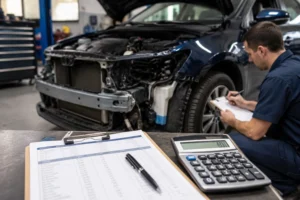
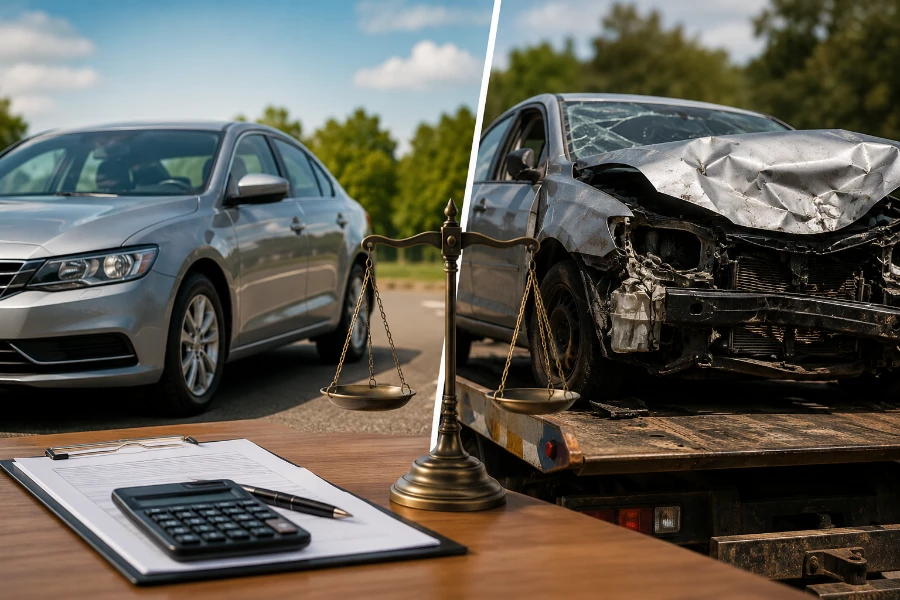
A car accident can affect your vehicle in more ways than most drivers realize. Some vehicles are repaired and returned to the road. Others are declared a total loss and never return to normal use. Understanding the difference between diminished value vs total loss is essential if you want to maximize your insurance settlement and avoid leaving money on the table.
Many vehicle owners mistakenly believe that once repairs are completed, their vehicle automatically regains its previous value. Unfortunately, that is rarely the case. On the other hand, some drivers assume that extensive damage automatically means their vehicle should be totaled. Insurance companies don’t always see it that way.
The distinction between diminished value vs total loss can significantly impact how much compensation you receive after an accident. Whether you’re dealing with a repairable vehicle or disputing a total loss settlement, understanding how insurers calculate value puts you in a much stronger position. If you’re unsure where to begin, understanding the role of a professional car appraisal after accident can help establish the true value of your claim.
Let’s break it all down.
What Is Diminished Value?
Diminished value refers to the reduction in a vehicle’s market value after an accident, even when repairs have been completed properly.
Think about it from a buyer’s perspective. If two identical vehicles are sitting side by side and one has a documented accident history, most buyers will choose the vehicle with the clean history—or demand a lower price for the repaired one.
That’s diminished value.
The vehicle may look perfect. It may drive perfectly. Yet its market value has changed.
The Three Types of Diminished Value
Immediate Diminished Value
This represents the difference between a vehicle’s value immediately before and immediately after an accident, before repairs occur.
While important conceptually, this form is rarely used for actual insurance claims.
Inherent Diminished Value
This is the most common type of diminished value claim.
The loss occurs simply because the vehicle now carries an accident history. Even flawless repairs cannot erase that history from vehicle reports.
Luxury vehicles, newer vehicles, and high-performance vehicles often experience significant inherent diminished value.
Repair-Related Diminished Value
Sometimes repairs are not completed to factory standards.
Examples include:
- Paint mismatches
- Improper panel alignment
- Structural issues
- Visible repair defects
These problems can further reduce resale value.
Why Diminished Value Matters
Vehicle history reports have changed the automotive marketplace forever.
Buyers have more information than ever before.
As a result:
- Trade-in offers may decrease
- Private sale values may decline
- Dealership purchase offers may be reduced
- Future negotiations become more difficult
A vehicle that was worth $40,000 before an accident may only be worth $35,000 afterward despite receiving $15,000 worth of repairs.
That’s a significant loss.
What Is a Total Loss?
A total loss occurs when an insurance company determines that repairing a damaged vehicle is not economically practical.
This doesn’t always mean the vehicle is destroyed.
In fact, many vehicles declared total losses appear repairable at first glance.
The key factor is economics.
How Insurers Determine Total Loss Status
Insurance companies compare repair costs against the vehicle’s pre-loss value.
If repairs exceed certain thresholds, the vehicle may be declared a total loss.
Actual Cash Value (ACV)
Actual Cash Value, commonly called ACV, represents the vehicle’s value immediately before the accident occurred.
Insurance companies consider:
- Year
- Make
- Model
- Mileage
- Condition
- Market demand
- Optional equipment
The ACV serves as the foundation for a total loss settlement.
Total Loss Thresholds
Many states establish specific thresholds for declaring a vehicle a total loss.
For example, if repair costs exceed a certain percentage of the vehicle’s value, insurers may be required or permitted to total the vehicle.
These thresholds vary depending on state regulations.
Repair Cost Analysis
Repair estimates often evolve.
Initial inspections may uncover:
- Hidden frame damage
- Suspension damage
- Electrical issues
- Safety system failures
As repair costs increase, the likelihood of a total loss determination rises.
What Happens When a Vehicle Is Declared a Total Loss?
The insurance company typically offers a settlement based on the vehicle’s ACV.
The owner may:
- Accept the settlement
- Challenge the valuation
- Retain the salvage vehicle in some situations
Once declared a total loss, the vehicle usually receives a salvage designation depending on state requirements.
Diminished Value vs Total Loss: Key Differences
Understanding diminished value vs total loss becomes easier when comparing the two side by side.
| Factor | Diminished Value | Total Loss |
| Vehicle Repairable | Yes | Usually No |
| Purpose of Claim | Recover lost market value | Replace vehicle value |
| Vehicle Ownership | Retained by owner | Often transferred to insurer |
| Vehicle Returns to Road | Yes | Sometimes |
| Settlement Goal | Compensate value reduction | Compensate total vehicle value |
The most important distinction is simple.
A diminished value claim addresses lost market value after repairs.
A total loss claim addresses the complete value of the vehicle before the accident.
That’s the heart of the diminished value vs total loss discussion.
Can a Vehicle Involve Both Diminished Value and Total Loss Issues?
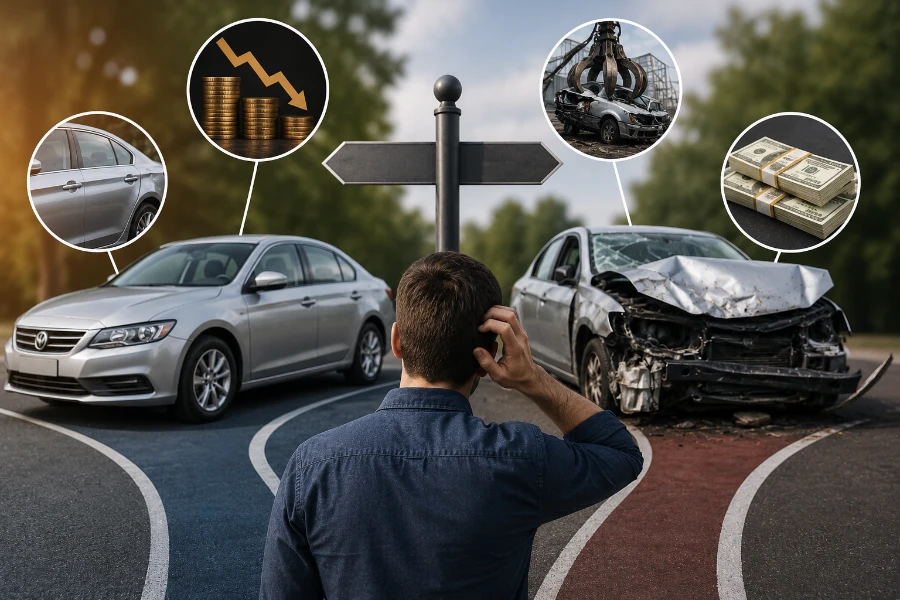
This is where confusion often arises.
Drivers frequently ask whether they can pursue diminished value compensation after a vehicle has been totaled.
In most cases, the answer is no.
Why?
Because the total loss settlement is intended to compensate for the entire pre-loss value of the vehicle.
The vehicle is no longer participating in the normal marketplace.
Therefore, there is no future resale value to diminish.
Borderline Cases
Some vehicles exist in a gray area.
Examples include:
- Severe collision damage
- High repair estimates
- Disputed repairability
- Owner-retained salvage situations
In these circumstances, disputes may arise regarding whether the vehicle should be repaired or declared a total loss.
These cases often benefit from independent appraisal support.
How Insurance Companies Calculate Diminished Value
Unfortunately, there is no universal formula for calculating diminished value.
Different insurers may use different approaches. Some methods are detailed and market-driven. Others rely on simplified calculations that may not accurately reflect what buyers are willing to pay for a vehicle with an accident history.
Market-Based Analysis
One of the most reliable approaches compares vehicles with similar specifications but different histories.
Appraisers often examine:
- Comparable vehicles with clean titles
- Comparable vehicles with reported accidents
- Local market conditions
- Vehicle age and mileage
- Severity of the damage
The difference between those values helps determine the vehicle’s diminished value.
Dealer Feedback
Dealerships frequently discount vehicles with accident histories.
Even when repairs are completed properly, many dealers anticipate lower consumer demand and adjust trade-in offers accordingly.
This information can provide valuable insight into actual market behavior.
Independent Appraisal Reports
Professional appraisers evaluate:
- Repair documentation
- Vehicle condition
- Structural damage history
- Market comparisons
- Local sales data
These reports often provide stronger support than generic insurance formulas.
The Problem With Formula-Based Methods
Many insurers rely on simplified valuation formulas when handling diminished value claims.
In some cases, these methods function as a heuristic—a simplified decision-making shortcut used to generate quick estimates rather than comprehensive market analyses.
While shortcuts can speed up the claims process, they do not always capture the true reduction in market value.
A vehicle’s actual diminished value may be substantially higher than a formula-generated figure.
That is why many vehicle owners obtain independent diminished value appraisals before accepting a settlement offer.
How Insurance Companies Calculate Total Loss Settlements
Calculating a total loss settlement follows a different process.
Instead of measuring post-repair value loss, insurers attempt to determine the vehicle’s value immediately before the accident occurred.
Comparable Vehicle Analysis
Insurance companies generally search for similar vehicles recently sold within the region.
Factors often include:
- Vehicle year
- Make and model
- Mileage
- Trim package
- Equipment
- Overall condition
The goal is to establish a reasonable Actual Cash Value.
Condition Adjustments
Vehicle condition matters.
A well-maintained vehicle with complete service records may deserve a higher valuation than an average vehicle of the same age.
Insurers may adjust values based on:
- Paint condition
- Interior condition
- Tire condition
- Mechanical history
- Previous repairs
Local Market Conditions
Vehicle prices vary significantly from one market to another.
Supply shortages, seasonal demand, and regional preferences can influence vehicle values.
That’s why national pricing guides don’t always tell the full story.
Common Total Loss Valuation Disputes
Many vehicle owners assume the insurance company’s valuation is automatically correct.
That assumption can be expensive.
Errors happen.
Missing Vehicle Options
Premium features are sometimes overlooked.
Examples include:
- Advanced safety packages
- Premium audio systems
- Technology upgrades
- Towing packages
- Luxury trim enhancements
Missing options can reduce settlement offers.
Incorrect Mileage
Mileage remains one of the most important valuation factors.
Even relatively small discrepancies can affect a settlement.
Poor Comparable Selection
Not all comparable vehicles are truly comparable.
Differences in condition, equipment, or mileage can significantly distort results.
Reviewing the insurer’s valuation report carefully is always worthwhile.
When You Should Challenge an Insurance Settlement
Not every settlement offer accurately reflects a vehicle’s value.
Sometimes additional review is necessary.
Signs a Diminished Value Offer May Be Too Low
Potential warning signs include:
- No explanation of methodology
- Limited supporting documentation
- Lack of comparable sales
- Generic calculations
The more transparency an insurer provides, the easier it becomes to evaluate the accuracy of the offer.
Signs a Total Loss Offer May Be Too Low
Watch for:
- Missing options
- Incorrect mileage
- Poor vehicle condition ratings
- Outdated market data
These errors can create substantial valuation differences.
The Importance of Evidence
Vehicle owners should rely on facts rather than emotion during valuation disputes.
Supporting documentation always carries more weight than frustration or speculation. Excessive exaggeration rarely helps negotiations. In rhetoric, this form of exaggeration is known as hyperbole.
The strongest disputes are built on evidence.
The Role of Independent Appraisals

Independent appraisals can play a critical role in both diminished value claims and total loss disputes.
The objective is simple.
Establish an accurate, supportable value based on market evidence.
Professional appraisers rely on:
- Market research
- Comparable vehicle sales
- Industry valuation tools
- Vehicle inspections
- Regional pricing trends
Understanding the complete car appraisal process can help vehicle owners better understand how professional valuations are developed.
In disputes involving diminished value vs total loss, objective valuation often becomes the deciding factor.
How Auto Appraisals Help Maximize Settlement Outcomes
Many consumers trust that insurance companies will automatically arrive at the correct number.
Sometimes they do.
Sometimes they don’t.
Independent appraisals provide another layer of verification.
Diminished Value Appraisals
A diminished value appraisal can help determine:
- Post-accident market loss
- Impact of accident history
- Vehicle stigma in the marketplace
- Reduction in resale value
This information becomes particularly important when dealing with newer vehicles, luxury vehicles, and specialty vehicles.
Total Loss Appraisals
Total loss appraisals focus on:
- Pre-loss vehicle value
- Vehicle condition verification
- Comparable market analysis
- Feature and option verification
The goal is ensuring the settlement reflects the vehicle’s true value immediately before the accident.
Why Documentation Matters
Documentation creates credibility.
Helpful records include:
- Maintenance records
- Service receipts
- Vehicle photographs
- Purchase agreements
- Upgrade documentation
- Comparable listings
The stronger the documentation, the stronger the valuation argument.
Common Mistakes Vehicle Owners Make
Many vehicle owners unintentionally weaken their own claims.
Avoiding these mistakes can improve outcomes significantly.
Assuming Repairs Restore Full Value
Repairs restore functionality.
They do not automatically restore market value.
That’s why diminished value claims exist in the first place.
Accepting the First Settlement Offer
Initial offers are not always final offers.
Review supporting documentation before accepting any settlement.
Failing to Review Valuation Reports
Always verify:
- Mileage
- Equipment
- Condition ratings
- Comparable vehicles
Even minor errors can influence the final settlement.
Waiting Too Long
Deadlines matter.
Waiting too long can complicate claim resolution and reduce available options.
Skipping Independent Appraisals
Many policyholders rely exclusively on insurance company valuations.
Independent appraisals often reveal valuation gaps that may otherwise go unnoticed.
Final Thoughts
Understanding diminished value vs total loss is one of the most important steps vehicle owners can take after an accident.
Although the two concepts are often confused, they address entirely different issues. A diminished value claim seeks compensation for the reduction in market value after repairs, while a total loss claim seeks compensation for the vehicle’s entire pre-accident value.
Knowing which situation applies can help you avoid costly mistakes and better evaluate insurance settlement offers.
Whether you’re pursuing a diminished value claim, disputing a total loss settlement, or simply researching your options, accurate valuation remains the foundation of a fair outcome. Independent appraisals, detailed documentation, and careful review of insurance calculations can all make a meaningful difference.
When it comes to diminished value vs total loss, informed vehicle owners are almost always in the strongest negotiating position. The more you understand the valuation process, the better prepared you’ll be to protect your financial interests after an accident.
FAQs
Diminished value refers to the loss in market value after a vehicle is repaired, while a total loss occurs when repairing the vehicle is not economically practical.
Yes, if your vehicle lost market value because of its accident history, you may be eligible to pursue a diminished value claim.
Generally, no. A total loss settlement is intended to compensate you for the vehicle’s full pre-accident value.
They compare the estimated repair costs and salvage value against the vehicle’s actual cash value before the accident.
Actual cash value is the vehicle’s fair market value immediately before the accident, taking depreciation and condition into account.
Yes, you can challenge the valuation if you believe the insurer used inaccurate vehicle information or unsuitable comparable vehicles.
It is typically determined through market comparisons, appraisal reports, vehicle condition assessments, and accident severity analysis.
An independent appraisal can provide objective evidence that may support a higher diminished value claim or total loss settlement.
Vehicle age, mileage, accident severity, repair quality, and brand reputation all influence how much value is lost after an accident.
The deadline varies by state and insurance policy, so it is important to review applicable laws and act as soon as possible after the accident.