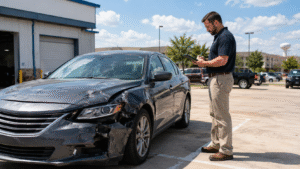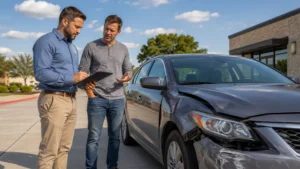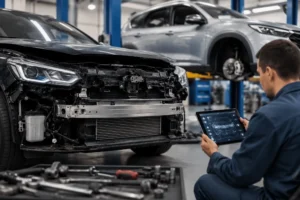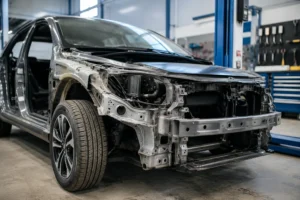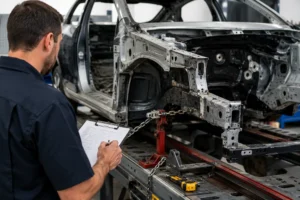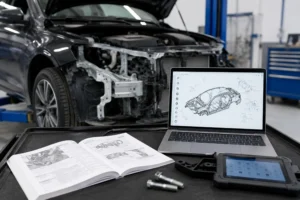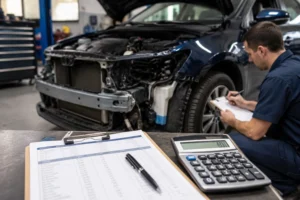
A vehicle accident can create more problems than visible dents, cracked bumpers, or broken lights. Today’s vehicles contain sophisticated safety technology that depends on precise measurements and exact positioning to function correctly. That is why ADAS calibration insurance has become one of the most important topics in modern collision repair. As vehicles become increasingly dependent on cameras, radar sensors, and onboard computers, calibration-related disputes are appearing in insurance claims more often than ever.
Many vehicle owners assume that once repairs are completed, the vehicle is fully restored.
Unfortunately, that is not always true.
A vehicle can look perfect on the outside while critical safety systems remain improperly calibrated underneath. The result can be claim disputes, repair delays, unexpected expenses, and even safety concerns.
Understanding how ADAS calibration insurance works can help vehicle owners avoid costly surprises and ensure their vehicles are repaired correctly after an accident.
What Is ADAS Calibration?
Advanced Driver Assistance Systems, commonly known as ADAS, are electronic technologies designed to help drivers avoid collisions and improve vehicle safety.
Over the past decade, ADAS features have moved from luxury vehicles into everyday transportation.
Common ADAS features include:
- Automatic Emergency Braking
- Adaptive Cruise Control
- Blind Spot Monitoring
- Lane Departure Warning
- Lane Keeping Assist
- Forward Collision Warning
- Rear Cross-Traffic Alert
- Parking Assist Systems
- Traffic Sign Recognition
Each of these systems relies on sensors, cameras, radar units, and software.
Those components must communicate with remarkable precision.
If a camera or radar sensor shifts slightly during a collision, repair, or component replacement, system performance may be affected. Calibration restores these systems to manufacturer specifications.
Without calibration, safety features may not perform as intended when drivers need them most.
How Vehicle Accidents Affect ADAS Systems
Many people assume calibration is only necessary after major accidents.
In reality, minor impacts can create calibration requirements.
For example, a low-speed parking lot collision may damage a bumper cover while also affecting the radar sensor mounted behind it. Likewise, a windshield replacement can trigger calibration requirements because many vehicles mount forward-facing cameras directly to the windshield.
The challenge is that these issues are often invisible.
A repair may appear complete. The vehicle may drive normally. Yet critical sensors may still require adjustment and verification.
Common repairs that may require calibration include:
| Repair Type | Possible Calibration Requirement |
| Front bumper replacement | Radar sensor calibration |
| Rear bumper repair | Blind spot monitoring calibration |
| Windshield replacement | Forward camera calibration |
| Suspension repair | Dynamic calibration |
| Wheel alignment | Sensor verification |
| Structural repair | Multiple ADAS calibrations |
Consequently, many modern repairs involve more than simply replacing damaged parts.
They involve restoring technology.
The Different Types of ADAS Calibration
Not every calibration procedure follows the same process.
Manufacturers typically require one of three approaches.
Static Calibration
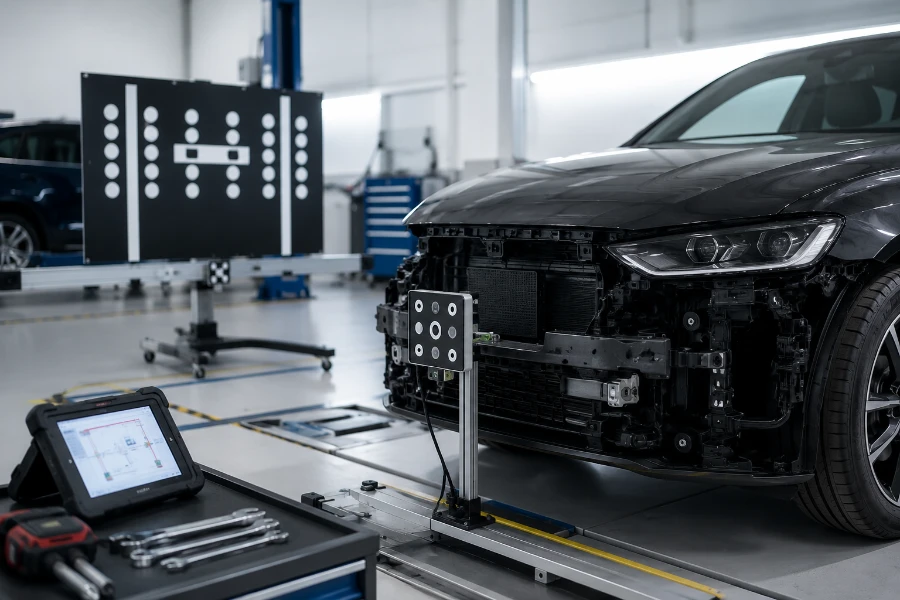
Static calibration takes place inside a controlled environment.
Technicians use specialized targets, measuring devices, lasers, and calibration equipment while the vehicle remains stationary.
Many calibration systems depend on positioning methods similar to triangulation, where precise measurements ensure sensors align according to manufacturer specifications.
Even a small measurement error can affect the calibration process.
This is why repair facilities often dedicate special areas specifically for calibration work.
Dynamic Calibration
Dynamic calibration occurs while driving the vehicle.
Manufacturers may require:
- Specific driving speeds
- Clearly visible lane markings
- Defined driving distances
- Favorable weather conditions
During the process, vehicle systems collect information and automatically adjust sensor parameters.
Combined Calibration Procedures
Many newer vehicles require both static and dynamic calibration.
This creates additional labor time and complexity.
A technician may first perform a static calibration inside the shop before completing a dynamic calibration on public roads.
As technology advances, combined procedures are becoming increasingly common.
Why Insurance Companies Often Miss ADAS Calibration Costs

Insurance estimates are frequently prepared before repairs begin.
That creates challenges.
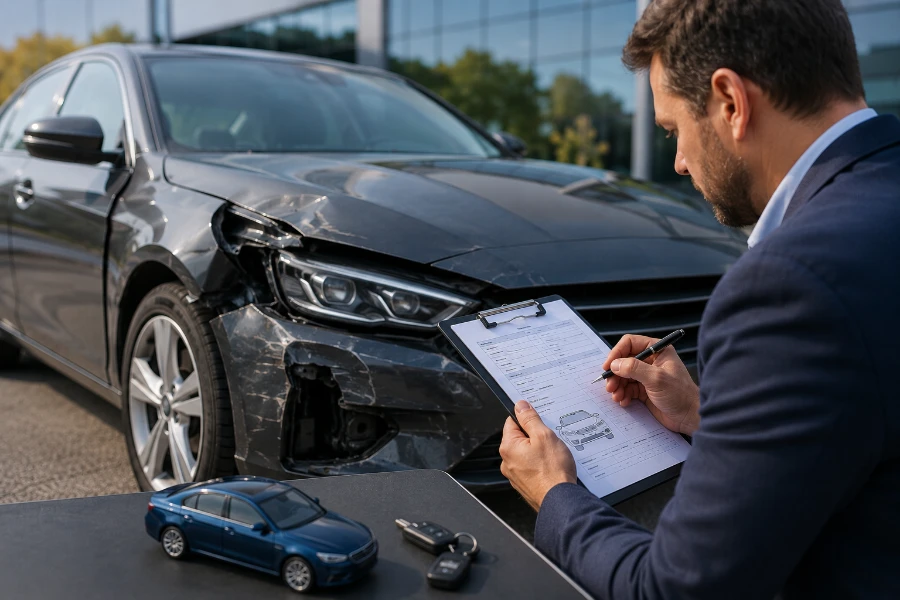
Adjusters often inspect visible damage and prepare estimates based on what can immediately be observed. However, calibration requirements frequently become apparent only after the vehicle has been disassembled.
As a result, some necessary procedures are omitted from initial estimates.
OEM Procedures Continue to Evolve
Manufacturers constantly update repair requirements.
New vehicle models introduce new sensors. Existing technologies become more sophisticated. Repair guidelines become more detailed.
Keeping pace with every manufacturer’s recommendations is not easy.
This is one reason why reviewing OEM repair procedures has become increasingly important when evaluating repair estimates.
Estimating Software Has Limitations
Insurance companies and repair facilities often rely on estimating platforms.
These systems are useful.
However, they do not automatically include every required operation.
Additional research is frequently necessary to identify calibration requirements, diagnostic scans, and manufacturer-mandated procedures.
When those operations are overlooked, ADAS calibration insurance disputes often follow.
The repair facility identifies required calibrations.
The insurer questions the charges.
The vehicle owner becomes caught in the middle.
The Financial Impact of Missing ADAS Calibrations
Many drivers are surprised to learn how expensive calibration procedures can be.
Costs vary significantly depending on the manufacturer and vehicle technology involved.
Typical calibration expenses include:
| Procedure | Approximate Cost Range |
| Camera calibration | $250 – $700 |
| Radar calibration | $300 – $1,200 |
| Blind spot sensor calibration | $250 – $900 |
| Dynamic calibration procedures | $150 – $500 |
| Multiple calibrations | $1,000 – $3,000+ |
Luxury vehicles can generate even higher costs.
Consequently, omitted calibration procedures can create substantial differences between an insurer’s estimate and the actual repair bill.
Vehicle owners may experience:
- Repair delays
- Supplemental negotiations
- Unexpected expenses
- Out-of-pocket costs
- Increased claim frustration
These situations highlight why ADAS calibration insurance has become such a significant issue throughout the collision repair industry.
OEM Repair Procedures and ADAS Calibration Requirements
Vehicle manufacturers do not consider calibration optional.
Neither should repair facilities or insurers.
OEM repair procedures establish the standards necessary to restore a vehicle safely following a collision.
These procedures frequently require calibration after:
- Sensor replacement
- Windshield replacement
- Bumper repairs
- Suspension repairs
- Structural repairs
- Wheel alignments
- Module replacement
Furthermore, proper calibration supports vehicle functional safety, helping advanced safety systems operate as intended after repairs are completed.
The purpose is straightforward.
Safety systems rely on precision.
If sensor positioning changes, calibration verifies proper operation before the vehicle returns to the road.
Unfortunately, repair estimates do not always include every required procedure.
As a result, differences often emerge between insurer estimates and actual repair requirements.
Vehicle owners should carefully review repair documentation and calibration reports whenever collision repairs involve ADAS-equipped vehicles.
ADAS Calibration Insurance Claim Disputes
As vehicle technology becomes more advanced, disputes involving ADAS calibration insurance are becoming increasingly common.
In many cases, the disagreement is not about whether the vehicle was damaged.
The disagreement is about what is required to repair it properly.
Insurance carriers may approve visible repairs while questioning calibration procedures that repair facilities consider mandatory. This can create tension between the insurer, the repair shop, and the vehicle owner.
Several issues commonly trigger disputes.
Lack of Documentation
Insurance companies often request proof that a calibration procedure is necessary.
Repair facilities may need to provide:
- OEM repair procedures
- Calibration reports
- Diagnostic scan results
- Photographs
- Manufacturer position statements
Without documentation, approval may be delayed.
Questions About Labor Charges
Some insurers challenge the labor associated with calibration procedures.
Calibration requires specialized equipment, trained technicians, and controlled environments. Yet labor times and rates can vary significantly between repair facilities.
This variation sometimes leads to disagreements over reimbursement.
Supplemental Repair Requests
Many calibration-related expenses appear as supplements.
A supplement is an additional repair charge discovered after the original estimate has been written.
Because ADAS systems are often hidden behind vehicle panels, repair facilities may not identify all calibration requirements until disassembly begins.
Consequently, supplemental requests have become a routine part of many modern collision claims.
Why Vehicle Owners Often Get Stuck in the Middle
The average driver is not expected to understand sensor alignment, radar positioning, or manufacturer repair procedures.
Yet they are often the ones forced to navigate the dispute.
A repair shop may insist a calibration is required.
An insurance company may initially decline payment.
The vehicle owner is left wondering who is correct.
This situation creates several challenges:
| Challenge | Potential Impact |
| Repair delays | Longer time without vehicle |
| Payment disputes | Additional stress |
| Supplemental negotiations | Extended claim process |
| Unclear repair requirements | Confusion and uncertainty |
| Out-of-pocket costs | Unexpected expenses |
The problem is not simply financial.
It is also about confidence.
Vehicle owners deserve to know their safety systems are functioning properly after repairs have been completed.
How Auto Appraisals Help Resolve ADAS Calibration Disputes
Independent appraisals can provide valuable clarity when calibration-related disputes occur.
Rather than relying solely on the insurer’s estimate or the repair facility’s opinion, an independent appraisal provides an objective evaluation of the repair requirements.
This is where professional auto appraisers can make a significant difference.
Reviewing Insurance Estimates
An appraisal can identify:
- Missing calibration procedures
- Omitted diagnostic operations
- Incomplete repair line items
- Differences between estimates and OEM requirements
A thorough review often reveals costs that were overlooked during the initial claim evaluation.
Evaluating Manufacturer Requirements
Manufacturer procedures serve as the foundation for proper repairs.
Independent appraisers can compare repair estimates against OEM guidelines to determine whether calibration procedures are justified.
This helps support discussions between repair facilities and insurance companies.
Supporting Supplemental Claims
Many supplements involve calibration charges.
An appraisal can provide documentation supporting:
- Additional labor operations
- Required calibrations
- Diagnostic scans
- Post-repair verification procedures
This evidence can strengthen a claim and improve the likelihood of fair compensation.
ADAS Calibration and Diminished Value Claims
Repairing a vehicle is one thing.
Protecting its market value is another.
Even when repairs are performed correctly, accident history can affect what a vehicle is worth in the future.
That reality becomes especially important when advanced safety systems are involved.
Potential buyers often have concerns about:
- Previous collision damage
- Sensor replacements
- Calibration accuracy
- Structural repairs
- Future reliability
As a result, some vehicles experience measurable value loss after an accident.
This loss is commonly known as diminished value.
Many vehicle owners are unaware they may be eligible to pursue a diminished value claim even after repairs have been completed.
Why ADAS Repairs Can Influence Vehicle Value
Modern buyers are becoming increasingly aware of vehicle technology.
They understand that safety systems are complex.
When accident history appears on vehicle history reports, concerns about repairs and calibrations can affect buyer confidence.
A prospective purchaser may ask:
- Were all calibrations completed?
- Were OEM procedures followed?
- Were replacement parts installed correctly?
- Were all diagnostic systems verified?
Even if the answer is yes, market perception can still influence value.
That is why diminished value claims remain an important consideration following significant collision repairs.
Steps Vehicle Owners Should Take After an Accident
The best time to address calibration issues is before disputes develop.
Vehicle owners who remain proactive often achieve better claim outcomes.
Consider the following steps.
Ask About ADAS Features Immediately
Identify all driver assistance technologies equipped on the vehicle.
Many owners do not realize how many systems their vehicles contain until repairs begin.
Request OEM Repair Procedures
Manufacturer documentation helps establish repair requirements.
This information can provide valuable support if calibration charges are later questioned.
Review Repair Estimates Carefully
Look beyond visible repairs.
Review estimates for:
- Diagnostic scans
- Calibration procedures
- Sensor verification
- Post-repair testing
Missing operations can sometimes signal an incomplete estimate.
Keep Every Document
Maintain copies of:
- Repair estimates
- Calibration reports
- Diagnostic scans
- Supplemental invoices
- Insurance correspondence
Good documentation often becomes critical during disputes.
Consider an Independent Appraisal
When questions arise regarding repair scope or claim value, an independent appraisal can provide objective guidance.
This step is particularly helpful when insurers and repair facilities disagree about required procedures.
How AutoAdjusting Helps Vehicle Owners Recover Proper Compensation
Navigating a modern collision claim is no longer as simple as replacing damaged parts.
Today’s vehicles contain sophisticated technologies that create new repair challenges and new insurance disputes.
AutoAdjusting helps vehicle owners address these challenges through professional appraisal services focused on identifying overlooked damages, incomplete estimates, and missing repair operations.
Estimate Review Services
AutoAdjusting reviews repair estimates to identify:
- Missing calibration procedures
- Incomplete repair operations
- Underestimated repair costs
- Supplemental opportunities
This review helps ensure all necessary procedures are considered.
Calibration-Related Claim Support
Because ADAS calibration insurance issues are increasingly common, identifying missing calibration requirements can significantly impact claim outcomes.
Proper documentation often becomes the difference between an incomplete settlement and a fully supported claim.
Diminished Value Evaluations
AutoAdjusting also assists vehicle owners in evaluating accident-related loss in vehicle value.
This analysis can help determine whether additional compensation may be available after repairs are completed.
Independent and Objective Analysis
An independent appraisal provides a third-party perspective focused on repair accuracy and claim completeness.
That objectivity can be extremely valuable when disputes arise.
The Growing Importance of ADAS Calibration Insurance
Vehicle technology is advancing rapidly.
Every year, more vehicles leave the factory equipped with cameras, radar sensors, and advanced safety systems. As a result, calibration procedures are becoming a routine part of collision repair.
At the same time, ADAS calibration insurance disputes continue to increase.
Initial estimates may overlook calibration requirements. Supplemental requests may become necessary. Vehicle owners may face delays, confusion, and unexpected costs.
The key is understanding that proper repairs involve more than restoring appearance.
They involve restoring functionality.
A repaired bumper means little if the radar sensor behind it is not operating correctly.
A new windshield means little if the forward-facing camera remains out of specification.
By reviewing repair estimates carefully, understanding OEM requirements, maintaining thorough documentation, and seeking independent appraisal assistance when necessary, vehicle owners can better protect themselves throughout the claims process.
Ultimately, ADAS calibration insurance is about more than repair costs.
It is about ensuring modern vehicles are restored to the safety standards their manufacturers intended while helping owners receive the compensation necessary to complete those repairs properly.
FAQs
ADAS calibration insurance involves claim coverage for calibrating vehicle safety systems after repairs or a collision.
Calibration ensures cameras and sensors operate accurately after repairs or component replacement.
Many vehicles require camera recalibration after a windshield replacement.
Insurance often covers necessary calibrations, but coverage disputes can occur.
Costs typically range from a few hundred to several thousand dollars depending on the vehicle.
Static calibration is performed inside a shop using specialized targets and equipment.
Dynamic calibration is completed by driving the vehicle under specific conditions.
You can, but safety features may not function correctly.
Some calibration requirements are discovered only after repairs begin.
Yes. An independent appraisal can identify overlooked repair and calibration costs.