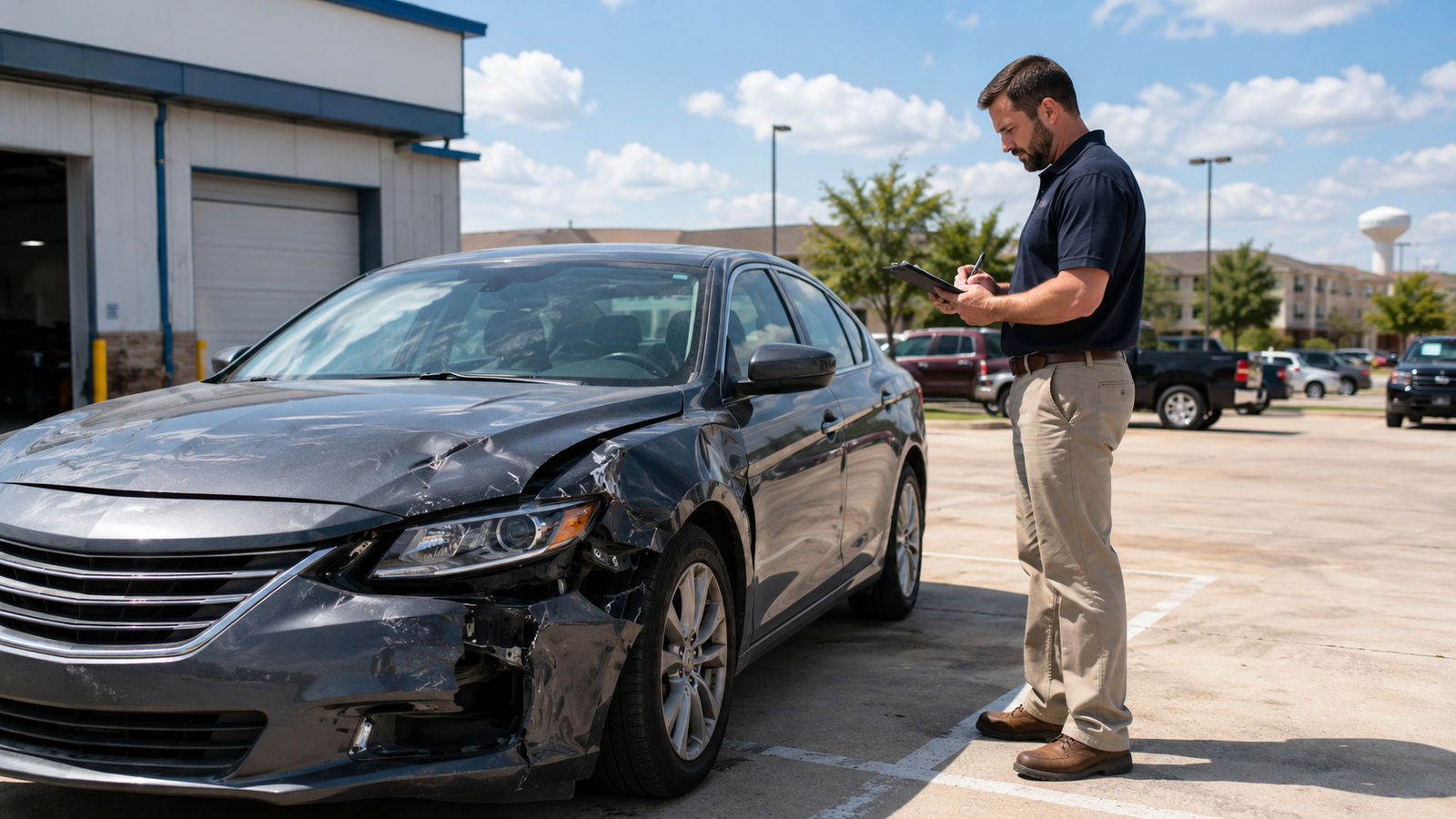
Understanding Texas total loss laws becomes important the moment an insurance company says your vehicle is not worth repairing. The car may still run. The visible damage may not appear severe. You might even believe a qualified collision shop could repair it without a problem.
Yet the insurer calls it a total loss.
That decision can feel abrupt, especially when the settlement offer is thousands of dollars below the price of comparable vehicles in your area. However, a total-loss claim involves more than a single repair estimate. Vehicle value, hidden damage, salvage returns, title requirements, policy language, and local market evidence can all affect the outcome.
The good news? You do not have to accept an insurer’s initial valuation without reviewing it.
Vehicle owners can request the complete valuation report, correct inaccurate information, provide stronger comparable vehicles, and use an independent auto appraisal when the numbers do not add up. The process works best when you focus on documented facts rather than frustration.
What Is Considered a Total Loss in Texas?
A vehicle is generally considered a total loss when the insurance company determines that repairing it is not economically practical compared with its pre-loss value.
That sounds simple. It often is not.
An insurer may evaluate several factors before making the decision:
- The vehicle’s actual cash value before the accident
- The initial repair estimate
- Expected supplemental repairs
- Salvage value
- Structural or frame damage
- Airbag replacement costs
- Parts availability
- Labor rates
- Electronic system calibration
- The likelihood of hidden damage
The company compares the expected cost of handling and repairing the claim with the vehicle’s value immediately before the damage occurred. An insurer may total a vehicle even when the initial repair estimate is lower than its market value.
That last point matters.
Suppose a vehicle has a pre-loss value of $24,000 and an initial repair estimate of $17,500. At first glance, repairing it may appear reasonable. However, the insurer may also anticipate a $3,000 supplement, extended rental expenses, expensive electronic calibrations, and a $4,500 salvage return.
Once those numbers are considered, totaling the vehicle may cost the insurer less than completing the repair.
In other words, the total-loss decision is not always based on one fixed percentage.
Is There a Texas Total Loss Threshold?
People researching Texas total loss laws often look for a simple threshold such as 70%, 75%, or 80%.
Texas is frequently described as using a total-loss formula rather than one strict percentage for every insurance decision. In practical terms, an insurer may compare the vehicle’s pre-loss value with the repair costs and expected salvage value.
A simplified formula looks like this:
Repair costs + salvage value ≥ actual cash value
However, policyholders should not confuse an insurance company’s economic total-loss decision with Texas title-branding requirements. The two issues are connected, but they are not identical.
An insurer may decide to total a vehicle before the repair estimate reaches 100% of its pre-loss value. This often happens when projected supplements, rental costs, storage charges, safety concerns, or parts delays make the repair economically uncertain.
Modern vehicles make the calculation even more complicated. A collision that once required a bumper, grille, and headlamp may now involve:
- Parking sensors
- Cameras
- Radar units
- Wiring harnesses
- Adaptive headlights
- Computer modules
- Advanced driver-assistance system calibration
Electric and hybrid vehicles add another layer. Battery enclosures, high-voltage systems, specialized labor, and manufacturer repair procedures can quickly increase the cost of an otherwise ordinary-looking repair.
Therefore, the first estimate rarely tells the entire story.
Total Loss and Salvage Titles Are Not the Same Decision
A common mistake is assuming that “totaled” automatically means “salvage,” or that every total-loss settlement creates the same title result.
It does not.
A total loss is primarily an insurance decision about how the claim will be settled. A salvage or nonrepairable brand is a separate title classification governed by state requirements. Vehicle owners should review the official Texas salvage vehicle requirements before retaining, repairing, selling, or attempting to register a totaled vehicle.
Texas considers vehicles with certain title brands to be salvage vehicles. Before such a vehicle can legally return to the road, it generally must be rebuilt, inspected, and properly titled.
Title branding can affect:
- Registration
- Insurance availability
- Financing
- Warranty protection
- Resale value
- Trade-in value
- Future vehicle-history reports
A repaired vehicle does not simply return to clean-title status. A qualifying rebuilt vehicle will carry a “Rebuilt Salvage” brand on its Texas title, even after repairs and inspections are completed.
Before keeping or repairing a totaled vehicle, determine exactly which title documents and inspections will be required. Do this before signing the settlement paperwork.
How Insurance Companies Determine a Totaled Car’s Value
Valuation is often the most disputed part of a total-loss claim.
The insurer generally calculates the vehicle’s actual cash value, subject to the insurance policy, applicable deductible, ownership interests, and other authorized adjustments. Actual cash value is intended to represent what the vehicle was worth immediately before the covered loss.
That value may be influenced by:
- Year, make, and model
- Trim level
- Engine and drivetrain
- Mileage
- Factory packages
- Optional equipment
- Prior damage
- Vehicle history
- Interior condition
- Exterior condition
- Local comparable vehicles
- Current market demand
Actual cash value reflects the vehicle’s market position immediately before the accident, including the effects of age, mileage, condition, and depreciation. For a totaled vehicle, the insurer generally bases its offer on a comparable used vehicle rather than the price of a brand-new replacement.
The insurer may use a third-party valuation company or automated database to prepare the report. That does not guarantee that the report is correct.
Automated data is only as reliable as the information entered into the system.
Common Total Loss Valuation Errors
One wrong trim level can change the result.
Understanding the most common total loss valuation errors can help you identify inaccurate mileage, missing equipment, poor comparable vehicles, and unsupported condition deductions before accepting a settlement.
Several small errors can combine to reduce an offer substantially.
Review the report for these common problems:
| Valuation Issue | Why It Matters |
| Incorrect trim level | Higher trims can carry significantly more market value |
| Missing factory options | Premium packages may increase comparable pricing |
| Wrong drivetrain | Four-wheel-drive and all-wheel-drive models may sell for more |
| Incorrect mileage | Lower mileage often supports a higher value |
| Poor comparables | Different trims or conditions can distort the estimate |
| Distant comparables | Vehicles outside the market may not reflect local prices |
| Unsupported condition deductions | Arbitrary deductions can reduce the offer |
| Unavailable listings | Sold or outdated vehicles may be unreliable evidence |
| Prior-damage assumptions | Unsupported history deductions can unfairly lower value |
Ask for the complete report, not just the settlement summary.
Then verify every line.
When appropriate, contact the dealers shown in the report. Confirm whether each comparable was actually available, whether its advertised price was accurate, and whether it had the same equipment as your vehicle.
Save screenshots. Online advertisements change quickly.
What Is Included in a Texas Total Loss Settlement?
A total-loss settlement usually begins with the accepted pre-loss value of the vehicle.
The insurer may then apply the deductible and other legitimate adjustments. When the owner keeps the damaged vehicle, the company will generally deduct the expected salvage value.
A simplified calculation may look like this:
| Settlement Component | Example Amount |
| Agreed pre-loss vehicle value | $32,000 |
| Collision deductible | -$1,000 |
| Owner-retained salvage value | -$6,500 |
| Estimated payment | $24,500 |
The actual calculation can be more complicated.
A lienholder may be entitled to receive some or all of the payment. Taxes, title costs, towing, storage, rental expenses, and other charges may be handled separately depending on the claim, insurance policy, and applicable requirements.
Always request an itemized written calculation.
A single settlement number does not reveal whether the vehicle value is correct or whether an unsupported deduction has been included.
Can You Negotiate a Total Loss Offer?
Yes. You can challenge the valuation.
However, knowing how to negotiate a total loss offer requires more than telling the adjuster that your vehicle is worth more. You need documented evidence showing where the insurer’s calculation is inaccurate and why stronger market data supports a higher value.
Start with the basics:
- Correct the year, trim, engine, drivetrain, and mileage.
- Provide the original window sticker or manufacturer build sheet.
- Submit clear photographs showing the vehicle’s pre-loss condition.
- Include service and maintenance records.
- Document major factory-installed options.
- Locate genuinely comparable vehicles.
- Identify every inaccurate deduction or adjustment.
Focus on market evidence.
Your loan balance does not establish the vehicle’s value. Neither does emotional attachment, the price you paid several years ago, or the cost of the replacement vehicle you would prefer to purchase.
Recent maintenance may support a higher condition rating, but it does not necessarily increase market value dollar for dollar. A $2,000 transmission repair may prove the vehicle was properly maintained. It does not automatically add $2,000 to the settlement.
How to Find Strong Comparable Vehicles
Good comparables should resemble the damaged vehicle as closely as possible.
Look for the same:
- Model year
- Make and model
- Trim level
- Body style
- Engine
- Drivetrain
- Major option packages
- General condition
- Mileage range
Location matters too.
A similar vehicle offered hundreds of miles away may not represent the market where the owner would reasonably shop for a replacement. Local availability and demand can influence pricing, especially for pickup trucks, specialty vehicles, performance models, and limited trims.
Avoid selecting only the three most expensive advertisements you can find. That weakens your argument.
Instead, collect a balanced group of relevant vehicles and explain any necessary adjustments. A comparable with 25,000 fewer miles may need a downward adjustment. A model without your premium package may need an upward adjustment.
The reasoning should be consistent and easy to follow.
How the Auto Appraisal Process Works
An appraisal clause provides a structured way to resolve disagreements about the amount of loss.
Typically, the policyholder selects an appraiser, and the insurance company selects another. The two appraisers evaluate the disputed amount. When they cannot agree, an umpire may be appointed to resolve the remaining differences.
Appraisal generally addresses the amount of loss. It does not necessarily determine:
- Whether the policy covers the accident
- Who caused the collision
- Whether an exclusion applies
- Whether the insurer acted improperly
- Whether a claimant is legally liable
That distinction is critical.
Negotiating with an adjuster is not the same as formally invoking appraisal. Hiring an appraiser for an independent market-value opinion also does not automatically begin the policy’s appraisal process.
Read the policy carefully. Follow the required notice procedure. Pay attention to deadlines, appraiser qualifications, umpire selection, and the allocation of costs.
New Texas Auto Appraisal Rights
Recent legislative changes have made appraisal especially important when discussing Texas total loss laws.
Texas Senate Bill 458 established appraisal requirements for certain disputed losses under personal automobile and residential property policies. The requirements apply to applicable policy forms issued or renewed on or after January 1, 2026.
The law requires covered personal auto policies to provide an appraisal process for disputes involving the amount of loss. Subject to limited legal challenges, the amount established through the appraisal process can be binding as to the amount of loss.
However, the policy in force on the date of the accident still matters.
Do not assume an older personal auto policy, a newly renewed policy, and a commercial auto policy provide identical rights. Review the exact form, endorsements, and appraisal language applying to your claim.
First-Party Versus Third-Party Claims
The type of claim changes the dispute process.
A first-party claim is filed under your own collision or comprehensive coverage. Your insurance contract controls the relationship, including deductibles, duties after loss, valuation terms, and any appraisal procedure.
A third-party claim is made against another driver’s liability insurer. Because you are not a party to that insurance contract, you generally cannot use the other driver’s appraisal clause as though it were your own.
| First-Party Claim | Third-Party Claim |
| Filed under your own policy | Filed against the at-fault driver’s insurer |
| May involve a deductible | Usually does not involve your collision deductible |
| Policy duties apply | Liability must first be established |
| Contractual appraisal may be available | Your policy’s appraisal clause may not control |
| Coverage terms determine payment | Fault, limits, and damages may remain disputed |
This distinction is important when deciding how to challenge an offer under Texas total loss laws.
What Happens When You Still Owe Money?
The total-loss settlement is based on the vehicle’s value, not the amount remaining on the loan.
Suppose the accepted value is $27,000, but the lender’s payoff is $32,000. The $5,000 difference is negative equity.
The insurer does not normally increase the vehicle valuation simply because the loan balance is higher.
Guaranteed asset protection, commonly called GAP, may cover some or all of the difference depending on the agreement. GAP is separate from the calculation of the vehicle’s actual cash value.
Request a current written payoff from the lender. Then compare it with the insurer’s settlement calculation.
Do not rely on the balance shown on an old statement. Interest, late charges, refunds, and other adjustments may change the final payoff amount.
Can You Keep a Totaled Vehicle in Texas?
In many situations, yes.
This is commonly called owner-retained salvage. The insurance company calculates what it expected to receive by selling the damaged vehicle and deducts that amount from the settlement.
Keeping the vehicle may make sense when:
- The damage is primarily cosmetic.
- You can complete repairs economically.
- The vehicle contains specialty equipment.
- You understand the title process.
- You plan to keep it for a long time.
But proceed carefully.
A vehicle that qualifies as salvage may need a salvage title before repairs or rebuilding begin. After the work is completed, safety inspections, anti-theft inspections, documentation, and rebuilt-title requirements may apply.
A branded title may also reduce resale value and make financing or insurance more difficult.
Before retaining the vehicle:
- Request the salvage deduction in writing.
- Confirm the required title classification.
- Research inspection requirements.
- Obtain realistic repair estimates.
- Ask an insurer whether it will cover the rebuilt vehicle.
- Consider its future resale value.
Keeping a totaled vehicle without completing those steps can turn a seemingly affordable decision into an expensive problem.
When an Independent Total Loss Appraisal Can Help
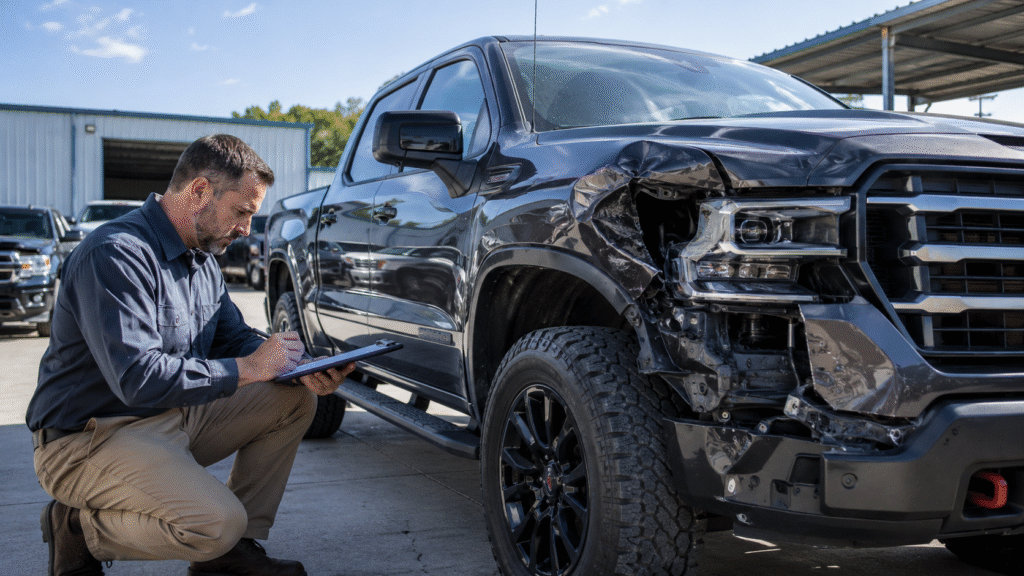
Not every valuation dispute requires a professional appraisal.
A $300 disagreement may not justify the expense. A $7,000 difference might.
Independent appraisal can be particularly useful for:
- Collector and classic cars
- Luxury vehicles
- Performance models
- Custom trucks
- Specialty vans
- Unusually low-mileage vehicles
- Rare trim packages
- Extensively optioned vehicles
- Vehicles with limited local comparables
A strong appraisal does more than collect a few online advertisements. It verifies the vehicle’s configuration, studies the relevant market, evaluates comparable vehicles, explains adjustments, and reaches a defensible conclusion.
The goal is not to produce the highest possible number.
The goal is to determine a well-supported pre-loss value.
How to Dispute a Low Total Loss Offer
Use an organized process. Do not send a scattered collection of screenshots and expect the insurer to build your argument for you.
Step 1: Request the Entire Valuation File
Ask for the full report, comparable vehicles, condition ratings, option list, deductions, and settlement worksheet.
Step 2: Verify the Vehicle Information
Check the VIN, year, trim, engine, drivetrain, mileage, packages, and factory equipment.
Step 3: Review the Comparables
Confirm each comparable vehicle’s mileage, equipment, price, condition, location, and availability.
Step 4: Document the Pre-Loss Condition
Collect photographs, service records, inspection reports, receipts, and detailing records.
Step 5: Build Better Market Evidence
Find comparable vehicles that accurately represent the local or regional market.
Step 6: Submit a Written Dispute
List each error separately. Attach the supporting evidence and state the corrected value you believe the market supports.
Step 7: Consider Independent Appraisal
Use a qualified auto appraiser when the disputed amount and complexity justify professional assistance.
Step 8: Review the Policy’s Appraisal Provision
Follow the required procedure exactly when informal negotiations do not resolve the amount-of-loss disagreement.
A Practical Total Loss Dispute Example
Consider a 2022 four-wheel-drive pickup with low mileage and a premium equipment package.
The insurer values it at $36,400. The owner reviews the valuation report and finds several problems:
- Two comparables are two-wheel-drive models.
- The premium package is missing.
- One comparable has 28,000 additional miles.
- The report applies a condition deduction without explanation.
- One listed vehicle was no longer available when the report was prepared.
The owner submits the original window sticker, pre-loss photographs, service history, and five stronger local comparables. An independent appraisal concludes that the documented pre-loss value is $40,300.
That does not guarantee that the insurer will immediately agree. It does, however, create a fact-based dispute supported by verifiable market evidence.
That is far stronger than simply rejecting the offer.
Common Mistakes to Avoid
People dealing with Texas total loss laws often lose leverage by moving too quickly.
Avoid these mistakes:
- Accepting the offer without reading the valuation report
- Using the loan balance as proof of value
- Relying on only one online pricing guide
- Ignoring missing options and packages
- Failing to preserve online listings
- Allowing unnecessary storage charges to accumulate
- Signing title paperwork without reading it
- Keeping the vehicle without researching salvage requirements
- Missing an appraisal deadline
- Arguing from emotion instead of market evidence
Be methodical.
Total-loss disagreements are largely document disputes. The party with the clearer, better-supported evidence usually has the stronger position.
Final Thoughts on Texas Total Loss Laws
Texas total loss laws involve two central questions: whether the vehicle should be treated as a total loss and how much it was worth immediately before the damage.
Do not assume the first valuation is flawless. Request the complete report. Check the trim, mileage, options, condition ratings, deductions, and comparable vehicles.
Correct every factual error. Then support your position with credible market evidence.
When the remaining gap is substantial, an independent auto appraisal may provide the detailed analysis needed to challenge an unsupported settlement. This can be especially valuable for rare, customized, luxury, performance, and unusually well-maintained vehicles.
A totaled vehicle is more than damaged property. It is a financial asset with a measurable market value.
Under Texas total loss laws, getting that value right can make a meaningful difference in the final settlement.
FAQs
A vehicle may be totaled when repair costs, salvage value, and related expenses make repairs uneconomical.
Texas generally uses a total-loss formula rather than one fixed percentage for every claim.
Insurers review the vehicle’s year, trim, mileage, condition, options, and comparable market listings.
Yes. Request the full report, correct errors, and submit stronger market evidence.
Useful records include the window sticker, service history, photos, receipts, and comparable listings.
Yes, when the policy includes an appraisal clause for disagreements over the amount of loss.
Often, yes, but the insurer will usually deduct salvage value from the settlement.
Usually not. A repaired salvage vehicle may receive a rebuilt or prior-salvage title.
The insurer pays based on vehicle value, while GAP coverage may help with negative equity.
Consider one when the value gap is large or the vehicle is rare, customized, or difficult to compare.