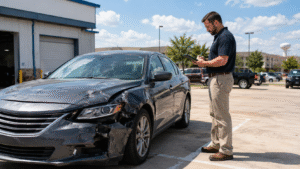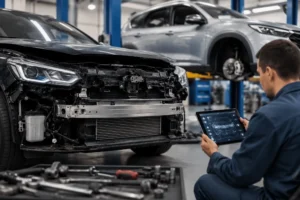
Getting into an accident is stressful enough. Then comes the repair process. Then comes the surprise.
The insurance company approves repairs, but not the repairs you expected.
Many vehicle owners discover that their insurer plans to use aftermarket, recycled, or alternative parts instead of Original Equipment Manufacturer (OEM) parts. Suddenly, a simple claim turns into a dispute. If insurance refuses OEM repairs, you may find yourself questioning whether your vehicle will be restored to the same condition it was in before the accident.
It’s a common issue.
And it’s becoming more common as repair costs continue to rise.
The good news? You have options. Understanding why insurance companies make these decisions—and what you can do about them—can help you protect both your vehicle and your financial interests.
What Are OEM Repairs?
OEM stands for Original Equipment Manufacturer.
In simple terms, OEM parts are made by the same company that manufactured the original components installed on your vehicle when it left the factory.
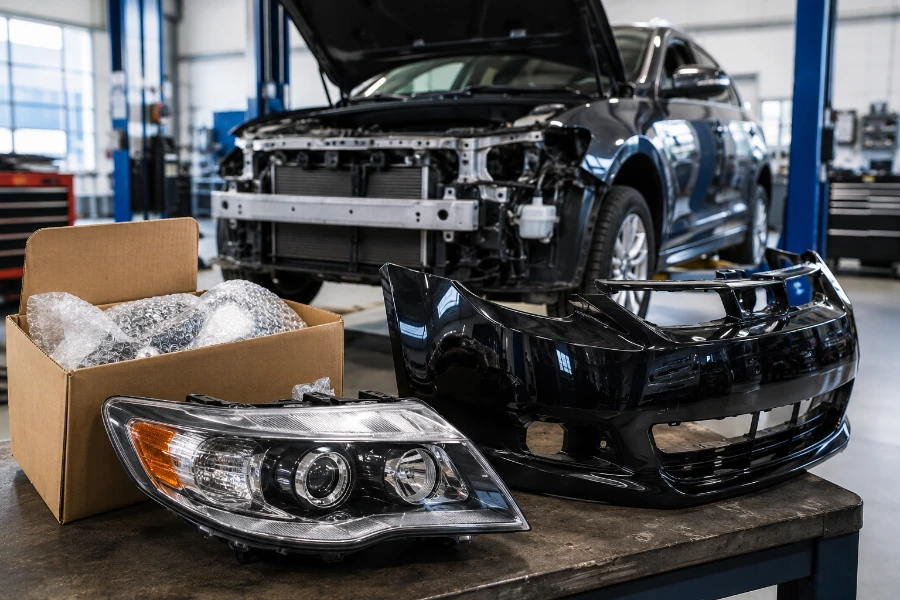
For example, if you drive a Toyota, an OEM bumper is manufactured according to Toyota’s specifications. The same applies to sensors, structural components, headlights, fenders, and countless other parts.
Not all replacement parts are created equal.
Generally, repair parts fall into three categories:
| Part Type | Description |
| OEM Parts | Manufactured according to the automaker’s specifications |
| Aftermarket Parts | Produced by third-party manufacturers |
| Recycled Parts | Salvaged from previously damaged vehicles |
Each option serves a purpose. However, when insurance refuses OEM repairs, vehicle owners often worry about safety, quality, and long-term value.
Those concerns are not always unfounded.
Why OEM Parts Matter
A vehicle today is far more complex than it was twenty years ago.
Modern cars contain advanced safety systems, cameras, sensors, radar units, collision avoidance technology, and highly engineered structural components designed to perform in very specific ways.
A seemingly simple replacement part can affect much more than appearance.
OEM parts often provide:
- Factory-level fitment
- Consistent manufacturing standards
- Compatibility with safety systems
- Better alignment with repair procedures
- Greater confidence in long-term performance
I often tell vehicle owners that the issue isn’t always whether an aftermarket part will fit. The real question is whether it will perform exactly as intended when it matters most.
Why Insurance Companies Refuse OEM Repairs
Let’s address the reality.
Insurance companies are businesses.
Their goal is to resolve claims fairly while controlling costs. OEM parts frequently cost more than aftermarket alternatives.
Sometimes significantly more.
Consider this example:
| Part | OEM Cost | Aftermarket Cost |
| Front Fender | $850 | $420 |
| Headlight Assembly | $1,400 | $780 |
| Bumper Cover | $900 | $500 |
Multiply those differences across multiple repairs and the savings become substantial.
From the insurer’s perspective, using less expensive parts helps reduce claim costs.
From the vehicle owner’s perspective, the decision may feel very different.
This is often where disputes begin.
The Role of Policy Language
Many people assume their insurance policy automatically guarantees OEM repairs.
In reality, most policies do not.
The policy contract typically requires the insurer to restore the vehicle to its pre-loss condition. That language leaves room for interpretation.
If an aftermarket part can reasonably perform the same function, some insurers argue that it satisfies their contractual obligation.
That doesn’t mean every aftermarket part is equal.
Nor does it mean every repair situation should be treated the same way.
The specific wording in your policy matters.
Some policies include endorsements that specifically provide OEM parts coverage. Others do not.
Reviewing your policy carefully is often the first step when insurance refuses OEM repairs.
Availability Can Influence Repair Decisions
Cost isn’t always the only factor.
Availability matters too.
Automakers occasionally experience supply shortages. Certain components may be backordered for weeks or even months.
When that happens, insurers may push for alternative parts simply to complete repairs sooner.
This situation became particularly common during supply chain disruptions in recent years.
Vehicle owners are often forced to choose between:
- Waiting for OEM parts
- Accepting aftermarket parts
- Delaying completion of repairs
None of these choices are ideal.
Yet they occur every day.
OEM vs Aftermarket Parts: Understanding the Difference
Some aftermarket parts perform very well.
Others do not.
That’s the challenge.
Quality can vary dramatically between manufacturers.
OEM parts are built according to the automaker’s specifications. Aftermarket manufacturers often reverse-engineer those components and create their own versions.
Sometimes the differences are minor.
Sometimes they are not.
Potential differences may include:
- Material thickness
- Structural design
- Corrosion resistance
- Manufacturing tolerances
- Sensor compatibility
- Crash energy absorption
These factors may not be visible to the naked eye.
But they can influence repair outcomes.
Safety Concerns Are Real
This issue becomes particularly important when safety systems are involved.
Modern vehicles rely heavily on Advanced Driver Assistance Systems (ADAS). These systems often involve sophisticated software, sensors, cameras, and electronic communication networks. Similar to how a cyber-physical system integrates digital and physical components to perform coordinated tasks, today’s vehicle safety technology depends on precise interaction between hardware and software.
Many of these technologies depend on sensors mounted behind bumpers, windshields, mirrors, and body panels.
A replacement component that doesn’t align perfectly can create calibration challenges.
That’s why some manufacturers issue repair procedures recommending specific OEM components for certain repairs.
When insurance refuses OEM repairs involving safety-critical systems, vehicle owners should pay especially close attention.
Components Where OEM Parts Often Matter Most
Not every part carries the same level of risk.
For example, a replacement trim piece may not create significant concerns.
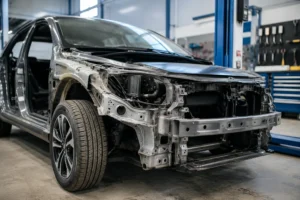
Structural and safety-related components are different.
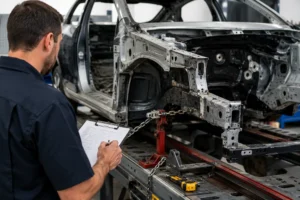
Areas where OEM parts frequently become important include:
Structural Components
These include:
- Reinforcement bars
- Crash absorbers
- Frame sections
- Impact management systems
These parts are specifically engineered to manage crash forces.
Small design differences can potentially affect performance.
Lighting Systems
Modern headlights are highly sophisticated.
Many contain:
- LED technology
- Adaptive lighting
- Sensors
- Camera integration
Replacing these systems with non-OEM alternatives can introduce compatibility concerns.
Sensor-Related Components
Bumpers and mirrors often house critical ADAS equipment.
Even slight dimensional differences can affect calibration procedures.
Repair facilities frequently encounter challenges when attempting to calibrate sensors using certain aftermarket components.
Can Insurance Legally Refuse OEM Parts?
The answer depends on several factors.
Most importantly:
- Your state
- Your policy language
- Your vehicle
- The repair involved
Some states require insurers to disclose the use of aftermarket parts.
Others impose specific quality standards.
Certain states provide stronger consumer protections than others.
There is no universal nationwide rule requiring OEM parts for every repair.
However, there are situations where OEM components may be strongly justified.
These often include:
- Newer vehicles
- Leased vehicles
- Warranty-sensitive repairs
- Manufacturer-required repair procedures
- Safety-critical repairs
Understanding your state’s regulations can significantly strengthen your position during a dispute.
Risks of Accepting Non-OEM Repairs
Not every non-OEM repair results in problems.
However, vehicle owners should understand the potential risks before agreeing to alternative parts.
The biggest concern is often long-term uncertainty.
A part may appear acceptable immediately after repairs are completed. Months or years later, issues can begin to surface.
Potential concerns include:
- Premature corrosion
- Poor panel alignment
- Increased wind noise
- Sensor calibration problems
- Reduced resale value
- Fit and finish inconsistencies
These problems are not guaranteed.
But they are important considerations when evaluating repair options.
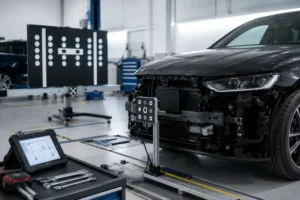
Repair quality also depends on maintaining strict manufacturing tolerances throughout the process. Engineers often evaluate dimensional accuracy using concepts related to metrology, the science of measurement. While most vehicle owners never encounter the term directly, precise measurements play a critical role in ensuring body panels, structural components, sensors, and safety systems function as intended after a collision repair.
Reduced Vehicle Value Can Be a Hidden Cost
Most people focus on getting their vehicle repaired.
Few consider what happens when they eventually sell or trade it.
Buyers increasingly research accident history reports and repair records. If repairs involved non-OEM components, some buyers may view the vehicle differently.
Luxury vehicles are particularly susceptible to this issue.
Repairs that deviate from manufacturer standards can affect buyer confidence.
While the exact financial impact varies, diminished resale value is one reason many vehicle owners challenge repair decisions when insurance refuses OEM repairs.
Even if the vehicle appears fully repaired, it may still suffer a measurable loss in market value. A professional internal review such as a car appraisal after accident can help identify value reductions that may not be obvious during the initial insurance settlement process.
What To Do When Insurance Refuses OEM Repairs
If you receive an estimate that substitutes aftermarket or recycled parts, don’t panic.
There are several steps you can take before accepting the decision.
Request a Written Explanation
Start with documentation.
Ask the insurance company:
- Why OEM parts were denied
- Which policy language supports the decision
- Whether part substitutions are mandatory or optional
- Whether alternative repair options exist
Written responses often reveal valuable information.
More importantly, they create a paper trail.
Obtain Manufacturer Repair Procedures
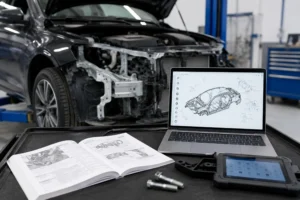
Many automakers publish repair procedures that specify how vehicles should be repaired after collisions.
These procedures may identify situations where OEM parts are recommended or required.
Repair facilities regularly use manufacturer repair information to develop repair plans.
If the automaker specifies a particular repair method, that information may help support your position during negotiations.
Work With a Qualified Collision Repair Facility
A reputable collision repair facility can be one of your strongest allies.
Experienced repair professionals understand:
- Manufacturer repair procedures
- Calibration requirements
- Structural repair standards
- Common insurance estimating issues
Ask the repair facility to provide written documentation explaining why OEM components may be necessary.
Objective technical evidence often carries more weight than personal opinions.
Escalate the Claim
Sometimes the first answer isn’t the final answer.
If you disagree with the insurer’s decision:
- Request a supervisor review
- Ask for a claim re-evaluation
- Submit supporting documentation
- Request written responses
Many disputes are resolved through escalation and additional review.
Persistence matters.
Professional documentation matters even more.
How Independent Auto Appraisals Can Help
This is where many vehicle owners gain leverage.
When insurance refuses OEM repairs, an independent auto appraisal can provide an objective assessment of the repair situation.
Unlike parties directly involved in the claim, independent appraisers focus on evidence.
Their role is not to advocate blindly for either side.
Their role is to analyze the facts.
What an Independent Auto Appraiser Evaluates
An appraisal may include:
- Vehicle condition analysis
- Repair estimate review
- Damage documentation
- OEM repair procedure review
- Parts replacement evaluation
- Market value analysis
The goal is to determine whether the proposed repairs appropriately restore the vehicle.
That objective analysis can become valuable during negotiations.
Understanding the broader car appraisal process can help vehicle owners better understand how independent evaluations support OEM repair disputes, diminished value claims, and insurance settlement negotiations.
Identifying Incomplete Repair Scopes
One issue frequently encountered in collision claims is incomplete repair planning.
An initial estimate may overlook:
- Necessary calibrations
- Hidden damage
- Manufacturer-required procedures
- Structural measurements
- Additional parts
These omissions can significantly affect repair costs.
Independent appraisers often identify repair requirements that were not included in the original estimate.
Supporting Claim Negotiations
Facts win disputes.
Documentation wins negotiations.
An independent appraisal report can help vehicle owners present:
- Technical repair evidence
- Manufacturer repair requirements
- Market value impacts
- Safety considerations
The stronger the documentation, the stronger the position during discussions with the insurer.
OEM Repair Disputes and Diminished Value Claims

Many vehicle owners focus exclusively on repair costs.
Another issue deserves attention.
Vehicle value.
Even after high-quality repairs, a vehicle may lose market value simply because it has an accident history.
This loss is commonly known as diminished value.
How Non-OEM Repairs Can Affect Diminished Value
Potential buyers often prefer vehicles repaired according to manufacturer standards.
When repair records indicate aftermarket or alternative components were used, buyer perception can change.
That perception may influence:
- Private-party sales
- Trade-in offers
- Dealer purchase offers
- Market demand
The effect varies by vehicle type and market conditions.
However, it can be a meaningful factor.
When a Diminished Value Claim May Be Appropriate
A diminished value claim may be worth exploring when:
- The vehicle was relatively new
- The accident caused significant damage
- Structural repairs occurred
- Vehicle history reports disclose the accident
- Market value was negatively affected
Independent appraisals frequently play a key role in documenting these losses.
Real-World Examples of OEM Repair Disputes
Example 1: Sensor-Equipped Front Bumper
A late-model SUV suffered front-end damage.
The insurer approved an aftermarket bumper assembly.
The repair facility expressed concerns regarding sensor mounting locations and ADAS calibration.
After reviewing manufacturer procedures and supporting documentation, OEM components were ultimately approved.
The dispute was not about appearance.
It was about system functionality.
Example 2: Structural Collision Repair
A vehicle sustained moderate side-impact damage.
The insurer’s estimate proposed alternative structural components.
The repair facility cited manufacturer procedures requiring specific OEM parts and welding methods.
Additional review resulted in revisions to the repair plan.
Documentation changed the outcome.
Example 3: Luxury Vehicle Repair
A luxury sedan sustained significant collision damage.
The owner argued that non-OEM repairs could negatively affect vehicle value and future marketability.
An independent appraisal supported concerns regarding repair methodology and diminished value exposure.
The parties ultimately reached a revised settlement.
Every claim is different.
But these examples demonstrate how evidence often drives resolution.
How To Protect Yourself Before Repairs Begin
The best time to address OEM concerns is before repairs start.
Not after parts have already been installed.
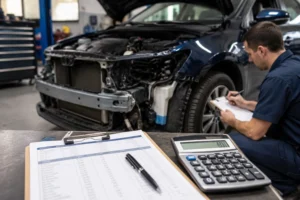
Review Estimates Carefully
Most vehicle owners focus on the total dollar amount.
Instead, review:
- Part descriptions
- Parts sources
- Labor operations
- Calibration procedures
- Structural repair items
Small details can reveal significant differences in repair quality.
Ask Direct Questions
Don’t assume.
Ask the repair facility and insurer:
- Which parts are OEM?
- Which parts are aftermarket?
- Why were substitutions made?
- Are manufacturer repair procedures being followed?
- Will calibrations be completed?
The answers matter.
Keep Organized Records
Documentation should include:
- Photographs
- Repair estimates
- Supplement estimates
- Emails
- Text messages
- Manufacturer repair information
- Appraisal reports
Good records create leverage.
Poor records create uncertainty.
When Fighting for OEM Repairs Makes Sense
Not every dispute warrants a prolonged battle.
However, pursuing OEM repairs may be justified when:
- Safety systems are involved
- Structural repairs are required
- Manufacturer procedures specify OEM parts
- The vehicle is new
- The vehicle is leased
- Vehicle value concerns are significant
The key is supporting your position with objective evidence rather than emotion.
Insurance companies respond to documentation.
Not frustration.
Conclusion
When insurance refuses OEM repairs, vehicle owners often feel caught between cost-saving decisions and concerns about quality, safety, and value.
Those concerns deserve careful consideration.
OEM parts can play an important role in maintaining manufacturer repair standards, supporting advanced safety systems, and preserving vehicle value. At the same time, insurance companies frequently rely on policy language, cost considerations, and alternative repair options when evaluating claims.
The most effective response is not guesswork.
It’s evidence.
Review your policy. Understand the repair plan. Consult qualified repair professionals. Obtain manufacturer repair procedures. And when necessary, seek an independent auto appraisal to evaluate whether the proposed repairs truly restore the vehicle to its pre-loss condition.
If insurance refuses OEM repairs, knowledge and documentation can make all the difference.
The better prepared you are, the stronger your position becomes throughout the claims process.
FAQs
You can request OEM parts, but whether the insurer must pay for them depends on your policy, state regulations, and the specific repair involved.
Insurance companies often choose aftermarket or recycled parts to reduce claim costs while still meeting their interpretation of restoring the vehicle to pre-loss condition.
Not necessarily. Some aftermarket parts perform well, but quality, fitment, and compatibility can vary significantly between manufacturers.
It can. Some buyers and dealerships may view vehicles repaired with non-OEM parts less favorably, potentially affecting resale or trade-in value.
A repair shop can recommend OEM parts based on manufacturer procedures or safety concerns, but the insurer may still dispute payment responsibility.
Many lease agreements require repairs that meet manufacturer standards, which may make OEM parts more appropriate in certain situations.
Request a written explanation, gather supporting documentation from the repair facility, and consider obtaining an independent appraisal.
Yes. An independent appraisal can provide objective documentation regarding repair methods, vehicle value, and manufacturer repair requirements.
They can be. Components related to ADAS features, sensors, cameras, and structural systems may require precise fitment to function correctly.
Potentially. If the repair method negatively impacts the vehicle’s market value, an independent appraisal may help support a diminished value claim.