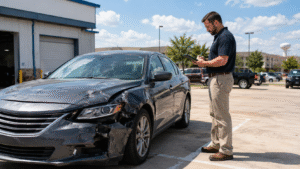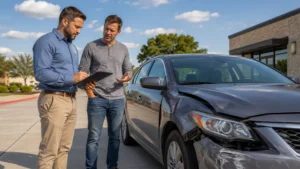
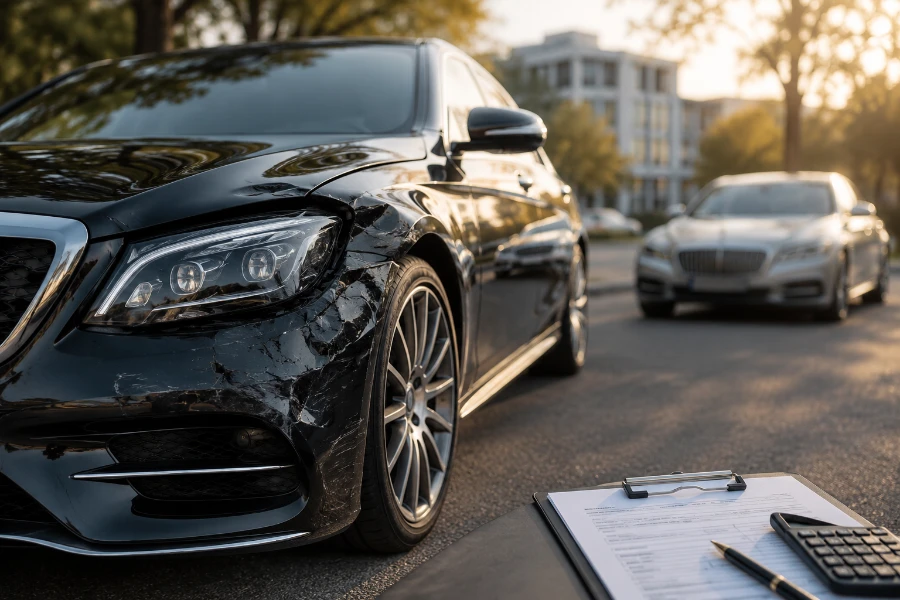
A collision can leave more than dents, scratches, and repair bills behind. For owners of premium vehicles, the financial impact often extends far beyond the repair shop. That’s where luxury car diminished value becomes a major concern.
Many luxury vehicle owners assume that once repairs are completed, their vehicle’s value returns to normal. Unfortunately, the market often sees things differently. Even when repairs are flawless and completed by certified technicians, buyers, dealerships, and appraisers may still view the vehicle as less desirable simply because it has an accident history.
That loss can be significant.
Whether you drive a Porsche, Mercedes-Benz, BMW, Ferrari, Tesla, or Range Rover, understanding luxury car diminished value can help protect your investment and potentially recover compensation after an accident.
Luxury vehicle owners often discover that repairs are only part of the financial equation. A vehicle can be restored to excellent condition and still lose market value because of its accident history. Understanding how appraisals work after a collision is critical, and our guide on car appraisal after accident explains how professional valuations help document post-accident losses and support insurance-related claims.
What Is Luxury Car Diminished Value?
Diminished value refers to the reduction in a vehicle’s market value after it has been involved in an accident and repaired.
Think about it from a buyer’s perspective.
If two identical luxury vehicles are available for sale and one has a clean history while the other shows accident repairs, most buyers will choose the clean vehicle—or expect a discount on the repaired one.
That difference in value is diminished value.
The concept applies to all vehicles, but luxury cars often experience substantially greater losses because buyers in this market segment are far more selective.
Types of Diminished Value
There are generally three forms of diminished value:
| Type | Description |
| Immediate Diminished Value | Difference in value immediately after an accident before repairs |
| Inherent Diminished Value | Loss that remains even after proper repairs |
| Repair-Related Diminished Value | Additional loss caused by poor-quality repairs |
For most claims, inherent diminished value is the primary focus because it reflects the lasting market stigma attached to an accident history.
Why Luxury Cars Experience Greater Diminished Value
Not all vehicles are treated equally by the marketplace.
Luxury vehicles occupy a unique category where buyers expect perfection. As a result, accident history tends to have a larger impact.
Brand Reputation and Buyer Expectations
Luxury brands are built around prestige.
Buyers spending $70,000, $100,000, or even $300,000 on a vehicle typically demand exceptional condition and complete transparency.
Even a minor collision can raise questions such as:
- Was the frame damaged?
- Were OEM parts used?
- Was the repair facility manufacturer-certified?
- Could future issues arise?
These concerns affect buyer confidence and ultimately resale value.
Expensive Original Components
Luxury vehicles contain specialized materials and components that are often expensive to replace.
Examples include:
- Carbon fiber panels
- Aluminum body structures
- Adaptive suspension systems
- Premium paint finishes
- Specialized lighting systems
While repairs may restore functionality, prospective buyers often worry that replacement components may not perform exactly like factory-installed parts.
Advanced Technology Systems
Modern luxury vehicles are packed with technology.
Sensors.
Cameras.
Radar systems.
Driver assistance features.
Lane-centering technology.
Automatic emergency braking.
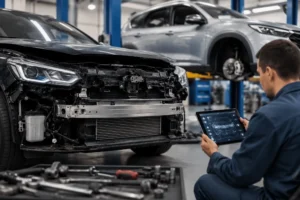
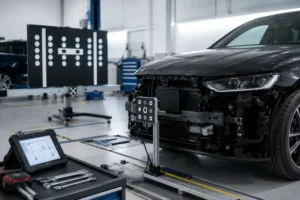
After a collision, these systems frequently require recalibration and testing. Even when completed correctly, some buyers remain cautious.
Many of these technologies rely on sophisticated data collection methods similar to telemetry, where information is transmitted and analyzed to monitor system performance. Because luxury vehicles depend heavily on these interconnected systems, buyers often scrutinize accident histories more closely than they would with standard vehicles.
That caution can translate directly into luxury car diminished value.
Limited Buyer Pool
Luxury vehicle buyers represent a smaller market.
Unlike mainstream vehicles, premium buyers tend to have more options and higher expectations.
As a result, vehicles with accident histories often face:
- Longer selling times
- Lower trade-in offers
- Reduced dealer interest
- More negotiation pressure
These factors can magnify luxury car diminished value.
Which Luxury Vehicles Often Experience the Highest Diminished Value?

Certain vehicle categories tend to suffer larger value losses after accidents.
European Luxury Vehicles
Brands commonly affected include:
- Mercedes-Benz
- BMW
- Audi
- Porsche
These vehicles often command strong resale values when accident-free, making post-accident value reductions more noticeable.
Exotic Vehicles
High-end exotic brands may experience dramatic value impacts.
Examples include:
- Ferrari
- Lamborghini
- McLaren
- Bentley
- Rolls-Royce
Collectors and enthusiasts frequently prioritize originality and history.
Even minor accidents can affect desirability.
Premium Electric Vehicles
Luxury EVs are increasingly involved in diminished value claims.
Common examples include:
- Tesla Model S Plaid
- Lucid Air
- Rivian R1S
- Tesla Model X
Battery systems, structural components, and advanced electronics can create additional buyer concerns after repairs.
Luxury SUVs
High-end SUVs often carry substantial market value and can sustain considerable diminished value losses.
Examples include:
- Range Rover
- Porsche Cayenne
- Cadillac Escalade
- BMW X7
- Mercedes-Benz GLS
Because these vehicles often exceed six-figure price points when new, even small percentage reductions can equal thousands of dollars.
Factors That Determine Luxury Car Diminished Value
No two claims are identical.
Several factors influence the amount of diminished value associated with a luxury vehicle.
Severity of Damage
The extent of damage remains one of the most important considerations.
Minor cosmetic damage may have limited impact.
Structural damage typically creates much larger losses.
For example:
| Damage Type | Potential Impact |
| Minor bumper repair | Lower diminished value |
| Door replacement | Moderate diminished value |
| Structural repairs | Significant diminished value |
| Frame damage | Highest diminished value |
Vehicle Age and Mileage
Newer vehicles often sustain greater diminished value.
Why?
Because buyers expect nearly flawless condition.
A two-year-old luxury sedan with low mileage may experience a larger market penalty than an older vehicle with higher mileage.
Quality of Repairs
Repair quality matters.
Certified repairs using OEM components can help reduce value loss.
However, even exceptional repairs rarely eliminate diminished value entirely.
Buyers still see accident history.
That reality affects market perception.
Vehicle History Reports
Services such as:
- Carfax
- AutoCheck
- Dealer databases
can permanently document accidents.
Future buyers frequently review these reports before making purchasing decisions.
A visible accident history often becomes one of the biggest contributors to luxury car diminished value.
Market Conditions
The market also influences outcomes.
Factors include:
- Local demand
- Seasonal trends
- Vehicle popularity
- Economic conditions
Luxury vehicle values can fluctuate substantially depending on current market dynamics.
Real-World Luxury Car Diminished Value Examples
Let’s look at how these losses can play out in practice.
Example 1: BMW 7 Series
Vehicle value before accident: $82,000
Repair cost: $14,000
Damage included:
- Front-end impact
- Hood replacement
- Sensor recalibration
After repairs, comparable market data suggested the vehicle sold for approximately $7,500 less than a similar accident-free model.
Example 2: Mercedes-Benz S-Class
Vehicle value before accident: $105,000
Repair cost: $22,000
Damage included:
- Side impact
- Door replacement
- Structural repair
Appraisal analysis identified approximately $12,000 in diminished value despite high-quality repairs.
Example 3: Porsche 911
Vehicle value before accident: $145,000
Repair cost: $18,000
Damage included:
- Rear-quarter panel repairs
- Paint refinishing
Market comparisons indicated a diminished value loss exceeding $15,000 due to buyer sensitivity within the sports car market.
How Luxury Car Diminished Value Is Calculated
Many vehicle owners assume insurers use a universal formula.
In reality, accurately measuring diminished value requires a more detailed analysis.
Establishing Pre-Loss Value
The first step involves determining what the vehicle was worth before the accident.
This typically includes:
- Market listings
- Comparable sales
- Dealer data
- Vehicle condition analysis
Reviewing Damage Documentation
Appraisers evaluate:
- Repair invoices
- Damage photos
- Parts replacement records
- Structural repair information
The extent of repairs directly influences value loss.
Market Comparison Analysis
A strong appraisal compares:
- Similar accident-free vehicles
- Similar repaired vehicles
- Dealer inventory
- Auction transactions
The goal is to determine how buyers actually respond to accident history in the marketplace.
In many ways, this process resembles econometrics, where analysts evaluate large amounts of data to identify how specific factors influence value. Appraisers apply similar principles when examining real-world vehicle transactions to determine the financial impact of an accident.
Professional Appraisal Evaluation
Luxury vehicles often require vehicle-specific analysis.
Generic formulas may overlook important factors such as:
- Brand reputation
- Collector interest
- Limited-production models
- Performance package options
That is why independent appraisal services can provide significantly more accurate results.
Professional appraisals involve much more than reviewing repair invoices. Market research, comparable vehicle analysis, condition assessments, and valuation reporting all play a role in determining accurate diminished value. If you’re interested in understanding the broader process behind vehicle value disputes, our article on diminished value vs total loss explains how insurers evaluate different types of vehicle losses after an accident.
Common Mistakes Luxury Vehicle Owners Make
Many owners unintentionally reduce their ability to recover diminished value.
Accepting the First Settlement Offer
Insurance companies may not fully account for luxury market realities.
Reviewing offers carefully is essential.
Delaying Documentation
Evidence matters.
Save:
- Repair estimates
- Invoices
- Photos
- Communications
- Vehicle history reports
The sooner records are organized, the stronger the claim becomes.
Failing to Research Market Impact
Many owners focus solely on repair quality.
The market, however, often places significant weight on accident history regardless of repair quality.
Skipping an Independent Appraisal
This is one of the most costly mistakes.
Without independent documentation, proving the true extent of luxury car diminished value becomes much more difficult.
Can You File a Diminished Value Claim on a Luxury Car?
In many situations, yes.
Third-Party Claims
If another driver caused the accident, diminished value claims may be available depending on state laws.
These claims often seek compensation for the difference between pre-accident and post-repair value.
First-Party Claims
Coverage varies.
Some policies may limit or exclude diminished value recovery.
Reviewing policy language carefully is important.
Commercial and Exotic Vehicles
High-value vehicles often require more detailed documentation because potential losses can be substantial.
Professional appraisal support becomes increasingly important as vehicle value rises.
Why Independent Appraisals Matter for Luxury Vehicles
Luxury vehicle claims require more than rough estimates.
They require evidence.
Objective Market Analysis
Independent appraisers analyze actual market behavior rather than relying solely on internal insurance calculations.
Stronger Negotiation Position
A detailed appraisal report provides documentation that supports your claim.
Facts carry weight.
Especially when negotiations become difficult.
Accurate Assessment of Financial Loss
The true loss may be far greater than many owners initially expect.
Professional analysis helps identify the actual impact.
Support During Disputes
When disagreements arise, comprehensive appraisal documentation often becomes one of the strongest pieces of evidence available.
How Auto Adjusting Helps Luxury Vehicle Owners
Luxury vehicles deserve specialized attention.
At Auto Adjusting, the focus is on providing professional auto appraisal services designed to identify and document diminished value losses accurately.
Services may include:
- Independent diminished value appraisals
- Market value analysis
- Vehicle inspection review
- Detailed reporting
- Claim documentation support
Rather than relying on generalized assumptions, each vehicle is evaluated based on its unique characteristics, repair history, and market position.
That level of detail can make a meaningful difference when pursuing compensation.
When Should You Contact a Diminished Value Expert?
Timing matters.
Consider seeking professional guidance when:
- Repairs have been completed
- The vehicle has significant damage history
- Structural repairs occurred
- You drive a high-value luxury vehicle
- You are reviewing a settlement offer
- You need objective market documentation
Waiting too long can complicate the process.
Early evaluation often provides the strongest foundation for a claim.
Conclusion
Luxury vehicles command premium prices because buyers expect premium condition. Unfortunately, once an accident appears on a vehicle’s history report, that expectation changes.
That’s why luxury car diminished value can represent a significant financial loss—even after flawless repairs.
Whether the vehicle is a BMW, Porsche, Mercedes-Benz, Tesla, Ferrari, or Range Rover, accident history can influence buyer behavior, trade-in offers, and resale opportunities for years to come.
Understanding your vehicle’s true post-accident value is the first step. Obtaining an independent appraisal is often the second.
For luxury vehicle owners seeking clarity, documentation, and professional valuation support, a detailed diminished value appraisal can provide the evidence needed to understand and pursue fair compensation. With the right data, expert analysis, and supporting documentation, vehicle owners are often in a far stronger position to protect the value of one of their most significant automotive investments.
FAQs
Luxury car diminished value is the reduction in a luxury vehicle’s market value after it has been involved in an accident, even if it has been fully repaired.
Luxury vehicle buyers typically have higher expectations and are more sensitive to accident history, which can significantly impact resale value.
Yes. Even flawless repairs may not eliminate diminished value because buyers often prefer vehicles with clean accident histories.
Brands such as Porsche, Mercedes-Benz, BMW, Audi, Ferrari, Lamborghini, and Bentley often experience substantial diminished value after accidents.
Yes. Accident records that appear on vehicle history reports can influence buyer perception and reduce market value.
Appraisers typically analyze the vehicle’s pre-accident value, repair history, damage severity, market data, and comparable vehicle sales.
In many states, yes. If another driver caused the accident, you may be able to pursue compensation for your vehicle’s diminished value.
Yes. Newer luxury vehicles generally experience greater diminished value because buyers expect them to be in near-perfect condition.
An independent appraisal can provide objective documentation of your loss and may strengthen your position during claim negotiations.
It’s usually best to begin the process after repairs are completed and before accepting any final insurance settlement.