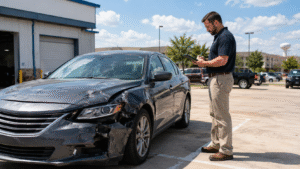

A disputed repair estimate can quickly turn a stressful accident into a frustrating financial battle. One number says your vehicle needs $3,200 in repairs. Another says $7,800. Suddenly, you are stuck in the middle wondering who is right, what is missing, and whether your car is actually being repaired safely.
This happens more often than most drivers realize.
Modern vehicles are incredibly complex. What looks like a minor bumper hit can involve sensors, hidden structural damage, calibration procedures, wiring systems, and manufacturer-required repair methods hiding underneath the surface. That is why a disputed repair estimate is not always about dishonesty. In many cases, it is about incomplete inspections, rushed evaluations, or major disagreements over repair standards.
I have seen situations where a vehicle looked perfectly drivable but later required thousands of dollars in supplemental repairs after teardown began. It happens fast. And if drivers are not careful, they may approve repairs based on incomplete information.
Understanding how repair estimate disputes work gives you leverage. More importantly, it helps protect your vehicle’s safety, value, and long-term reliability.
What Is a Disputed Repair Estimate?
A disputed repair estimate happens when two or more parties disagree on the cost or scope of repairs after a vehicle accident.
Usually, the disagreement involves:
- The insurance company
- The repair shop
- The vehicle owner
- An independent appraiser
Sometimes the gap is small. Other times, it is massive.
For example, an insurance estimate may include basic bumper replacement while the repair facility identifies hidden reinforcement damage, sensor recalibration requirements, and structural repairs underneath. Suddenly the repair costs double.
That does not automatically mean one side is wrong.
Initial inspections are often limited. Vehicles may not be fully disassembled during early evaluations. Hidden damage simply cannot always be seen immediately.
This is especially common in modern collision claims.
Common Reasons Repair Estimates Get Disputed
Not all repair disagreements are equal. Some involve labor rates. Others involve repair procedures. And some involve serious safety concerns.
Here are the biggest reasons a disputed repair estimate happens.
Hidden Damage Beneath Visible Panels
This is probably the most common cause of supplement disputes.
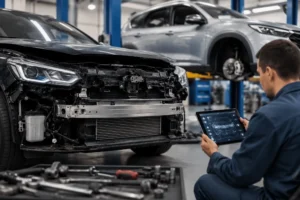
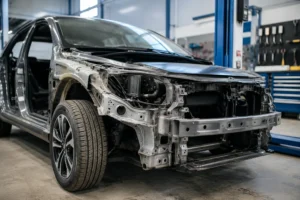
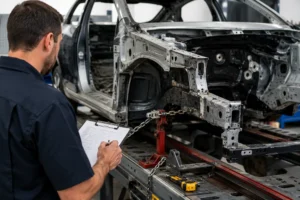
After a collision, visible exterior damage only tells part of the story. Once repair shops remove panels and begin teardown, they often discover:
- Bent supports
- Cracked brackets
- Suspension damage
- Frame movement
- Wiring issues
- Moisture intrusion
- Damaged impact absorbers
A small front-end collision can become much larger once internal components are exposed.
That changes everything.
Labor Rate Disagreements
Repair shops and insurance carriers frequently disagree on labor pricing.
Insurance companies may rely on regional averages. Repair facilities may charge higher rates due to specialized technicians, certifications, or advanced equipment.
This becomes even more noticeable with luxury vehicles or electric vehicles.
Here is a simplified example:
| Repair Item | Insurance Estimate | Repair Shop Estimate |
| Labor Rate | $52/hour | $78/hour |
| Paint Materials | $450 | $890 |
| Calibration | Not Included | $650 |
| OEM Parts | Partial | Full OEM |
Those differences add up quickly.
OEM vs Aftermarket Parts
Part selection creates major repair disputes.
Insurance companies may approve aftermarket or recycled components to control costs. Repair facilities may argue that Original Equipment Manufacturer parts are necessary for proper fitment and safety.
That debate becomes critical when dealing with:
- Airbag systems
- Crash sensors
- Structural components
- ADAS equipment
- Mounting brackets
Poorly fitting aftermarket parts can create alignment issues, sensor malfunctions, and future repair headaches.
Missed Calibration Requirements

Modern vehicles rely heavily on technology.
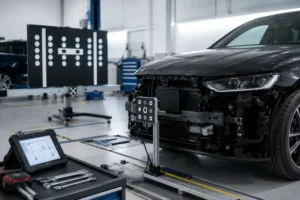
Blind spot monitoring systems, adaptive cruise control, lane assist, collision warning systems, and parking sensors all require precision calibration after repairs. Modern vehicles also rely heavily on interconnected electronic systems and complex sensor communication networks, sometimes involving technologies similar to telematics that require precise calibration after repairs.
And many estimates completely miss these procedures.
That is a serious problem.
A vehicle may appear repaired while critical safety systems remain inaccurate or nonfunctional.
Paint and Finish Disputes
Paint work is more complicated than many people realize.
Proper collision repair often requires:
- Blend panels
- Texture matching
- Clear coat refinishing
- Color transition work
- Corrosion protection
Insurance estimates sometimes underestimate the labor and materials required for quality refinishing.
The result?
Visible mismatches and unhappy vehicle owners.
Signs Your Repair Estimate May Be Too Low
Drivers often assume the insurance company’s first estimate is final. It is not.
A disputed repair estimate frequently starts because something important was overlooked.
Watch for these warning signs.
Incomplete Line Items
A rushed estimate may skip critical procedures entirely.
Common missing items include:
- Pre-repair scans
- Post-repair scans
- Structural measurements
- Corrosion protection
- Sensor calibrations
- Blend operations
- Suspension inspections
Missing procedures often lead to supplemental estimates later.
No Mention of Calibrations
If your vehicle has advanced safety systems but the estimate contains no calibration charges, ask questions immediately.
Many newer vehicles require recalibration after even minor repairs.
This includes:
- Windshield replacement
- Bumper replacement
- Suspension repairs
- Alignment work
Ignoring calibrations can affect vehicle safety.
Vague Descriptions
Generic wording creates problems.
Terms like:
- “Repair as needed”
- “Blend adjacent”
- “Miscellaneous labor”
may lack enough detail to explain what is actually being repaired.
Detailed estimates provide transparency. Vague estimates create confusion.
Repair Costs Far Below Local Shop Quotes
One low estimate does not automatically mean it is wrong. But if multiple qualified repair facilities identify higher costs, there may be missing procedures or incomplete damage documentation.
Comparison matters.
Drivers dealing with major estimate disagreements often benefit from a professional car accident insurance appraisal to better understand the true scope of damage and repair costs.
Why Modern Vehicles Create More Estimate Disputes
Vehicle repair has changed dramatically over the last decade.
A disputed repair estimate today looks very different from one twenty years ago.
Modern vehicles contain:
- Radar systems
- Cameras
- Parking sensors
- Multiple onboard computers
- Lightweight metals
- Advanced welding requirements
- Complex structural designs
Even minor accidents can involve sophisticated repair procedures.
Advanced Driver Assistance Systems Increase Complexity
Many sensors are hidden behind bumpers, mirrors, windshields, and grilles.
A seemingly small impact can affect:
- Adaptive cruise control
- Automatic emergency braking
- Lane departure systems
- Pedestrian detection systems
These systems require precise positioning.
Tiny measurement errors matter.
Aluminum and Specialty Materials
Some manufacturers use aluminum, high-strength steel, carbon fiber, and mixed-material construction methods.
These materials require:
- Specialized tools
- Separate work areas
- Manufacturer-approved repair methods
- Certified technicians
That increases both labor complexity and repair costs.
Manufacturer Repair Procedures Matter More Than Ever
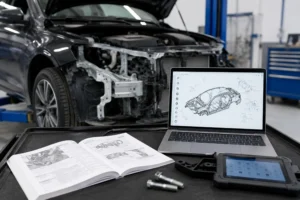
Repair facilities increasingly rely on OEM repair procedures during collision repairs.
Why?
Because manufacturers publish exact instructions for safe repairs.
Ignoring those procedures may create liability concerns and safety risks.
Some repair disputes become highly technical, especially when structural measurements and repair tolerances involve detailed forms of metrology used during collision analysis and frame inspections.
That is one reason disputed repair estimate cases continue growing throughout the collision industry.
The Insurance Company’s Perspective
Drivers often assume insurance companies intentionally underpay estimates. The reality is more complicated.
Initial estimates are frequently based on limited information.
Especially early in the claim.
Why Initial Estimates Are Often Conservative
Many insurance inspections happen before teardown begins.
Adjusters may only see:
- Exterior damage
- Limited photographs
- Preliminary repair information
They cannot always inspect hidden structural areas immediately.
As repairs progress, additional damage becomes visible.
That leads to supplements.
Understanding the Supplement Process
A supplement is simply an updated repair request submitted after additional damage or procedures are discovered.
Supplements are extremely common.
Especially with:
- Front-end collisions
- Suspension damage
- Side impacts
- Modern vehicles with ADAS systems
In many claims, the final repair cost differs substantially from the original estimate.
Why Legitimate Repairs Still Get Challenged
Even when damage is real, disagreements still happen.
Common disputes involve:
- Labor rates
- Paint procedures
- OEM parts usage
- Calibration necessity
- Structural repair methods
This is where documentation becomes critical.
What Drivers Should Do After Receiving a Disputed Repair Estimate
Drivers have more control than they realize.
The key is staying organized and proactive.
Request a Detailed Breakdown
Never rely on a vague summary.
Request itemized documentation showing:
- Labor hours
- Parts pricing
- Repair procedures
- Paint operations
- Calibration charges
Specificity matters.
Compare Multiple Evaluations
Do not rely solely on one opinion.
Consult:
- Independent repair facilities
- OEM-certified shops
- Collision specialists
- Independent appraisers
Different evaluations can expose missing procedures or unrealistic assumptions.
Document Everything
This step is incredibly important.
Keep records of:
- Photos
- Emails
- Repair invoices
- Supplement requests
- Inspection notes
- Text messages
- Rental receipts
Strong documentation strengthens your position during a disputed repair estimate process.
Ask Direct Questions
Do not be afraid to challenge unclear estimates.
Ask:
- Were OEM procedures reviewed?
- Are calibrations included?
- Has the vehicle been scanned?
- Was structural movement measured?
- Were hidden damage areas inspected?
Simple questions often reveal missing steps.
The Role of Auto Appraisals in Repair Estimate Disputes
Independent auto appraisals can play a major role when estimate disagreements become serious.
Especially when the cost gap grows large.
What an Auto Appraisal Does
An independent appraisal evaluates:
- Vehicle damage
- Repair scope
- Repair methods
- Labor requirements
- Market-based repair costs
The goal is objectivity.
Not guesswork.
When an Appraisal Becomes Valuable
An appraisal may help when:
- Estimates vary significantly
- Repairs seem incomplete
- Total loss valuations are disputed
- Supplements continue increasing
- Repair quality concerns exist
Independent reviews create clarity.
Understanding the car appraisal process can help vehicle owners identify missing repair procedures, hidden damage, and valuation inconsistencies during a disputed repair estimate.
How Auto Adjusting Helps Drivers
Auto Adjusting focuses on auto appraisal services designed to help drivers better understand repair-related disputes and valuation disagreements.
That independent perspective can help identify:
- Missing repair operations
- Incomplete damage documentation
- Unrealistic repair assumptions
- Valuation inconsistencies
Sometimes a second opinion changes the entire direction of a claim.
Common Mistakes Drivers Make During Estimate Disputes

Some drivers unintentionally weaken their own position.
Avoid these mistakes.
Approving Repairs Too Quickly
Fast approvals can create major problems later.
Especially before teardown is complete.
Once repairs begin, additional disputes become harder to manage without proper documentation.
Automatically Choosing the Cheapest Estimate
Cheap repairs can become expensive mistakes.
Low-cost estimates may skip:
- Proper calibrations
- OEM procedures
- Structural measurements
- Corrosion protection
Quality matters.
Ignoring OEM Repair Procedures
Manufacturer procedures exist for a reason.
They help ensure repairs meet engineering and safety standards.
Ignoring them may affect:
- Crash performance
- Sensor accuracy
- Vehicle value
- Long-term reliability
Failing to Keep Records
Poor documentation weakens disputes quickly.
Paper trails matter.
Always maintain organized records throughout the claim process.
Can a Repair Estimate Be Reopened Later?
Yes. Absolutely.
A disputed repair estimate may continue evolving even after repairs begin.
Supplemental Estimates
Additional damage often appears during teardown.
This can include:
- Structural movement
- Internal cracking
- Hidden corrosion
- Electrical damage
Supplements are part of normal collision repair.
Post-Repair Problems
Sometimes problems appear after repairs are completed.
Drivers may notice:
- Warning lights
- Sensor malfunctions
- Paint mismatch
- Alignment pulling
- Wind noise
- Water leaks
These issues may justify additional review.
When Further Investigation Becomes Necessary
Further review may be appropriate if:
- Repairs appear incomplete
- Safety systems malfunction
- OEM procedures were skipped
- Repair quality seems questionable
Do not ignore concerns simply because repairs are finished.
How to Strengthen Your Position During a Repair Estimate Dispute
Strong claims rely on strong evidence.
The more organized and informed you are, the better.
Use OEM Documentation
Manufacturer repair procedures carry weight.
They help support:
- Calibration requirements
- Replacement recommendations
- Structural repair methods
OEM guidance often becomes central during disputed repair estimate negotiations.
Work With Qualified Repair Facilities
Choose shops carefully.
Look for:
- OEM certifications
- Collision repair specialization
- Modern diagnostic equipment
- Strong documentation practices
Experienced shops identify problems early.
Obtain Independent Appraisals
Independent evaluations create balance.
Especially when major estimate disagreements exist.
A neutral assessment can help clarify what repairs are necessary and reasonable.
Stay Professional
Emotion rarely strengthens disputes.
Professional communication works better.
Stay organized. Stay factual and stay calm.
That approach produces stronger results.
Final Thoughts
A disputed repair estimate is not unusual in today’s collision repair world. In fact, it is becoming increasingly common as vehicles become more advanced and repair procedures become more technical.
The important thing is understanding that the first estimate is not always the final answer.
Hidden damage exists. Calibration requirements matter. OEM repair standards matter. Documentation matters.
Most importantly, safety matters.
Drivers who ask questions, compare evaluations, document everything, and seek independent expertise place themselves in a far stronger position during repair disputes.
Because once repairs are completed, reversing shortcuts becomes much harder.
And nobody wants to discover repair problems after getting back on the road.
FAQs
A disputed repair estimate usually happens when the insurance company, repair shop, or vehicle owner disagrees on repair costs or repair methods. Hidden damage and missed procedures are often major factors.
Yes. Once technicians begin teardown, they may discover structural damage, wiring issues, or sensor problems that were not visible during the initial inspection.
Insurance estimates are often written before full disassembly. Repair shops may later identify additional labor, calibrations, or OEM procedures that increase total costs.
Absolutely. Modern vehicles rely on sensors and safety systems that require recalibration after many repairs, including bumper, windshield, and suspension work.
Not always. It is smart to review the estimate carefully, compare repair opinions, and confirm that all necessary procedures are included before approving repairs.
OEM parts are Original Equipment Manufacturer components made specifically for your vehicle. They often provide better fitment, compatibility, and safety performance than aftermarket alternatives.
Yes. Supplemental estimates are common once hidden damage is uncovered during the repair process. Final repair costs are often higher than the original estimate.
Warning signs include vague descriptions, missing calibration charges, no structural measurements, or estimates that are far lower than multiple repair shop evaluations.
An independent appraisal helps evaluate repair scope, repair methods, and reasonable repair costs objectively. It can help identify missing procedures or unrealistic assumptions.
Yes. Improper repairs, skipped calibrations, or ignored OEM procedures may affect crash protection, sensor accuracy, vehicle value, and long-term reliability.