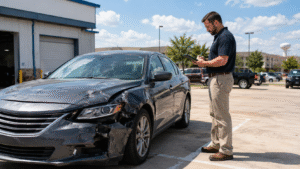

After an accident, most vehicle owners feel relieved when the insurance estimate finally arrives.
The claim is moving forward. Repairs are scheduled. Everything seems straightforward.
Or so it appears.
Unfortunately, many drivers discover that the initial estimate is only the beginning. Once technicians begin dismantling damaged areas, additional problems often emerge. This is where hidden damage after insurance estimate reviews become an important issue for vehicle owners.
What looked like a simple bumper replacement can suddenly involve structural repairs, damaged sensors, suspension components, or safety systems. The visible damage tells one story. The hidden damage tells another.
I’ve seen countless examples where repair costs increased significantly after the vehicle entered the shop. That doesn’t necessarily mean someone made a mistake. It often means the full extent of the damage simply couldn’t be seen during the initial inspection.
Understanding how hidden damage after insurance estimate situations occur can help you avoid surprises, protect your financial interests, and ensure your vehicle is repaired properly rather than simply repaired quickly.
What Is Hidden Damage After an Insurance Estimate?
Hidden damage refers to accident-related damage that cannot be identified during an initial visual inspection.
Insurance adjusters typically prepare estimates based on visible damage. They document what can be seen without extensive disassembly. While this process is necessary, it also has limitations.
Many vehicle components remain concealed behind:
- Bumpers
- Fenders
- Quarter panels
- Interior trim
- Underbody shields
- Structural supports
Until those components are removed, the full extent of the damage may remain unknown.
For example, a rear-end collision may appear to require only a new bumper cover. However, once technicians remove the bumper, they may discover:
- Bent reinforcement bars
- Crushed energy absorbers
- Damaged parking sensors
- Wiring damage
- Structural deformation
Those additional repairs become part of the hidden damage discovered after the estimate was completed.
Why Hidden Damage Is So Common
Modern vehicles are designed differently than they were even a decade ago.
Manufacturers build vehicles to absorb crash energy in controlled ways. This helps protect occupants, but it also means collision forces often travel far beyond the visible point of impact.
A seemingly minor accident can affect:
- Structural supports
- Suspension systems
- Steering components
- Electronic modules
- Safety systems
The outside of the vehicle may show relatively minor cosmetic damage while important components beneath the surface suffer significant impact-related stress.
As a result, hidden damage after insurance estimate reviews are extremely common throughout the collision repair industry.
Modern vehicle engineering involves highly specialized design principles. Engineers often analyze forces, load paths, and component interactions with a level of precision that can resemble concepts such as orthogonality, where systems operate independently while still contributing to overall performance. This complexity helps explain why collision forces can travel beyond the visibly damaged area.
Modern Safety Technology Complicates Repairs
Today’s vehicles contain technology that many drivers never see.
A single bumper assembly may include:
- Blind-spot monitoring sensors
- Parking assist sensors
- Radar systems
- Backup camera components
- Collision avoidance technology
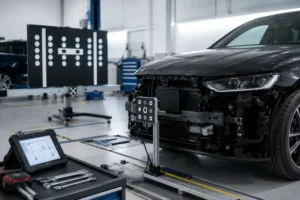
Even if the bumper appears repairable, the technology behind it may require replacement, calibration, or diagnostics.
These issues often remain invisible until repairs begin.
Common Types of Hidden Damage Found During Repairs
Some hidden damage affects appearance.
Other hidden damage affects safety.
Understanding the difference is critical.
Structural Damage
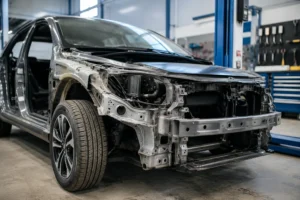
Structural repairs are among the most serious discoveries made during vehicle teardown.
Examples include:
- Unibody damage
- Frame distortion
- Crumple zone damage
- Reinforcement damage
Modern vehicle structures are designed using advanced engineering techniques such as finite element analysis, which allows manufacturers to predict how materials and structural components will behave during a collision. As a result, damage can spread through designated energy-absorbing areas that may not be visible during an initial inspection.
Even small structural changes can affect vehicle performance during future collisions.
Suspension and Steering Damage
Collision forces often travel into suspension systems.
Technicians frequently discover:
- Bent control arms
- Damaged tie rods
- Alignment problems
- Steering component damage
In some cases, these issues may not become obvious until alignment procedures begin.
Mechanical Damage
Mechanical systems can also suffer hidden impact damage.
Common examples include:
| Mechanical Component | Potential Hidden Damage |
| Radiator | Internal leaks |
| Condenser | Impact damage |
| Cooling fans | Cracked housings |
| Transmission cooler | Fluid leaks |
| Engine mounts | Structural movement |
These repairs often add significant costs beyond the original estimate.
Electrical Damage
Modern vehicles rely heavily on electronics.
Hidden electrical damage may involve:
- Wiring harnesses
- Sensor failures
- Communication modules
- Grounding systems
- Connector damage
These issues frequently require advanced diagnostics before they can be identified.
Safety System Damage
Safety systems deserve special attention.
Technicians sometimes uncover damage involving:
- Crash sensors
- Airbag modules
- Seatbelt pretensioners
- Occupancy sensors
These components play a direct role in occupant protection and must function properly after repairs are completed.
Why Insurance Estimates Sometimes Miss Hidden Damage
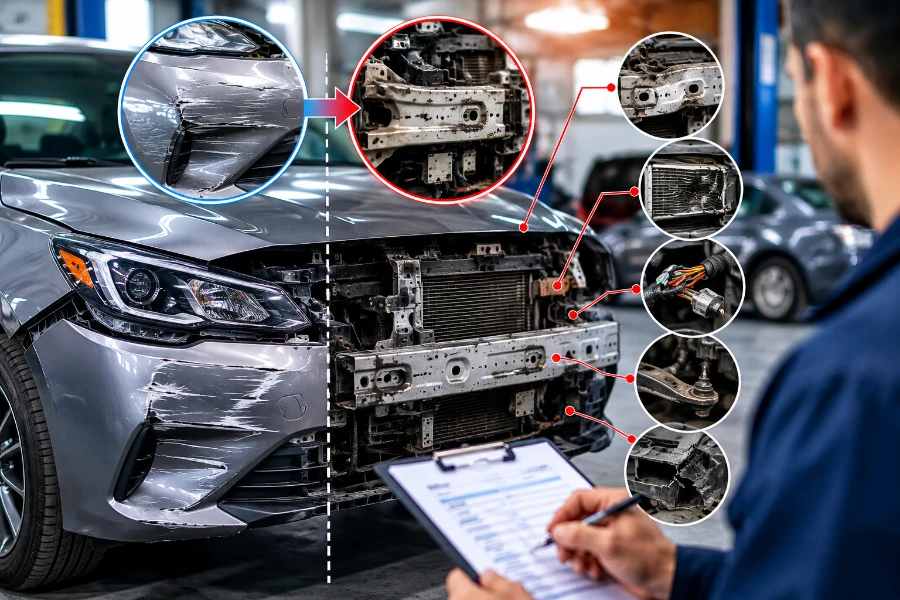
Vehicle owners occasionally assume an incomplete estimate means the inspection was performed incorrectly.
In reality, many estimates are simply preliminary assessments.
Limited Visibility During Inspection
Insurance inspections are often non-invasive.
Adjusters generally do not dismantle vehicles during their evaluations. Their estimates reflect the visible damage present at the time of inspection.
Without removing damaged components, many hidden issues simply cannot be identified.
Repairs Require Teardown Procedures
Repair facilities often need authorization before disassembling major components.
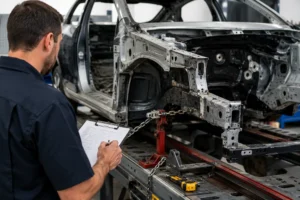
Once teardown begins, technicians gain access to areas that were previously concealed.
This is when hidden damage frequently emerges.
Consider the following examples:
| Visible Damage | Hidden Damage Found Later |
| Rear bumper damage | Reinforcement damage |
| Fender damage | Suspension damage |
| Door damage | Structural intrusion |
| Front bumper damage | Cooling system damage |
| Quarter panel damage | Inner structural damage |
The estimate reflects what can be seen.
The repair process reveals what cannot.
Vehicle Technology Keeps Evolving
Another challenge involves advanced vehicle technology.
Many repairs now require:
- Electronic diagnostics
- Sensor testing
- Camera calibration
- Radar calibration
- Software updates
These requirements may not become apparent until technicians begin working on the vehicle.
As vehicle complexity increases, the likelihood of discovering hidden damage after insurance estimate preparation also increases.
Real-World Examples of Hidden Damage
Rear-End Collision Example
A driver arrives at a repair facility with moderate rear bumper damage.
The initial estimate includes:
- New bumper cover
- Paint work
- Trim replacement
After teardown, technicians discover:
- Bent reinforcement bar
- Crushed energy absorber
- Damaged parking sensors
- Wiring repairs
Repair costs increase substantially.
Front-End Impact Example
At first glance, the front-end damage appears manageable.
However, once technicians remove the bumper assembly, they discover:
- Radiator support damage
- Condenser damage
- Cooling system issues
- Sensor calibration requirements
The original estimate simply couldn’t account for components hidden behind the visible damage.
Side Impact Example
Door damage often appears straightforward.
Yet technicians frequently uncover:
- B-pillar damage
- Side-impact sensor damage
- Reinforcement issues
- Structural alignment concerns
The final repair plan may look very different from the initial estimate.
Minor-Looking Accident, Major Repairs
One of the biggest misconceptions in collision repair is that minor-looking accidents always result in minor repairs.
They don’t.
A low-speed impact can sometimes create substantial structural damage while leaving surprisingly little visible evidence.
That’s why appearance alone is never a reliable indicator of repair complexity.
The Supplement Process Explained
When additional damage is discovered, repair facilities submit what is known as a supplement.
This process is completely normal.
A supplement is simply a request to add newly discovered repair items to the claim.
The process generally follows these steps:
- Technicians identify additional damage.
- Photos are taken.
- Repair documentation is created.
- Costs are calculated.
- Information is submitted to the insurer.
- The insurer reviews the supplement.
Most collision repairs involve at least one supplement.
In many cases, supplements exist specifically because hidden damage after insurance estimate evaluations are so common throughout the repair industry.
Vehicle owners should view supplements as part of the normal repair process rather than an indication that something has gone wrong.
Can Hidden Damage Affect Vehicle Value?
Absolutely.
Many vehicle owners focus exclusively on repair costs after an accident. However, another financial consequence often receives less attention: diminished value.
Diminished value refers to the reduction in market value that can occur after a vehicle has been involved in an accident, even when repairs are completed properly.
Why?
Because future buyers often view accident history as a risk factor.
The severity of the accident matters. The quality of repairs matters. Most importantly, the type of damage discovered matters.
Structural Damage Can Have Long-Term Effects
When hidden damage after insurance estimate reviews uncover structural issues, the impact can extend beyond repair costs.
Potential concerns include:
- Reduced resale value
- Lower trade-in offers
- Buyer hesitation
- Vehicle history report disclosures
A vehicle with documented structural repairs may be worth less than a comparable vehicle with no accident history.
Documentation Matters
If additional damage is discovered during repairs, maintaining complete records becomes critical.
Keep copies of:
- Initial estimates
- Supplements
- Repair invoices
- Photos
- Diagnostic reports
- Calibration reports
The more documentation you have, the easier it becomes to understand the full scope of repairs and support future valuation discussions.
How Independent Auto Appraisals Help Identify Hidden Damage
When repair costs continue growing or questions arise about damage severity, an independent appraisal can provide valuable insight.
Insurance companies, repair facilities, and vehicle owners may all have different perspectives regarding damage and value.
An independent appraisal introduces an objective evaluation into the process.
Reviewing Damage Beyond the Initial Estimate
An experienced appraiser examines:
- Repair documentation
- Damage reports
- Supplements
- Vehicle history
- Market value considerations
This broader perspective often helps vehicle owners better understand how the accident affected their vehicle.
In situations where additional repairs continue to emerge, many vehicle owners seek a professional car appraisal after accident to evaluate the complete impact of the collision. An independent appraisal can help document repair-related discoveries, assess potential diminished value, and identify whether significant damage extends beyond what was included in the original estimate.
Understanding the Full Appraisal Process
When substantial hidden damage is discovered, understanding the car appraisal process becomes especially important. A thorough appraisal typically includes a physical inspection, repair documentation review, damage analysis, and market valuation assessment that provides a more complete picture of the vehicle’s condition following an accident.
Supporting Supplement Discussions
Independent appraisals may also help:
- Verify repair requirements
- Evaluate repair scope
- Document damage severity
- Support claim discussions
- Identify overlooked issues
While appraisers do not replace repair technicians, they often provide valuable independent documentation that can clarify complicated situations.
Signs Your Insurance Estimate May Be Missing Damage
Not every estimate misses damage.
However, certain warning signs deserve attention.
The Repair Shop Finds Additional Problems Immediately
One of the clearest indicators occurs when technicians discover new issues shortly after teardown begins.
This is often the first sign that the initial estimate captured only part of the damage.
The Estimate Appears Unusually Low
If repair costs seem surprisingly low compared to the severity of the accident, additional investigation may be warranted.
Visible damage rarely tells the entire story.
Warning Lights Appear
Following an accident, dashboard warnings may indicate hidden issues involving:
- Airbags
- Safety systems
- Sensors
- Electronics
These systems frequently require diagnostic testing before problems can be confirmed.
The Vehicle Drives Differently
Pay attention to changes such as:
- Pulling to one side
- Steering irregularities
- Vibrations
- Unusual noises
These symptoms may indicate hidden suspension, steering, or structural damage.
Repair Timelines Keep Expanding
As technicians discover additional damage, repair schedules often extend.
While delays can occur for many reasons, repeated discoveries of accident-related damage may signal that the original estimate was incomplete.
Multiple Supplements Are Submitted
Multiple supplements do not automatically indicate a problem.
However, they often reflect the ongoing discovery of hidden accident-related damage.
This is another reason why hidden damage after insurance estimate situations deserve careful attention throughout the repair process.
What To Do If Hidden Damage Is Found After the Insurance Estimate

Finding additional damage can feel frustrating.
Fortunately, there are practical steps you can take.
Stay in Communication With the Repair Facility
Repair shops are often the first to identify hidden damage.
Ask questions.
Request updates.
Understand what was discovered and why it affects the repair plan.
Request Supporting Documentation
Good documentation protects everyone involved.
Request:
- Photographs
- Diagnostic reports
- Supplement estimates
- Repair explanations
The more information you have, the better informed your decisions will be.
Review Every Supplement
Don’t simply assume every supplement is correct.
Take time to review:
- New repair items
- Labor charges
- Parts requirements
- Diagnostic procedures
Understanding the repair process helps prevent confusion later.
Keep Copies of Everything
Create a claim file that includes:
- Insurance correspondence
- Estimates
- Supplements
- Repair invoices
- Photos
- Appraisal reports
Organization becomes extremely valuable if questions arise in the future.
Consider an Independent Appraisal
If significant damage is discovered or claim disagreements develop, an independent appraisal may provide additional clarity.
Objective documentation can help vehicle owners understand:
- Damage severity
- Repair scope
- Vehicle value impacts
- Potential diminished value concerns
Focus on Proper Repairs
Most importantly, avoid rushing the process.
Proper repairs matter more than quick repairs.
A vehicle that is repaired correctly today is far less likely to create problems tomorrow.
Why Vehicle Owners Should Take Hidden Damage Seriously
Many people assume that once the estimate is written, the hard part is over.
In reality, the repair process often reveals the most important information.
The discovery of hidden damage after insurance estimate preparation can influence:
- Repair costs
- Vehicle safety
- Repair timelines
- Vehicle value
- Future resale potential
Ignoring these issues can lead to incomplete repairs or unresolved concerns that surface later.
Staying informed allows you to make better decisions throughout the claim and repair process.
Conclusion
Discovering hidden damage after insurance estimate approval is far more common than many vehicle owners realize.
Initial estimates are often based on visible damage only. Once technicians begin disassembly, additional structural, mechanical, electrical, and safety-related issues frequently emerge.
That doesn’t necessarily mean anyone made a mistake. Rather, it reflects the reality of modern vehicle construction and collision repair.
The key is understanding the process.
Ask questions. Review supplements carefully. Maintain detailed documentation. And when necessary, seek independent appraisal support to gain a clearer understanding of your vehicle’s condition and value.
A collision may last only a few seconds.
The effects can influence your vehicle’s safety, performance, and value for years.
Taking hidden damage seriously helps ensure the repairs you receive today continue protecting you long after the claim is closed.
FAQs
Hidden damage refers to accident-related damage that isn’t visible during the initial inspection and is discovered later during the repair process.
Additional damage is often uncovered once technicians remove damaged parts and inspect components hidden behind panels, bumpers, or structural areas.
Yes. Supplements are common in collision repairs and are used to request payment for newly discovered accident-related damage.
Yes. Significant repairs, especially structural damage, can reduce a vehicle’s market value even after repairs are completed.
Not necessarily. Initial estimates are typically based on visible damage, and some issues simply cannot be identified until disassembly begins.
Structural damage, suspension issues, sensor failures, wiring damage, and cooling system problems are among the most common discoveries.
An independent appraisal can help document the full extent of damage and evaluate potential impacts on vehicle value.
Yes. Even low-speed collisions can damage structural components, safety systems, or electronics that aren’t immediately visible.
Warning signs include repair supplements, dashboard warning lights, alignment issues, unusual noises, or repair costs that continue increasing.
Request documentation, review supplements carefully, stay in contact with the repair facility, and keep records of all repair-related information.